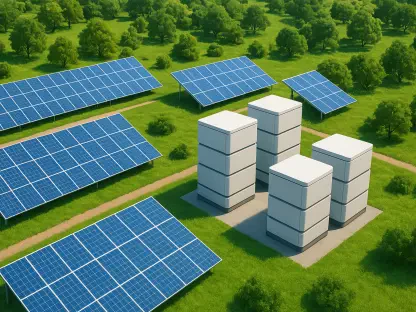

With a targeted completion timeline of just 18 months, stakeholders are moving rapidly to modernize the energy entry points for the landlocked Ethiopian nation. This $660 million venture represents a significant shift in the regional energy landscape, involving the Ethiopian government, the
The decommissioning of a nuclear power plant often leaves a town grappling with a profound economic vacuum and a massive, silent infrastructure that serves as a reminder of a bygone industrial era. In Vernon, Vermont, the site formerly known as Vermont Yankee is currently at the center of a

A standard IoT power system usually relies on disposable coin cells, but these components drive up total cost of ownership by thirty to fifty percent. As the industry advances in 2026, the reliance on these single-use batteries has become a major hurdle for scalability and environmental

Hydropower serves as a critical pillar for Belgium's national energy security, providing the peak-load support necessary to prevent grid instability during the nuclear phase-out. As the nation maneuvers through the complexities of its long-term energy transition, the reliance on hydroelectric

The global transition toward carbon neutrality in 2026 has transformed the hydroelectric sector from a reliable baseload power source into a critical, high-speed flexibility partner for unstable renewable grids. While wind and solar power provide the bulk of new capacity, their inherent variability

The massive influx of electric vehicles onto global highways has inadvertently created a secondary gold mine that exists within the discarded husks of automotive battery packs. As of 2026, the transition from simple disposal to a sophisticated circular economy is no longer a theoretical concept but