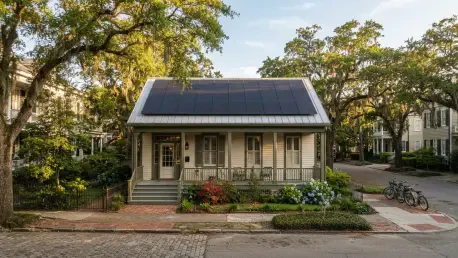

Experienced solar adopters suggest that the true value of rooftop panels is realized only when they are paired with battery storage or electric vehicles featuring bidirectional charging. In the historic neighborhoods of Savannah, Georgia, where high summer temperatures lead to substantial electricity consumption, residents are increasingly turning to renewable solutions to manage fluctuating utility rates. A detailed assessment of a local shotgun-style home reveals that while the initial transition appears straightforward, the complexity of modern energy markets requires a nuanced understanding of both hardware and economics. For a standard 1,000-square-foot property, the objective is often to offset approximately 90% of grid reliance. However, achieving this goal involves more than just installing hardware on a roof; it requires a strategic alignment of household habits with the peak output of the sun. As the landscape of domestic power changes, homeowners find that the narrative of simple savings is evolving into a more complex discussion regarding total energy independence.
Analyzing Property Assets: Structural Readiness and Solar Potential
A thorough technical examination of a potential solar site is the first critical step in determining the feasibility of a long-term investment in renewable energy. In the case of Savannah’s unique architectural landscape, the shotgun-style house provides a compelling template for solar adoption due to its elongated roof surface and typically shallow pitch, which maximizes exposure to the southern sky. Modern assessments indicate that a house of this size requires a compatible electrical panel capable of handling the two-way flow of electricity, a feature often found in recently renovated historic homes. Furthermore, the absence of large, shade-providing trees or neighboring high-rise structures significantly enhances the efficiency of the photovoltaic cells. Without these environmental obstructions, the panels can maintain peak performance throughout the daylight hours. This structural readiness ensures that the installation process remains streamlined, avoiding the added expenses associated with roof reinforcement or extensive rewiring of the existing electrical infrastructure.
Beyond the physical constraints of the property, the financial viability of a solar project hinges on a clear understanding of the return on investment over a specific period. For the Savannah homeowner facing a $35,000 installation quote, the decision-making process is complicated by the reality of a five-year residency plan. Traditional solar models often assume a decade-long commitment to achieve a break-even point, but diverse financing paths like Home Equity Lines of Credit or zero-upfront leases are changing this calculation in 2026. Experts recommend obtaining multiple competitive bids to verify the accuracy of aggressive sales projections and to ensure that the equipment reflects current market standards. It is essential to look beyond the immediate tax credits and consider how the addition of solar infrastructure impacts the resale value of the property. When the residency timeline is relatively short, the focus must shift from long-term utility avoidance to the immediate increase in home equity and the attractiveness of a low-energy-cost residence to potential future buyers.
Advancing Energy Management: Storage Solutions and Maintenance Needs
The transition toward total energy independence is increasingly defined by the integration of storage technologies that allow for the intelligent management of generated power. While photovoltaic panels are remarkably durable—often requiring nothing more than a simple rinse with a garden hose to remove debris—their utility is limited by the cycles of the sun. To bridge the gap between daytime generation and nighttime consumption, modern lithium-ion battery systems or electric vehicles with bidirectional charging capabilities have become indispensable tools. These systems enable homeowners to store excess energy produced during the noon peak and deploy it during high-rate evening periods, a process colloquially known as spinning the meter backward. This capability is particularly vital in regions with high cooling demands, where evening air conditioning usage can quickly erase any daytime savings. By creating a closed-loop system, residents can maintain a consistent power supply during grid outages, ensuring that the solar investment provides both financial predictability and critical operational resilience.
Data collected from established solar markets in states like California, Pennsylvania, and Maine provide clear evidence that comprehensive solar investments can yield dramatic results. Many households utilizing a combination of heat pumps and battery storage have reported reducing their monthly utility bills to negligible amounts, with some achieving annual savings reaching the $8,000 mark. These real-world examples demonstrate that the most successful outcomes result from homeowners who utilize independent calculators to verify the claims made by installation firms. This cautious approach ensures that the final system configuration is perfectly tailored to the specific energy profile of the residence. Moving forward, the focus is placed on actionable strategies such as conducting energy audits and prioritizing high-efficiency appliances before the panels are even installed. Ultimately, the synthesis of technical data and financial planning proves that solar energy remains a powerful mechanism for cost control when residents approach the technology with a focus on holistic energy management rather than just a simple equipment purchase.