
Recent escalations in geopolitical tensions across the Strait of Hormuz have sent shockwaves through international fuel markets, forcing governments to reconsider their reliance on fragile maritime supply chains. This shift is clearly reflected in the most recent World Energy Outlook, which indicates that modern bioenergy demand is poised to surge by approximately twenty-five percent over the coming decade as nations prioritize domestic resilience. Projections under current stated policy scenarios suggest that global demand will climb from forty-five exajoules this year to fifty-six exajoules by 2035, marking a significant pivot in how sovereign states perceive their energy security. While traditional fossil fuels remain entrenched, the accelerated adoption of biomass-based alternatives offers a strategic buffer against the volatility of global petroleum logistics. The transition is no longer merely a climate imperative but has become a matter of national survival in an increasingly fragmented global trade environment where energy is frequently weaponized by major powers.
Scaling Infrastructure: The Rise of Modern Biofuels
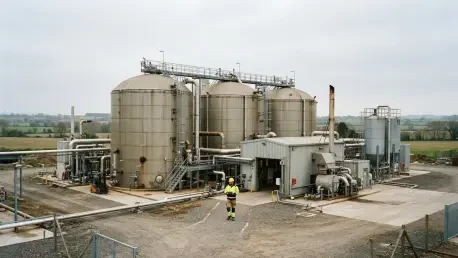
Solid fuels like wood pellets currently dominate the market, yet a fundamental transformation is underway as gaseous and liquid alternatives begin to claim a larger share of the total energy mix. Biomethane stands at the forefront of this evolution, recognized as the fastest-growing subsector within the industry through the middle of the century, despite currently representing a relatively small portion of global production. The European Union, China, the United States, and India are leading this expansion, with international forecasts suggesting that biogases will reach eighty billion cubic meters of natural gas equivalent within the next decade. The primary advantage of biomethane lies in its physical compatibility with existing infrastructure, as it can be injected directly into natural gas grids without requiring costly modifications to domestic heating or industrial systems. This capability makes it an attractive option for policymakers who need to bolster energy security without massive capital expenditures.
Transportation sectors are witnessing a similar reorganization as liquid biofuel mandates become the standard tool for reducing dependence on foreign crude oil while meeting strict environmental targets. Since early 2024, several emerging economies have implemented aggressive blending requirements, with Indonesia recently adopting a B50 biodiesel standard and Brazil increasing its mandatory ethanol blend to thirty-two percent for all road vehicles. Beyond road transport, the development of sustainable aviation fuel is gaining momentum due to stringent new regulations in the European Union and the United Kingdom, aiming to reach five percent of the market by 2035. These mandates serve a dual purpose by supporting domestic rural economies and shielding local consumers from the price fluctuations inherent in the global petroleum market. By decoupling transport costs from international geopolitical incidents, countries are effectively building a decentralized energy buffer that relies on local crops rather than distant refineries.
Strategic Implementation: Lessons From a Decoupled Economy
The evolution of the energy sector toward a bio-based model was shaped by a shift in priorities where security and sustainability became inseparable objectives for modern governance. Stakeholders recognized that diversifying fuel sources required a commitment to infrastructure investment that favored long-term stability over short-term financial gains. It was determined that the integration of biomethane and advanced biofuels necessitated a harmonized regulatory environment to prevent market fragmentation across different regions. Proactive measures were taken to ensure that land use policies remained transparent, preventing conflicts between energy production and food availability by utilizing marginal lands. Leaders prioritized the development of regional bioenergy hubs, which minimized transport costs and enhanced the reliability of supply chains during periods of international instability. These actions provided a blueprint for how nations managed to navigate the complexities of a volatile decade while moving toward a more autonomous profile.
Advancements in carbon capture technology were successfully integrated into existing biomass plants, turning them into active agents of carbon removal rather than just power generators. This technical maturation allowed industries that were once considered impossible to decarbonize to find a path toward operational neutrality through the use of carbon credits and direct offsets. Governments incentivized research into non-food feedstocks, such as algae and municipal waste, which expanded the raw material base without impacting traditional agricultural markets. The successful deployment of these technologies across both developed and emerging economies showed that a decentralized energy strategy was viable on a global scale. Looking ahead, the focus remained on refining these processes to lower costs and increase efficiency, ensuring that bioenergy continued to serve as a reliable pillar of the global power grid. These steps established a foundation for a resilient system that was no longer beholden to geographic monopolies.