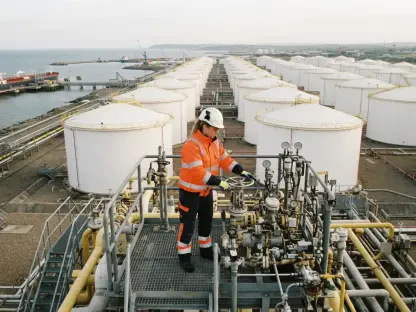

The structural disadvantage of being restricted to the domestic fuel market is forcing independent refiners to seek survival through technological modernization. This shift comes as the geopolitical landscape has fundamentally rewritten the rules of the energy trade for China’s private refining sector. For decades, these entities, known as “teapots,” thrived by securing discounted feedstocks that state-owned competitors avoided. However, the current year marks a definitive end to that era as traditional supply routes face disruptions. A sustained naval presence in key maritime corridors has effectively throttled the flow of sanctioned Iranian crude, which once served as the lifeblood of these operations. As this cheap oil vanishes, independent refiners find themselves in a precarious position, caught between a global market that demands transparency and a domestic environment that offers little room for error. The urgency for structural change is no longer a theoretical debate but a practical necessity.
Shifting Feedstock Dynamics
For several years, the economic model of the independent refining sector in China was built on a foundation of deeply discounted crude oil. Specifically, Iranian barrels frequently traded at prices ranging from $10 to $11 below the Brent benchmark, providing a massive financial cushion for smaller refineries. However, since the middle of 2024, a significant U.S. naval blockade has removed over one million barrels per day of this specific supply from the market. The sudden absence of this discounted feedstock has forced these entities to pivot toward the mainstream international market. Instead of enjoying the windfall of sanctioned barrels, they must now compete for transparent supplies from Iraq, Qatar, and Angola. This transition has completely erased the operational margins that once defined the Shandong refining hub, leading to a period of instability.
Market Transition: Purchasing Mainstream Barrels
Entering the global market without the shield of discounts has exposed the technical vulnerabilities of these private entities. Unlike the larger state-owned enterprises that operate sophisticated complexes, many independent refiners are less equipped to handle varying crude qualities. The shift to purchasing oil from Brazil and West Africa has introduced a new economic reality where these refineries are often paying premiums between $6 and $20 per barrel over benchmark prices. This reversal of fortune is not merely a temporary price fluctuation but a structural realignment of the industry. Without the buffer provided by the Iranian discount, the cost of production has surged, making it nearly impossible for less advanced facilities to achieve break-even status. The competitive landscape now favors those with the capital to secure high-quality feedstocks and the technology to maximize yields. Efficiency has replaced illicit price advantages as the primary driver of market survival.
Logistical Challenges: The Risks of Global Sourcing
The transition from localized, short-haul supplies to a diversified global procurement strategy has introduced a new layer of logistical complexity for independent refiners. Previously, the trade in Iranian oil was relatively predictable and involved shorter transit times that were easier to manage with limited working capital. Today, the search for replacement barrels has driven a surge in interest for Iraqi Basrah oil and the Russian ESPO blend. Since late 2024, these refiners have secured nearly 40 million barrels of Iraqi crude alone, representing a major shift in their supply chain geography. However, sourcing from distant regions such as South America or West Africa involves much longer sea voyages and extended trading cycles. For a small refinery with tight cash flows, a two-month transit time introduces significant price uncertainty. By the time a cargo arrives at a Chinese port, the international market price or domestic demand may have shifted unfavorably.
Financial Strain and Market Imbalance
A critical factor exacerbating the current crisis is the growing disparity between private refiners and the state-owned giants that dominate the national energy sector. State-owned enterprises possess a unique structural advantage: the legal authority to export refined products when domestic demand weakens or when international margins are more attractive. This allows them to balance their books by shipping excess fuel to global markets. In contrast, the independent “teapots” are largely confined to the domestic Chinese market, where the government maintains strict price ceilings on gasoline and diesel to manage inflation. This regulatory framework creates a “double squeeze” for the independents. On the input side, they are paying the full market price for crude oil, but on the output side, their revenue is limited by state-controlled pricing. This dynamic has turned many previously profitable operations into loss-making ventures, forcing a reevaluation of the industry’s survival strategy.
Operational Impact: Utilization Rates in Shandong
Financial data indicates that the impact of this margin compression has been swift and severe across the private refining landscape. Average refining losses for these independent players have recently reached levels between $3 and $4 per barrel, which translates to a significant deficit of approximately 150 to 200 yuan per ton. This financial strain is most visible in the plummeting utilization rates across Shandong province, which has long served as the heart of the independent sector. Historically, these plants maintained utilization rates as high as 75%, but recent figures show a sharp decline to approximately 54%. Many operators have concluded that running at half capacity is the only way to minimize losses while waiting for market conditions to improve. This period of underutilization is straining regional economies and challenging the long-term viability of the cluster model. The widening gap between cost and revenue has become the primary catalyst for a wider industry shakeout.
Strategic Evolution: The Path to Modernization
In the final analysis, the Chinese independent refining industry navigated a period of intense pressure by fundamentally altering its operational DNA. The sector moved away from a reliance on discounted, sanctioned feedstocks and embraced a more transparent procurement model that prioritized legitimacy over immediate profit margins. While utilization rates remained suppressed through the end of 2025, the most resilient players successfully consolidated their operations around advanced petrochemical production. This strategic pivot allowed them to survive the “double squeeze” of high crude costs and domestic price caps. By focusing on technological modernization and stricter regulatory compliance, these refiners secured their place within the national energy strategy. The consolidation process ultimately eliminated the most inefficient facilities, leaving behind a streamlined sector better equipped to handle global market volatility. This transition ensured the industry evolved into a capable force.