
Geopolitical friction has prevented strong regulatory language regarding transition minerals from being included in major international climate agreements like the COP summits. This diplomatic gridlock highlights a disturbing truth: the global drive to cool the planet through electrification relies on a massive expansion of industrial mining that many nations are hesitant to regulate strictly. While electric vehicles and wind turbines are marketed as symbols of environmental purity, their internal components—lithium, cobalt, and rare earth elements—tell a much grittier story of extraction and environmental degradation. The transition to a green economy is essentially a shift from a fuel-intensive system to a material-intensive one, trading the atmospheric damage of fossil fuels for the terrestrial scars of mineral mining. This fundamental change in how humanity powers its civilization has created a global Mineral Age where the race for resource security often overlooks social and ecological costs.
The Concentrated Power of Global Mineral Wealth
The geographical concentration of these essential minerals creates a massive imbalance in global power and resource security. For instance, the Lithium Triangle, which encompasses parts of Argentina, Chile, and Bolivia, contains more than half of the world’s known lithium reserves. Similarly, Indonesia currently dominates the nickel market with approximately 42% of recoverable reserves, while the Democratic Republic of Congo remains the primary source for over half of the global cobalt supply. This concentration has allowed specific nations to establish a stranglehold on the supply chain. China, in particular, has positioned itself as an indispensable player by controlling 50% of rare earth reserves and an incredible 76% of global processing capacity. This dominance means that the hardware required for a sustainable future, such as wind turbine magnets and electric vehicle motors, is inextricably linked to a handful of regions with varying environmental standards.
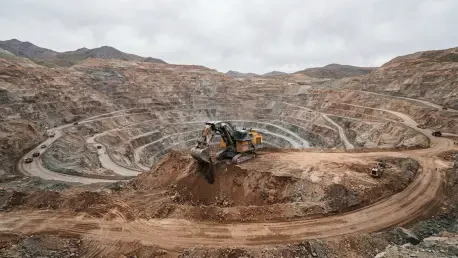
As the demand for electric vehicles and large-scale battery storage continues to surge, the International Energy Agency projects that the need for critical minerals will double or potentially triple by 2040. To satisfy this relentless appetite for electrification, industry experts estimate that at least 384 new mines must become operational by 2035 to provide the necessary volume of raw materials. This unprecedented scale of industrial expansion suggests that the environmental footprint of the mining sector will grow exponentially in the coming decades, often in areas with fragile ecosystems. The paradox of green energy lies in the fact that the very materials required to save the atmosphere from carbon saturation are being pulled from the Earth’s crust through methods that can cause localized ecological collapse. Without a radical shift in how these materials are sourced and managed, the transition risks trading one environmental crisis for another on a global scale.
Impact on Indigenous Lands and Local Sovereignty
Beyond the ecological impact, the human cost of the energy transition is increasingly visible among Indigenous communities who live near these massive industrial projects. More than half of the current mining operations for transition minerals are located on or near Indigenous territories, leading to a direct clash between global climate goals and local human rights. Activists argue that the narrative of a just transition is often used as a marketing tool that masks the reality of displacement and exploitation. These communities face immediate and life-threatening challenges, including the contamination of vital water sources used for agriculture and drinking, as well as the inhalation of toxic dust from blasting operations. The exploitation of these regions creates a moral gap where residents of the Global North enjoy the benefits of clean technology while populations in the Global South bear the brunt of the industrial processes required to manufacture those products.
The legacy of this extraction is often permanent, as the environmental recovery from such intensive operations can take centuries to complete. A primary concern is the management of tailings dams, which are massive structures designed to store the toxic waste products of mineral processing. The catastrophic failure of these dams in Brazil, such as the Mariana and Brumadinho disasters, serves as a grim reminder of the long-term risks associated with the mining industry. Because these waste sites must be monitored and maintained indefinitely, the burden of potential failure falls on local communities long after mining companies have extracted their profits and moved on to new projects. This dynamic effectively dismantles traditional ways of life and creates a multi-generational cycle of risk. For many Indigenous people, the green energy transition feels less like a solution to a global problem and more like a new form of industrial colonialism that threatens their sovereignty.
Bridging the Gap Through Global Transparency
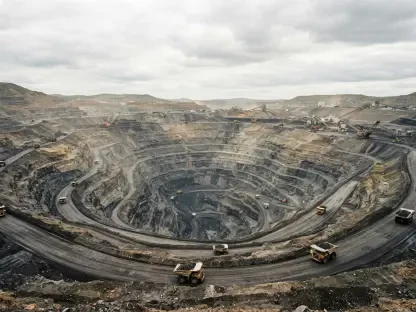
In an era of remote supply chains, visual testimony has become a vital tool for bridging the gap between abstract policy and physical reality. Aerial photography, in particular, offers a perspective that is often hidden from the public by geographical distance or high security fences. By capturing the immense scale of lithium ponds in the Atacama Desert or the sprawling nickel complexes in Southeast Asia, visual artists provide an overview that challenges the consumer’s sense of detachment. These images confront the users of smartphones, laptops, and electric cars with the true origin of their devices, revealing the vast industrial landscapes that fuel modern convenience. This visual evidence acts as a catalyst for a more honest global conversation regarding consumption habits. When the physical cost of a battery-powered future is laid bare through high-resolution imagery, it becomes much harder for stakeholders to ignore the environmental trade-offs involved in the shift to renewable energy.
Despite the growing awareness of these issues, the framework for international regulation remains largely fragmented and difficult to enforce on a global scale. While regions like the European Union have introduced measures such as the Critical Raw Materials Act to improve transparency and standards, these initiatives are often limited by national borders. Geopolitical tensions between major world powers have frequently prevented the implementation of binding environmental protections in large-scale climate agreements. In the absence of a unified global standard, many mining companies still rely on their own internal impact assessments, which lack the objective oversight needed to protect vulnerable ecosystems and local populations. The competitive nature of the global market often incentivizes a race to the bottom, where companies seek out jurisdictions with the most lenient regulations to minimize costs. Establishing a truly accountable supply chain will require a level of international cooperation that has so far remained elusive.
Building Toward a More Ethical Mineral Economy
Addressing the dark side of the energy transition requires a fundamental shift toward circular design and a radical rethinking of how materials are used. Instead of a linear system based on disposable technology, the global economy must prioritize the recovery and reuse of metals through advanced recycling infrastructure. Designing products for longevity and ease of mineral recovery is a critical step in reducing the immense pressure on primary mining operations. By creating a closed-loop system for batteries and electronics, manufacturers can decrease their reliance on newly extracted raw materials, thereby mitigating some of the most severe environmental impacts. This approach also helps to stabilize supply chains by providing a steady stream of recycled minerals within regional borders. Moving toward a durable-metal model is not just an ecological necessity but also a strategic economic move that reduces the vulnerability of tech sectors to the volatility of the global mining market.
Furthermore, the implementation of independent oversight and innovative extraction methods offers a path toward a more ethical energy system. Financial institutions that invest in mineral projects must mandate strict standards for waste management and human rights protections as a condition for funding. This shift in financial accountability forces mining companies to adopt safer practices and engage more transparently with local communities. At the same time, the development of synthetic alternatives and phytomining—using specialized plants to extract metals naturally from the soil—provides a glimpse into a future where traditional, destructive mining might be significantly reduced. These advancements demonstrate that a green future is possible, but only if the world values human rights and ecological health as highly as carbon reduction. By enforcing rigorous global standards and embracing technological innovation, the transition can finally move toward becoming a truly just and sustainable global transformation.