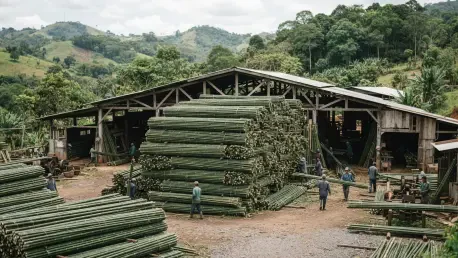

The transition toward a fully decarbonized energy grid necessitates the discovery of highly efficient, renewable biomass sources that can replace traditional fossil fuels without compromising food security. While wind and solar power have made significant strides in the electricity sector, the heavy transport industry, including aviation and international shipping, requires energy-dense liquid fuels that batteries currently cannot provide at scale. Bamboo has recently emerged as a primary contender for this role, offering growth rates that far exceed traditional timber or agricultural waste products. Unlike corn-based ethanol, which often raises concerns regarding land use and food pricing, bamboo can thrive on marginal lands with minimal irrigation or chemical intervention. This resilience, combined with its high cellulose content, allows it to serve as a consistent and sustainable feedstock for biocrude production. As researchers refine the chemical processes used to break down its complex fibers, the potential for bamboo to anchor a global biofuel economy becomes increasingly tangible for industrial applications.
Technological Breakthroughs and Economic Viability
Hydrothermal Liquefaction: Converting Wood to Fuel
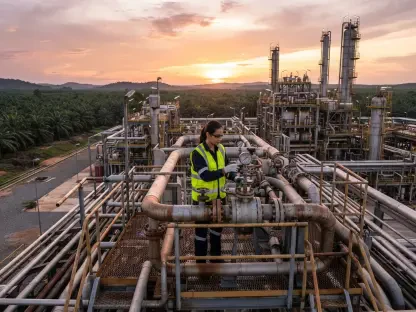
Worcester Polytechnic Institute has pioneered a significant advancement in the processing of lignocellulosic biomass through the application of hydrothermal liquefaction. This thermochemical process involves subjecting bamboo to high temperatures and pressures in a water-based environment, which breaks down the plant’s cellular structure into a liquid biocrude. This crude oil substitute can then be refined into high-quality transportation fuels, such as biodiesel or sustainable aviation fuel, using existing refinery infrastructure. Researchers Michael Timko and Timothy Woodard have demonstrated that this method is highly efficient, capturing a significant portion of the plant’s stored energy in a form that is easily integrated into current supply chains. The success of this technique marks a departure from older, less efficient methods that required extensive drying of the biomass, which often consumed more energy than the resulting fuel provided in return.
The chemical stability of the resulting biocrude is one of its most compelling attributes, as it allows for long-term storage and transport without the degradation issues seen in some first-generation biofuels. Building on this technical foundation, the research team focused on optimizing the catalyst systems used during the liquefaction stage to ensure maximum yield from various bamboo species. By adjusting the moisture content and pressure levels, they have successfully minimized the production of char and other unwanted byproducts that typically plague biomass conversion. This level of precision in chemical engineering ensures that almost every part of the harvested bamboo is utilized, maximizing the carbon-sequestration benefits of the crop. As these laboratory breakthroughs move toward commercial implementation, the industry is seeing a renewed focus on the scalability of hydrothermal processes, which could soon provide a steady stream of carbon-neutral fuel for the global market.
Cost Analysis: Achieving Price Parity
Economic viability remains the most significant hurdle for any renewable energy technology seeking to compete with the established petroleum industry. However, recent financial modeling based on bamboo feedstock suggests a production cost of approximately $2.75 per gasoline-gallon equivalent, a price point that is remarkably competitive with conventional fossil fuels. This low cost is primarily driven by the plant’s extreme growth velocity; bamboo can grow up to ten times faster than corn and does not require annual replanting, significantly reducing labor and agricultural input costs. Furthermore, because bamboo is a perennial grass, it can be harvested continuously for up to 25 years after the initial planting, providing a stable and predictable supply for biorefineries. This long-term productivity allows operators to amortize their initial investment over a much longer period compared to traditional seasonal crops, making the entire business model more attractive to investors.
Beyond the raw production costs, the environmental benefits of bamboo cultivation offer additional economic incentives through carbon credit programs and government subsidies for green energy. Many nations are currently implementing carbon pricing mechanisms that penalize the use of fossil fuels, effectively making bamboo-based biodiesel even more attractive to fleet operators and airline carriers. The ability to grow bamboo on land that is unsuitable for traditional food crops also prevents the “food versus fuel” economic conflict that has historically hampered the ethanol industry. By utilizing marginal lands, producers can keep land acquisition costs low while contributing to rural economic development in regions that have been left behind by traditional industrial growth. This multi-faceted economic advantage ensures that bamboo is not just a scientific curiosity but a practical solution for the global energy market, providing a clear path toward large-scale commercialization.
Global Implementation and Environmental Impacts
Commercial Operations: Scaling Across Borders
The shift from theoretical research to practical application is already visible in Maryland, where the startup Avos BioEnergy is pioneering a unique procurement strategy. By focusing on the removal of “nuisance” bamboo—species that have become invasive or problematic on private lands and along public roadsides—the company has secured a steady supply of raw material at virtually no cost. This approach solves a significant local land-management problem while simultaneously providing the feedstock necessary for their pilot-scale bioethanol production. This model demonstrates how strategic waste management can be integrated into the renewable energy sector, creating a circular economy that benefits both the environment and the local community. The success of this Maryland initiative provides a blueprint for other regions to utilize invasive biomass as a resource rather than a liability, effectively turning an ecological challenge into a sustainable energy opportunity.
On a much larger scale, international collaborations are proving that bamboo biofuel can be produced at an industrial level in regions with favorable growing climates. In the Indian state of Assam, a major commercial-scale bioethanol plant has recently commenced operations as a joint venture involving the Numaligarh Refinery and technical partners from Finland, specifically Fortum and Chempolis. This facility represents one of the first successful attempts to refine bamboo at a massive scale, utilizing the region’s vast natural reserves of the plant to produce fuel for the domestic Indian market. The partnership combines Finnish expertise in biorefining with India’s agricultural capacity, creating a high-output production hub that serves as a proof of concept for the global industry. This project underscores the importance of international technology transfer and capital investment in accelerating the transition toward a bio-based economy in the developing world.
Strategic Integration: Future Energy Security
The long-term impact of bamboo-based fuels will likely be most profound in the aviation and maritime sectors, where the physical constraints of electric propulsion are most evident. Sustainable aviation fuel derived from bamboo biocrude offers a “drop-in” solution, meaning it can be used in existing jet engines without requiring expensive retrofits or new infrastructure. This compatibility is crucial for the rapid adoption of green technologies in the transport industry, as it allows airlines to reduce their carbon footprint immediately. Moreover, the high energy density of these fuels ensures that long-haul flights can maintain their range and payload capacity, a feat that currently remains impossible for battery-powered aircraft. As global regulations on carbon emissions continue to tighten, the demand for these high-performance biofuels is expected to surge, positioning bamboo as a critical asset in the portfolio of renewable energy resources needed to meet net-zero targets.
Stakeholders in the global energy sector successfully demonstrated that bamboo represents a technically sound and economically feasible alternative to traditional liquid fuels. The integration of hydrothermal liquefaction with high-yield crops allowed for a significant reduction in production costs, effectively bridging the gap between laboratory success and commercial viability. Regional projects in both North America and Asia proved that diverse business models, ranging from invasive species management to large-scale industrial farming, could reliably supply the growing demand for sustainable feedstocks. Moving forward, the focus must shift toward expanding these biorefining capabilities to every region capable of supporting bamboo growth, ensuring a decentralized and resilient energy supply. Policymakers and industry leaders recognized that investing in such versatile biomass was essential for securing a carbon-neutral future for the global transportation network.