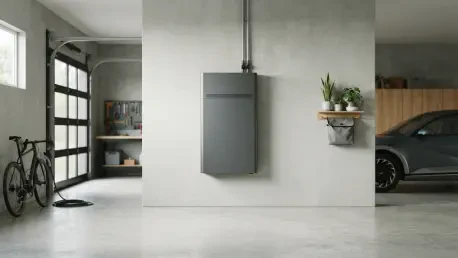

Homeowners participating in time-of-use electricity plans often worry that drawing maximum power from two sources simultaneously might exceed the safe temperature limits of their battery cells. This anxiety is common as residential energy storage systems grow in capacity, moving from basic backup units to substantial 18-kilowatt-hour installations that serve as the primary energy hub for a modern household. In the current landscape of 2026, the proliferation of free power windows offered by utilities has encouraged users to saturate their systems with energy from both rooftop solar arrays and the electrical grid at the same time. While the visual of two high-current streams feeding a single battery might seem risky, the engineering behind modern lithium-ion and lithium iron phosphate systems is specifically designed to handle these exact scenarios. These systems operate within a highly controlled environment where sensors monitor every variable, ensuring the transition is managed with precision.
Engineering for High-Throughput Energy Systems
Sophisticated Battery Management Units: Internal Safety Protocols
The primary safeguard against any potential thermal runaway or cell degradation during rapid charging is the internal Battery Management System, commonly referred to as the BMS. This sophisticated control unit acts as the brain of the energy storage system, constantly communicating with individual modules to regulate current, voltage, and temperature. For a typical 18-kilowatt-hour system comprised of multiple modules, each unit often has a hardware-restricted charge rate, such as 4.6 kilowatts, which serves as a hard physical ceiling for energy intake. Even if the combined output from a large solar array and a high-voltage grid connection could theoretically provide more power, the BMS will throttle the input to match the safest possible charging curve. This internal regulation ensures that the chemical composition of the battery cells is never stressed beyond its design parameters, regardless of external power availability from solar or grid sources. These digital watchdogs represent the first line of defense in modern homes.
Efficient Design Architecture: The Role of DC-Coupling
Beyond the digital controls of the BMS, the physical architecture of modern systems, particularly DC-coupled configurations, plays a vital role in maintaining safety during simultaneous charging. In these setups, the energy from the solar panels remains in a direct current format as it enters the battery, reducing the number of conversion steps and the associated heat generation that typically occurs with AC-to-DC rectification. This efficiency is a cornerstone of current 2026 residential energy standards, ensuring that high-throughput charging does not result in unnecessary energy waste as ambient heat. Engineers have subjected these residential units to rigorous testing protocols that simulate extreme usage patterns, including the simultaneous draw of maximum solar peak and maximum grid allowance. These regulatory standards ensure that the hardware can dissipate heat effectively through passive or active cooling mechanisms, maintaining high safety margins for users worldwide while ensuring consistent long-term performance.
Strategic Utilization: Economic and Grid Resilience
The evolution of energy storage technology proved that the initial fears regarding simultaneous charging were largely addressed by robust engineering and standardized safety protocols. Those who investigated the limits of their hardware discovered that modern lithium batteries were remarkably resilient when managed by sophisticated digital oversight. To maximize the longevity and safety of these systems, homeowners were encouraged to regularly update their system firmware and monitor their usage patterns via integrated mobile applications. For individuals who were not yet ready for a large-scale 18-kilowatt-hour installation, the emergence of smaller, plug-and-play storage units offered a practical entry point into energy independence. These compact solutions provided essential backup capabilities while maintaining the same rigorous safety standards found in larger residential arrays. Moving forward, the focus shifted toward optimizing self-consumption rates and exploring the potential of virtual power plants to stabilize the broader electrical grid.