
As urban centers across South Asia face the dual pressures of surging electricity demand and environmental degradation, the transition to sustainable power has become an urgent necessity rather than a peripheral luxury. Somiron Mistry serves as a critical link between international renewable energy standards and the local implementation of hybrid solar systems within the Public Works Department. His role is defined by a sophisticated understanding of how technical engineering can be leveraged to meet national policy goals in 2026. By focusing on the integration of photovoltaic technology into existing government structures, he has provided a roadmap for modernizing the power grid without the need for extensive land acquisition. This strategic approach effectively addresses the immediate energy needs of public institutions while laying the groundwork for long-term ecological resilience. The ongoing transformation within the Public Works Department highlights a shift toward decentralized energy production that prioritizes efficiency.
Specialized Expertise in Solar Infrastructure
Building a Legacy Within the PWD
With a professional history spanning over 15 years, Somiron Mistry has cultivated a deep reserve of institutional knowledge essential for navigating the complexities of large-scale engineering projects. Within the E/M P&D Division-1 in Dhaka, his leadership has been instrumental in the conceptualization and execution of solar initiatives that now boast a cumulative capacity of 300MW(AC). This achievement is not merely a reflection of technical skill but also of a persistent commitment to high standards within the public sector. By managing a diverse portfolio of projects, he has successfully demonstrated that government infrastructure can be adapted to support cutting-edge green technology. His work ensures that the transition to renewable energy is grounded in practical, scalable solutions that can be replicated across various regions of the country. This effort has allowed the department to meet its operational objectives while contributing to the broader national strategy for energy independence.
Managing the Solar Project Lifecycle
The technical proficiency required to manage the entire lifecycle of a solar photovoltaic system is immense, ranging from initial feasibility studies to the final commissioning of advanced arrays. Mistry’s oversight includes the development of rigorous technical specifications that define the performance parameters of every component, ensuring that the technology is both reliable and durable. By supervising the testing and commissioning phases, he guarantees that the systems are integrated seamlessly into the existing electrical infrastructure, minimizing potential disruptions. This end-to-end management approach is critical for the long-term success of renewable projects, as it establishes a foundation of quality control that mitigates risks associated with rapid technological adoption. His focus on technical compliance ensures that public investments yield the maximum possible return in terms of electricity generation and operational longevity. These evaluations provide the data-driven insights needed to inform all future project designs.
Strengthening National Engineering Standards
Collaborating Across Key National Agencies
The influence of a skilled engineer often extends beyond their primary office, and Mistry’s career is a prime example of how specialized knowledge benefits the entire nation. By serving on various Technical Evaluation Committees, he provides essential guidance to high-profile organizations like the Bangladesh Power Development Board and the Sustainable and Renewable Energy Development Authority. In these capacities, he is responsible for reviewing complex technical proposals and ensuring that they align with both domestic requirements and international safety benchmarks. This collaborative effort helps to professionalize the renewable energy market, fostering an environment where innovation is balanced with rigorous oversight. His presence on these committees ensures that the standards for hardware are consistently high across all government-sponsored initiatives. This inter-agency cooperation is vital for creating a unified approach to the energy transition, allowing the country to move toward its goals with a sense of collective purpose.
Authoring Essential Guidelines for Solar Design
One of the most enduring contributions to the engineering field in Bangladesh is the formalization of technical knowledge through comprehensive documentation. Mistry’s authorship of the “Basic Design and Implementation Guidelines of On-grid and On-grid Hybrid Rooftop Solar System in Bangladesh” has filled a significant gap in the industry. This manual serves as a definitive resource for engineers, contractors, and consultants, providing a standardized roadmap for the design and installation of solar power systems. By codifying these complex technical directions, he has reduced the likelihood of integration errors and streamlined the procurement process for public sector projects. This initiative transforms individual expertise into a shared institutional asset, ensuring that the best practices for solar installation are accessible to all. The guidelines also emphasize the importance of hybrid systems, which offer greater reliability by combining solar generation with traditional grid connectivity and storage solutions.
Transforming Public Spaces into Power Plants
Decentralizing Energy Through Rooftop Innovation
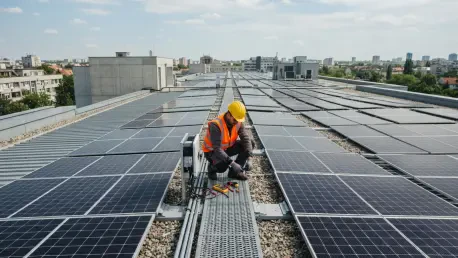
In a country where land is a precious and limited resource, the traditional model of large-scale solar farms often faces significant logistical and social challenges. Recognizing this constraint, Mistry has championed a strategic pivot toward decentralized, rooftop-based solar generation as a more viable alternative. His work on the 300 MW rooftop initiative transforms static government buildings into active power plants, utilizing existing architectural footprints to generate electricity at the point of consumption. This approach effectively eliminates the need for land acquisition and minimizes the environmental impact associated with land conversion. By generating power locally, these systems also reduce the burden on the national transmission grid, lowering the energy losses that typically occur during long-distance distribution. This decentralized model is effective for urban areas, where the density of buildings provides an expansive surface area for solar arrays. This innovation represents a shift in how public space is utilized.
Supporting Climate Goals and Economic Efficiency
The economic implications of transitioning to renewable energy are as significant as the environmental benefits, especially when implemented on a national scale. By reducing the operational costs of government institutions, the solar projects overseen by Mistry contribute to a more sustainable fiscal policy. The electricity generated by these rooftop systems offsets the need for expensive fossil fuel imports, thereby improving the national trade balance and energy security. Furthermore, the reduction in carbon emissions associated with these initiatives directly supports the country’s commitments to international climate agreements. This alignment of economic efficiency and environmental stewardship proves that green energy is a catalyst for broader economic growth. The shift toward solar technology also stimulates the domestic job market, creating opportunities for skilled technicians and engineers. By prioritizing sustainability, the department is not only protecting the environment but also ensuring the long-term economic viability of infrastructure.
Final Considerations and Frequently Asked Questions
How Do These Guidelines Improve the Energy Sector?
The establishment of standardized guidelines has a profound impact on the reliability and scalability of renewable energy projects across the country. By providing a consistent technical framework, these documents minimize the occurrence of costly design errors and ensure that all installations meet high-quality performance benchmarks. This consistency is particularly important for the integration of hybrid solar systems, which require precise engineering to balance multiple power sources effectively. Furthermore, these guidelines empower local contractors and engineers with the knowledge necessary to compete in a rapidly evolving market, fostering domestic expertise and innovation. The streamlined implementation process also speeds up the deployment of new solar arrays, allowing the government to reach its renewable energy targets more efficiently. Ultimately, these standards protect public investments by ensuring that solar infrastructure remains operational and efficient throughout its intended lifespan, providing a reliable source of clean energy for the public sector.
Establishing a Scalable Framework for the Future
The successful integration of these technologies required a paradigm shift in how public engineering departments approached energy security. Moving forward, the focus shifted toward expanding the rooftop model to include residential and commercial sectors through incentivized policy frameworks. Technical specialists prioritized the training of a new generation of engineers to maintain the infrastructure that was established during this period. By documenting every stage of the 300 MW initiative, the department created a blueprint that was used by other nations in the region to kickstart their own renewable journeys. The investment in domestic manufacturing of solar components was also identified as a critical next step to further reduce costs. Ultimately, the framework established by professionals like Mistry ensured that the transition was not a temporary project but a permanent evolution. Stakeholders were encouraged to adopt these standardized guidelines to maintain the momentum toward a carbon-neutral economy.