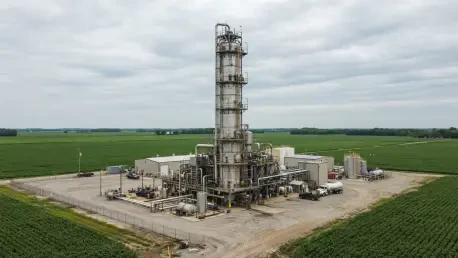

The revival of energy production in the heart of the American Midwest marks a significant turning point for local economies that rely on the intersection of agriculture and modern industrial technology. In Ralston, Iowa, the local biodiesel facility recently resumed operations, bringing a renewed sense of purpose to a community that saw the site go dark in early 2024. This facility, now under the operational umbrella of Chevron U.S.A. Inc., represents a powerhouse in the renewable sector with an annual production capacity of 42 million gallons. To put that scale into perspective, such a volume is sufficient to fuel approximately 275,000 heavy-duty trucks, providing a critical alternative to traditional petroleum-based fuels. The decision to restart the plant was not merely a reaction to shifting balance sheets but a calculated response to improved market conditions and more favorable regulatory signals that emerged throughout 2026. This restart underscores the resilience of the bioenergy market and its vital role in supporting domestic energy security while simultaneously revitalizing the rural workforce.
Integrating Local Agriculture and Energy Policy
A fundamental component of this industrial resumption is the strategic alliance with Landus Cooperative, which provides the essential soybean feedstock required for biodiesel synthesis. The Ralston site is uniquely positioned adjacent to a processing facility that handles over 28 million bushels of soybeans every year, creating a streamlined, vertically integrated supply chain that minimizes the carbon footprint associated with transportation. This relationship ensures that local agricultural producers have a direct and consistent conduit to the energy market, effectively turning Iowa’s harvest into high-value fuel products. As the plant transitions through its initial stages of reopening, the operational focus has centered on rigorous maintenance schedules and the implementation of advanced safety protocols to protect the incoming workforce. While the precise timeline for full-scale staffing remains under evaluation, the move has already begun to generate specialized employment opportunities in rural sectors where industrial growth is often difficult to sustain.
The broader context of this reopening involves a complex interplay between federal fuel mandates and the economic stability of the renewable energy sector. Industry advocates have long argued that the Environmental Protection Agency’s Renewable Fuel Standard provides the necessary market signals to justify large-scale capital investments in facilities like the one in Ralston. Throughout 2026, the finalized blending volumes have acted as a cornerstone for growth, allowing companies to plan for consistent demand across the heavy-duty transportation and logistics industries. Despite opposition from certain regions where leaders have sought waivers to mitigate perceived consumer costs, the stability offered by these federal standards remains a top priority for agricultural organizations. These groups maintain that a robust mandate is the most effective way to ensure that the domestic biofuel industry can continue to innovate. By fostering a competitive environment for renewable fuels, the policy framework helps to lower the overall carbon intensity of the national fuel supply while securing the economic future.
The successful reactivation of the Ralston facility served as a clear demonstration of how localized energy production could bolster regional economies through strategic private and public alignment. By transforming locally grown soybeans into a vital energy resource, the partnership between Chevron and Landus aimed to insulate the regional market from global supply chain disruptions. Industry experts noted that the project’s success relied on a consistent regulatory environment that encouraged long-term technological upgrades and infrastructure development. To ensure the continued success of such initiatives, stakeholders moved to prioritize the expansion of retail access for higher biodiesel blends, such as B20, across the interstate highway system. This move provided an actionable path toward reducing the cost of heavy-duty transportation while simultaneously increasing the domestic supply of renewable energy. The effort highlighted that the integration of agricultural output with industrial energy needs was a viable solution for maintaining high employment levels in the heartland.