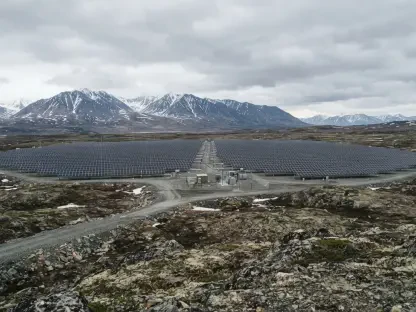

The geographical irony of solar power is that the regions with the highest irradiance are often the most prone to sandstorms that block sunlight from reaching photovoltaic cells. This fundamental conflict defines the challenge of large-scale renewable energy production in desert climates, where “soiling” can reduce efficiency by up to 50 percent. While solar energy is frequently described as a passive asset, the reality of maintaining multibillion-dollar installations in the Middle East or the American Southwest reveals a more labor-intensive truth. Dust and pollen accumulation creates a physical barrier that prevents sunlight from penetrating the glass, forcing operators to balance cleaning costs against energy losses. For years, the industry struggled with manual interventions that were both expensive and physically taxing for human crews. Today, however, the paradigm has shifted as Israeli innovator Ecoppia deploys sophisticated robotics to automate the upkeep of these critical power plants.
Waterless Cleaning: A Necessity for Desert Operations
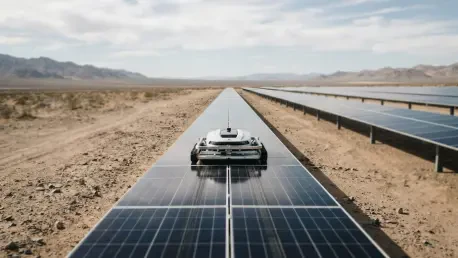
Traditional solar panel cleaning methods rely heavily on water, a resource that is notoriously scarce in the arid environments where solar harvesting is most effective. Using tankers and high-pressure hoses in a desert setting is not only logistically complex but also environmentally contradictory, as it diverts drinking water to industrial maintenance. Ecoppia has disrupted this model by developing a fleet of robots that utilize a “dry cleaning” process. These machines glide across the surfaces of solar arrays, employing soft microfibers and high-speed rotation to sweep away particulates without a single drop of liquid. This method is particularly effective at preventing “cementation,” a phenomenon where morning dew mixes with dust to form a hardened, crusty layer that is difficult to remove without abrasive chemicals. By cleaning the panels every night, the robots ensure that dust never has the chance to settle and harden, maintaining the surface in a pristine state.
The sustainability of this approach extends to the robots’ own energy consumption, as they operate as self-sufficient, closed-loop units. Each robot is equipped with its own dedicated solar panels and battery storage system, allowing it to harvest energy during daylight hours while the main farm is producing power for the grid. This design ensures that the maintenance system does not siphon electricity from the plant’s overall output. Because these units are fully autonomous, they eliminate the need for fossil-fuel-powered service vehicles or heavy machinery on the site, further reducing the carbon footprint of the entire operation. Furthermore, the microfiber brushes are engineered to be gentle on the antireflective coatings of the solar panels, extending the operational lifespan of the hardware. By removing the threat of microscratches that often occur during manual scrubbing, the robotic solution preserves the optical integrity of the glass, ensuring that maximum light transmission is maintained.
Digital Intelligence: AI Integration and Remote Monitoring
While the mechanical aspect of the robots is impressive, the digital infrastructure behind the scenes is what truly enables global scalability. Ecoppia utilizes a cloud-based management platform that leverages artificial intelligence and machine learning to oversee thousands of units across multiple continents. This centralized system monitors the performance and mechanical health of every robot in real time, providing plant operators with a comprehensive dashboard of their facility’s status. By analyzing data patterns, the AI can detect subtle changes in a robot’s motor torque or battery efficiency, which might indicate the early stages of wear or a pending component failure. This predictive maintenance capability allows technicians to intervene precisely when and where they are needed, rather than following a rigid and often inefficient manual inspection schedule. This transition from reactive to proactive maintenance ensures that the cleaning fleet remains operational with near-zero downtime, protecting the solar farm’s revenue.
The integration of weather data into the control logic further optimizes the cleaning schedules. The system can automatically pause operations during high-wind events or sandstorms to prevent damage to the robots, resuming work as soon as conditions are safe. This level of granular control is impossible to achieve with human crews, who cannot respond as quickly to localized weather shifts. Additionally, the data gathered by the robots provides valuable insights into the specific soiling patterns of a region, allowing the AI to adjust cleaning intensity based on the time of year or specific environmental triggers like pollen seasons. This sophisticated interplay between hardware and software transforms a simple maintenance task into a data-driven optimization strategy. By constantly learning from the environment, the system refines its movements and energy usage, ensuring that each cleaning cycle is as efficient as possible. This intelligence effectively future-proofs the installation against unpredictable climate patterns.
Economic Viability: Lowering the Levelized Cost of Energy
The primary metric for success in the renewable energy sector is the Levelized Cost of Energy (LCOE), which represents the average cost per unit of electricity generated over a project’s lifetime. High operational and maintenance expenses are often the Achilles’ heel of large-scale solar projects, particularly when labor and water costs are factored in. By automating the cleaning process, Ecoppia significantly reduces these recurring expenses. Manual cleaning of a 10-megawatt farm can cost thousands of dollars per cycle, and when scaled up to hundreds of megawatts, the financial burden becomes a major hurdle for investors. The shift to a fixed-cost robotic solution provides financial predictability, removing the volatility associated with labor markets and water prices. Furthermore, by keeping the panels at maximum efficiency, the system increases the total energy output of the farm, directly improving the return on investment for owners and making solar power more competitive against traditional fossil fuels.
In summary, the transition toward autonomous maintenance systems established a new benchmark for the solar industry. Ecoppia’s success proved that for solar energy to be truly sustainable, its maintenance had to evolve beyond the resource-heavy methods of the past. By eliminating water usage and human intervention, this technology ensured that solar farms remained both ecologically sound and financially viable. Moving forward, the industry prioritized the integration of such automated solutions during the initial design phase of solar installations, rather than as an afterthought. Investors and developers who adopted these technologies early secured a competitive advantage by stabilizing their energy production forecasts and reducing long-term risk. As the global demand for clean energy rose through 2026, the focus shifted toward further miniaturization and multi-platform compatibility, which allowed these robots to service smaller, more complex residential or commercial rooftop arrays with precision.