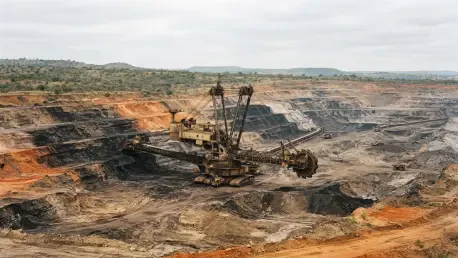

The abrupt halt has left hundreds of workers facing voluntary severance or potential layoffs as the company reviews its insolvent financial position. This sudden shutdown of operations at the Makhado coal mine in northern Limpopo, South Africa, represents a devastating intersection of corporate failure and environmental degradation. Positioned as a critical cornerstone of a massive industrial vision for the region, the coal mine’s collapse on October 1, 2026, occurred just five months after its initial opening. The project, managed by MC Mining and controlled by China’s Kinetic Development Group, has left behind a landscape marked by excavated earth and destroyed ancient ecosystems. This development has triggered an urgent national conversation regarding the viability of fossil-fuel-led industrialization in sensitive biospheres and the accountability of both private developers and public financial institutions. The scope of the crisis extends far beyond the immediate financial losses, reaching into the heart of one of South Africa’s most ecologically significant regions. As the dust settles over the dormant pits, the reality of a project built on shaky economic ground becomes impossible to ignore, forcing a reckoning with the true cost of extractive industries in a changing world.
Financial Volatility and Severe Liquidity Risks
The financial state of MC Mining is currently defined by a staggering imbalance between its tangible assets and its mounting debt obligations. Despite the ambitious scope of the Makhado project, the company recently reported a mere $170,000 in available cash and facilities, a figure that pales in comparison to the $54.4 million in current liabilities recorded at the end of the third quarter. This liquidity crisis underscores the instability of the operation, which failed to establish a sustainable commercial workflow despite shipping a small amount of coal to Mozambique earlier in the year. The disparity between the promised economic windfall and the actual cash reserves has raised serious questions about the project’s fundamental viability from its inception.
Auditors have repeatedly warned that the company may not be able to continue as a going concern, a sentiment that has grown more pervasive as operations remain suspended. While a recent $8 million bridge loan was secured from the Kinetic Development Group, these funds are earmarked specifically for restructuring and suspension costs rather than a return to active production. Without a significant influx of committed capital to restart the machines, the project remains a speculative venture that has left hundreds of employees facing a bleak future. This situation highlights how quickly a large-scale mining operation can turn into a financial liability when initial capitalizations are insufficient to weather the inevitable volatility of the global commodities market.
Ecological Destruction within Vhembe Biosphere Reserve
The Makhado coal mine is situated within the UNESCO-designated Vhembe Biosphere Reserve, a region of global significance known for its ancient baobabs and vital wildlife corridors. The open-pit mining process required the total removal of topsoil and surface vegetation, leading to the destruction of trees that had stood for over a thousand years. This irreversible loss of biodiversity has sparked intense outrage among environmental advocacy groups who monitor “Critical Biodiversity Areas” designated for their unique flora and fauna. The physical scarring of the landscape is a permanent testament to the cost of prioritizing short-term extraction over long-term ecological health.
Environmental critics argue that the company’s promises of future restoration are fundamentally insufficient to replace the complex ecological relationships of a millennium-old ecosystem. The removal of indigenous bushveld and the disruption of natural drainage patterns have altered the landscape in ways that cannot be undone by simple replanting efforts. This degradation impacts not only the local wildlife but also the human communities that depend on the land for sustainable livelihoods and the burgeoning biodiversity economy. The loss of these ecological services represents a hidden economic cost that is rarely factored into the balance sheets of mining firms, yet it remains a primary concern for the future of the Limpopo region.
Massive Gaps in Environmental Rehabilitation Funding
A primary concern following the mine’s suspension is the significant shortfall in funds set aside for land restoration and closure. While South African law requires mining operations to provide financial guarantees to cover these costs, there is a profound discrepancy between the current guarantees and the actual projected restoration expenses. Currently, only R82.1 million is guaranteed by the developer, while independent assessments from industry experts suggest that a comprehensive, whole-of-mine-life rehabilitation would require approximately R747 million. This massive funding gap leaves the environment at risk of being left in its current, ravaged state indefinitely.
If MC Mining enters formal bankruptcy or permanently abandons the site, the legal and financial burden of restoration will inevitably fall on the South African state. Under the Mineral and Petroleum Resources Development Act, the government is mandated to step in when a developer fails to fulfill its environmental obligations. This scenario effectively places taxpayers in the role of “funders of last resort,” forced to pay for the management of a degraded landscape that no longer offers any productive economic benefit. The lack of adequate financial provisioning during the permitting stage has exposed the public to hundreds of millions of rands in potential liabilities, highlighting a systemic flaw in how mining risks are assessed and mitigated.
Threatening Regional Water Security and Groundwater
The project is located in an already water-stressed region where local communities, agriculture, and wildlife must compete for extremely limited resources. Coal mining is an intensive process that requires vast quantities of water, and its byproduct often poses a severe threat to both water quantity and quality. Preliminary investigations near the site have already identified elevated arsenic concentrations in local wells, raising alarms about the possibility of long-term chemical leaching. This contamination of the groundwater supply could have devastating effects on the health of the local population and the productivity of nearby commercial farms.
If the site remains suspended without meticulous environmental management, it could become a permanent source of acid mine drainage and chemical runoff. In a region where water is arguably the most precious resource, the environmental legacy of a failed mine threatens to outweigh any short-term industrial gains achieved during its brief period of operation. The risk of long-term contamination to the regional watershed represents a socioeconomic threat that could undermine the stability of the agricultural sector for decades. Ensuring that the site does not become a source of toxic runoff is now a matter of urgent public concern as the dormant pits continue to be exposed to the elements.
Public Investment Accountability and IDC Scrutiny
The Industrial Development Corporation (IDC), a prominent South African state-owned enterprise, holds a 6.7% stake in the mine’s holding company and has provided significant financing since 2017. Despite the project’s precarious financial history and repeated requests for repayment extensions, the IDC continued to pour public funds into the venture. This deep involvement has drawn intense parliamentary scrutiny regarding the oversight of public investments in high-risk fossil fuel projects. Lawmakers are now questioning the due diligence performed by the IDC, particularly given the mine’s rapid collapse so soon after opening.
Critics argue that as a public shareholder, the IDC failed to prioritize environmental and social protections over the pursuit of speculative industrial growth. There are now growing calls from civil society for the corporation to withhold any further funding until a transparent, independent assessment of the environmental damage and closure costs is conducted. The current suspension casts a shadow of doubt on previous assurances that public investments would be fully recovered through coal sales. This situation serves as a stark reminder of the risks associated with using state resources to prop up extractive industries that lack a clear path to long-term financial sustainability or ecological compliance.
Systemic Patterns of Regulatory and Operational Failure
The troubles at Makhado are not an isolated incident but part of a broader pattern of failure for MC Mining, which was formerly known as Coal of Africa. The company has a history of operational setbacks and regulatory challenges, most notably at the Vele coal mine near the Mapungubwe World Heritage Site. Vele has remained largely idled for the better part of 15 years, operating for only a fraction of its intended lifespan. The Makhado project followed a similarly contentious path, with construction beginning even while legal appeals against its environmental authorizations were still being processed in court.
The fact that development was allowed to proceed during periods of legal uncertainty suggests a systemic failure in South Africa’s regulatory oversight. Regulators have been accused of failing to enforce the “precautionary principle,” which dictates that high-risk developments in sensitive areas should not proceed without absolute certainty regarding their safety and viability. This history of operational halts and environmental noncompliance indicates that the risks were well-documented and predictable long before the current collapse occurred. The lack of stringent enforcement has permitted a cycle of development and abandonment that leaves the landscape scarred and the economy destabilized.
Future Impacts on the Musina-Makhado Economic Zone
The Makhado coal mine was intended to be the primary coal supplier for the Musina-Makhado Special Economic Zone (MMSEZ), a massive industrial hub planned for northern Limpopo. This zone was envisioned to include energy-intensive power plants, coke production facilities, and smelting operations. However, the suspension of its primary fuel source calls the entire viability of the MMSEZ into question. Without a local, reliable supply of coal, the financial and logistical foundations of this planned industrial expansion are severely compromised, leading many to wonder if the project should be reimagined or abandoned.
Opponents of the industrial zone argue that the project is based on an outdated economic model that ignores the global shift toward renewable energy and the specific environmental constraints of the Limpopo region. The collapse of the Makhado mine highlights the potential for “economic collateral damage” to more stable sectors like tourism and agriculture, which provide more sustainable employment than a failing coal industry. Instead of driving regional growth, the failing coal infrastructure now threatens the very resources that sustain the local economy. This failure provides an opportunity for policymakers to reconsider the region’s development path, focusing instead on the burgeoning biodiversity economy and green energy alternatives.
Enforcing Responsibility and the Polluter Pays Principle
To address this crisis effectively, the South African government must prioritize the enforcement of the “polluter pays” principle by securing all necessary funds for immediate site stabilization. This will require a thorough and independent audit of the current restoration guarantees to ensure that they reflect the true cost of restoring the Vhembe Biosphere Reserve. Furthermore, the Industrial Development Corporation should be held accountable for its role in financing a project that lacked sufficient environmental and financial safeguards. Future mining permits in the region must be contingent upon a significantly higher threshold of financial security to prevent the state from becoming the ultimate payer for corporate failures.
The transition toward a sustainable economy necessitated a move away from speculative coal projects that endangered vital water and land resources. In the months following the collapse, authorities began to realize that the ecological scars left by the coal mine were more than just physical; they represented a failure of the regulatory framework to protect the public interest. Local communities expressed their relief when further clearing was halted, yet they remained burdened by the contamination risks. Decisions made during this period ultimately favored a shift toward a conservation-based economy, which proved to be more resilient than the extractive models of the past. The legacy of the Makhado coal mine served as a turning point, prompting a more cautious and transparent approach to industrial development in South Africa.