
While the Coalition cites big tech interest in nuclear power, these corporations are not providing the direct funding required for actual reactor construction. This fundamental disconnect lies at the heart of Australia’s intensifying debate over how to sustain the rapid expansion of its digital economy. As of 2026, the demand for cloud services and generative artificial intelligence has reached an inflection point, forcing policymakers to confront the limitations of the current energy grid. The Liberal and National parties have championed Small Modular Reactors, or SMRs, as the necessary evolution of the National Electricity Market, positioning them as the only viable path to providing constant, emission-free baseload power. However, this narrative often ignores the economic realities and regulatory hurdles that make such a transition nearly impossible in the short term. Critics suggest that the focus on nuclear power is a distraction from existing renewable projects that are already providing the backbone for the nation’s high-tech aspirations.
Rising Power Demands of Digital Infrastructure
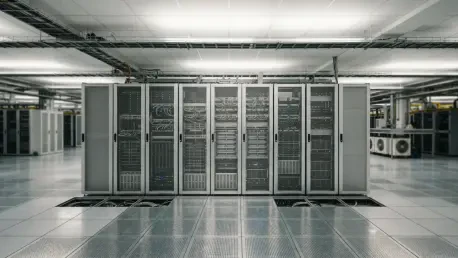
The Australian data center landscape is currently undergoing a period of unprecedented scaling, with nearly 400 facilities either operational or in various stages of planning. According to the Australian Energy Market Operator, the share of total grid load attributed to these facilities is projected to rise from under 3 percent to as much as 13 percent over the next decade. This spike is not merely a result of more servers but a direct consequence of the energy-intensive nature of artificial intelligence processing, which consumes several times more power than traditional data storage and retrieval. Meeting this demand requires a reliable and massive influx of electricity that can keep pace with the hyper-speed growth of the global technology sector. As the digital infrastructure expands beyond major metropolitan hubs into regional areas, the pressure on local energy networks is becoming a primary concern for state governments and industrial stakeholders who are balancing modernization with grid stability.
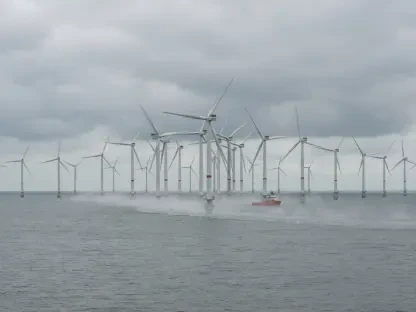
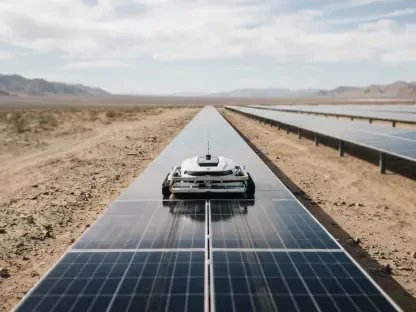
Despite the political rhetoric surrounding the need for a new nuclear framework, Australia’s data center industry is currently anchored in renewable energy, with approximately 70 percent of its electricity sourced from wind, solar, and hydro projects. This current trajectory demonstrates that the market has already begun a successful transition without the inclusion of nuclear power. Major operators are increasingly signing long-term agreements with renewable providers to meet their internal carbon-neutrality targets, suggesting that the industry’s preference is for technologies that can be deployed rapidly. The Coalition’s argument that nuclear is a “silver bullet” contradicts the momentum of these existing green investments, which have proven to be more adaptable to the decentralized nature of modern server farms. By framing nuclear as an essential requirement for the future, proponents risk undermining the established successes of the renewable sector, which continues to lower the levelized cost of energy while improving reliability.
The Disconnect Between Corporate Hype and Reality
While high-profile announcements from major technology firms often mention interest in nuclear energy, a closer inspection reveals a distinct lack of capital commitment toward the actual development of reactors. Companies like Microsoft and Amazon have engaged with SMR developers primarily through non-binding agreements or Power Purchase Agreements that shift the financial burden and operational risk onto the energy provider. This strategy allows tech giants to claim future sustainability goals in press releases without actually funding the multibillion-dollar construction costs associated with nuclear infrastructure. These corporations are essentially waiting for the market to mature before committing to offtake deals rather than acting as the primary financiers of the technology. This cautious approach highlights a significant gap between public relations “greenwashing” and the pragmatic reality of building a nuclear industry from scratch. Without a massive injection of direct private capital, the dream of a nuclear-powered digital economy remains a theoretical exercise.
Global energy statistics further diminish the argument that Australia is lagging behind a worldwide nuclear-led digital revolution. Data from the International Energy Agency indicates that while data center electricity use is expected to double globally by 2030, nuclear energy will only provide about 6 percent of the additional power capacity required to meet this surge. Most of this nuclear contribution is concentrated in nations like the United States and China, which already possess established regulatory frameworks, supply chains, and specialized workforces. For an emerging market like Australia, the absence of an existing nuclear industry makes the adoption of SMRs a far more complex and expensive undertaking than in countries with decades of experience. The IEA’s projections confirm that renewables remain the dominant choice for new energy capacity worldwide, accounting for the vast majority of growth in the sector. Attempting to pivot toward a niche technology like SMRs would place Australia at odds with global trends, potentially isolating the grid.
Legal and Social Barriers to Implementation
The legal landscape presents an immediate and formidable barrier to the implementation of any nuclear energy strategy in Australia. Currently, federal and state laws in New South Wales, Victoria, and Queensland strictly prohibit the construction and operation of nuclear power plants. Repealing these bans would require a level of political consensus that has remained elusive for decades, especially given the localized nature of energy projects. Public sentiment also remains a critical factor; recent polling suggests that nuclear facilities are often less popular than the data centers they are intended to power. This creates a “dual development” challenge where local communities might oppose the infrastructure on two fronts: the perceived noise and land use of a massive server facility and the safety concerns surrounding a nuclear reactor. Even if the legislative hurdles were cleared, the social license required to build nuclear plants in proximity to populated areas would take years of intense community engagement, resulting in significant delays and costs.
Technologically, the Small Modular Reactors being promoted as a modern solution do not yet exist in a commercially viable, mass-produced form. While proponents often point to small reactors in Russia or China as proof of concept, these examples do not meet the standard definitions of modularity, which requires factory-built components that can be quickly assembled on-site. Most operational small-scale reactors are bespoke projects that took decades to move from the drawing board to full functionality. For Australia to adopt a technology that is still in its infancy would be a high-risk gamble with national energy security. The timeline for developing a domestic nuclear industry, including the necessary safety regulations, waste management protocols, and technical expertise, is estimated to take at least twenty years. This long lead time is fundamentally incompatible with the fast-moving needs of the technology sector, where hardware cycles and infrastructure expansions occur every few years. Investing in a non-existent technology today provides no relief for current pressures.
Why Is This Problematic for Tech?
From an economic standpoint, nuclear energy is the most expensive electricity generation option available in the current Australian market. The CSIRO GenCost report consistently identifies the levelized cost of energy for SMRs as being substantially higher than that of wind and solar, even when factoring in the cost of battery storage and grid firming. Levelized costs for nuclear are estimated to range between four hundred and seven hundred dollars per megawatt-hour, which is significantly more than the cost of renewable alternatives. Furthermore, both data centers and nuclear reactors are characterized by their high water consumption for cooling purposes. In a nation prone to severe droughts and water scarcity, the co-location of these two “thirsty” technologies could place an unsustainable strain on regional water supplies. This environmental reality adds another layer of complexity and cost to the proposal, as operators would likely need to invest in expensive desalination or closed-loop cooling systems. For data center firms looking to minimize overhead, nuclear power is a poor choice.
In light of the evidence, the pursuit of nuclear-powered data centers serves more as a theoretical distraction than a viable solution for Australia’s energy transition. To ensure the continued growth of the digital economy, the nation must identify actionable strategies that align with both market readiness and environmental targets. This includes accelerating the rollout of large-scale renewable projects and investing in the transmission infrastructure needed to connect regional data hubs to the existing grid. Rather than waiting decades for unproven reactors, industry stakeholders should prioritize the expansion of battery storage and demand-management technologies that provide flexibility and reliability. Government policy should aim to streamline the approval process for green energy projects while maintaining strict environmental standards. By doubling down on the proven success of wind and solar, Australia can maintain its competitive edge in the global AI race without incurring massive financial costs. The future of digital infrastructure depends on energy that is fast and scalable.