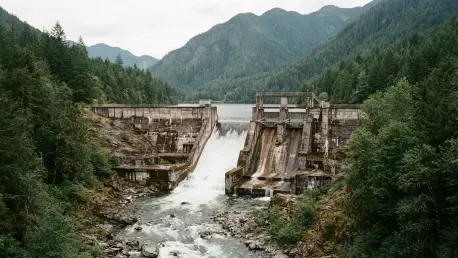

The environmental review process for the Salida facilities highlights the administrative transparency required when managing industrial sites on federal forest lands. This specific regulatory inquiry centers on the Public Service Company of Colorado’s proposal to formally surrender its license for the Salida Hydro Nos. 1 & 2 project, located in Chaffee County. These facilities have sat dormant for several years, no longer contributing to the regional energy grid or serving the functional needs of the surrounding communities. As they occupy a sensitive footprint within the Salida Ranger District of the Pike-San Isabel National Forests, their decommissioning requires a coordinated federal response to ensure that the removal of industrial materials aligns with the long-term conservation goals of the United States Forest Service. The Federal Energy Regulatory Commission is currently evaluating the logistical and ecological implications of dismantling these sites, marking a significant transition for Colorado’s high-country river management and local resource preservation.
Analyzing the Decommissioning and Restoration Goals
Managing Infrastructure Removal: Initial Phase
The proposed decommissioning plan is far from a simple abandonment; instead, it focuses on a deliberate and managed exit from the mountain sites. At the core of the strategy is the complete removal of the Salida U2 facilities and the remaining components of the Salida U1 powerhouse and its associated substation. This involves the systematic dismantling of concrete structures, electrical equipment, and metal components that have occupied the river corridor for decades. By removing these physical barriers, the project aims to clear the way for a more natural landscape that is free from the remnants of industrial decay. The logistics of this removal require careful planning to ensure that heavy machinery does not cause undue harm to the surrounding forest during the extraction process. Every piece of salvaged material must be hauled away according to federal standards, ensuring that the footprint of the energy project is completely erased from the national forest landscape over the coming months.
Habitat Recovery: Restoring the Corridor
Beyond the mere demolition of buildings and equipment, the project places a heavy emphasis on active land restoration to return the affected streambanks to their natural state. This effort is specifically designed to improve riparian habitats that were previously disturbed or obstructed by the hydropower infrastructure. By rehabilitating these areas, the plan seeks to restore natural flow regimes along the South Arkansas River corridor, which is vital for the health of local fish populations and native vegetation. Successful restoration involves stabilizing the soil, replanting indigenous flora, and ensuring that the water can once again move through its original channels without artificial interference. This phase of the project represents a commitment to long-term ecological health, moving past the industrial era to create a self-sustaining environment. As the vegetation takes root and the riverbed settles into its natural form, the area will once again provide a seamless habitat for the diverse species of the Colorado high country.
Examining the Regulatory and Environmental Review
Assessing the Findings: Environmental Impact
The federal review of the decommissioning project is strictly governed by the National Environmental Policy Act, which requires a thorough analysis of potential environmental consequences before any action is taken. Commission staff recently finalized a comprehensive Environmental Assessment to weigh the impacts of removing the industrial footprint against the long-term benefits of ecological restoration. This document serves as the technical backbone of the decision-making process, providing a detailed look at how the dismantling of the Salida sites will affect water quality, soil stability, and local wildlife. The assessment process involved rigorous data collection and site inspections to ensure that every potential risk was identified and mitigated. By adhering to these federal standards, the review ensures that the project proceeds with a high degree of scientific integrity. This thoroughness is essential for maintaining public trust, as it demonstrates that the government is taking every possible precaution to protect the public lands.
Assessment Conclusions: Evaluating the Benefits
The commission’s assessment concluded that the decommissioning and restoration plan does not constitute a major federal action that would negatively impact the quality of the human environment. This finding is pivotal, as it suggests that the long-term benefits of habitat reconnection and the removal of industrial debris far outweigh the temporary disturbances caused by the physical dismantling of the sites. While the construction phase will inevitably involve noise and temporary site access restrictions, these are viewed as minor inconveniences when compared to the permanent ecological gains. The findings also highlight the removal of potential safety hazards associated with abandoned structures, further justifying the license surrender. As the primary document for the final regulatory decision, the assessment provides a clear pathway forward for the Public Service Company of Colorado to begin the restoration work. This conclusion reaffirms the idea that returning a river to its natural state is an environmentally sound strategy for retired energy sites.
Encouraging Public Participation and Transparency
Participating in Review: The Public Window
The Federal Energy Regulatory Commission has emphasized transparency throughout the review process by inviting local residents, conservationists, and recreationists to share their views on the proposal. A public comment period has been established to ensure that the community has a direct voice in the future of the South Arkansas River and Fooses Creek. This open-door policy allows stakeholders to submit feedback through the commission’s electronic filing systems, which makes the process more accessible than traditional paper-based methods. By encouraging public participation, the commission aims to identify any unique local concerns that may not have been captured during the initial environmental assessment. This democratic approach ensures that the final decision is informed by a diverse range of perspectives, including those who use the river for fishing, rafting, or simply enjoying the scenery. The involvement of the public is a critical safeguard that ensures federal land management remains responsive to the needs of the community.
Participating in Review: Formal Submission Rules
Interested parties have until November 9, 2026, to submit their formal comments under docket number P-2275-052 to ensure their input is included in the permanent record. To make this process as straightforward as possible, the commission has provided direct contact information for project managers and the Office of Public Participation. These resources are designed to help the community navigate the complexities of federal filings, helping them balance the preservation of industrial heritage with the modern goals of river reclamation. The commission recognizes that the decommissioning process can be complex, and by offering these support services, they hope to foster a more informed and engaged citizenry. This level of administrative support is particularly important in a region like Chaffee County, where the relationship between the people and the land is deeply intertwined. Providing clear channels for communication ensures that all voices are heard before the final orders are issued for the removal of the hydropower infrastructure.
Reflecting Broader Trends in River Reclamation
The decommissioning of the Salida sites reflects a growing movement across the United States to reclaim rivers from aging and inefficient energy infrastructure that has reached the end of its utility. As maintenance and relicensing costs rose, many utilities chose to restore fish passages and riparian ecosystems, effectively enhancing the recreational and ecological value of local waterways. In the case of Chaffee County, the collaborative effort between federal regulators and the public service company demonstrated how obsolete industrial footprints could be successfully transitioned back into thriving natural habitats. Looking forward, this project serves as a blueprint for other rural communities facing similar decisions regarding retired power plants. The emphasis moved away from preservation for its own sake and toward active ecological stewardship. By prioritizing the health of the South Arkansas River, the decision-makers ensured that the waterway would remain a vital resource for generations, proving that the removal of the past is often the best way to secure the future.