
Oklo Inc. has secured fuel capacity for up to five of its Aurora powerhouses starting in 2029, mitigating a major single-point-of-failure risk in the advanced nuclear sector through its partnership with Centrus. This development follows a landmark tripartite agreement finalized in late 2024, which aligns the interests of a fast-fission technology pioneer, a domestic uranium enrichment leader, and a global tech titan. The collaboration addresses the critical shortage of High-Assay Low-Enriched Uranium, a fuel variant that provides the high energy density necessary for smaller, more efficient reactor designs. By facilitating the financial architecture for this supply chain, Meta Platforms has fundamentally altered the role of corporate energy procurement, moving beyond simple carbon credits to direct industrial investment. This shift signifies a maturing sector where the demand for consistent, carbon-free baseload power for artificial intelligence is driving unprecedented capital flows into domestic nuclear infrastructure.
Meta Acts as a Strategic Infrastructure Financier
Meta’s engagement in this tripartite deal represents a sophisticated evolution of the corporate power purchase agreement model traditionally seen in the renewable sector. Rather than waiting for a facility to be commissioned and then purchasing the output, Meta has adopted the role of a project financier by releasing funding from escrow directly to Centrus Energy. This capital serves as a significant credit toward Oklo’s fuel orders, effectively de-risking the fuel procurement phase for the technology provider while securing future energy access for the tech giant. This front-loading of capital is a strategic necessity for Meta, which faces a shift in its financial profile as it continues to pour tens of billions of dollars into specialized hardware. By providing this early-stage funding, the company ensures that the necessary energy infrastructure will be ready to support its hyperscale data centers, transforming what was once a utility expense into a primary capital expenditure.
The financial logic behind Meta’s proactive involvement is grounded in the shifting dynamics of the technology industry’s free cash flow. While the company maintained a strong positive cash position through 2025, projections suggest a move toward negative territory by 2027 as the cost of developing and training massive artificial intelligence models continues to escalate. By locking in energy security through prepayments now, Meta is insulating itself against potential future energy shortages that could throttle its computational growth. This strategy highlights a growing realization among tech leadership that software and hardware advancements are meaningless without the underlying power grid to sustain them. The partnership with Oklo and Centrus demonstrates that the most influential players in the digital economy are now willing to underwrite the physical risks of nuclear fuel enrichment and reactor construction to guarantee their dominance in the AI era.
Navigating the Financial Reality of Nuclear Construction
While the fuel agreement provides a clear path forward for supply chain security, Oklo continues to navigate a challenging economic landscape defined by high cash burn and the inherent risks of pioneering new technology. The company’s original capital-light business model has faced scrutiny as the projected costs for nuclear construction have seen significant revisions in the current market. Specifically, industry analysts have adjusted the expected capital expenditure for the Aurora powerhouses from an initial four thousand dollars per kilowatt to approximately seven thousand dollars. This nearly seventy-five percent increase reflects the broader inflationary pressures and technical complexities associated with first-of-a-kind reactor deployments. For Oklo, managing these rising costs is critical to maintaining investor confidence as the company works to transition from a venture-backed technology firm to a fully operational energy provider with a stable and predictable revenue stream.
To bridge the gap between development and commercial operation, Oklo has turned to the equity markets, resulting in a notable increase in its diluted share count from approximately ninety-eight million in 2024 to over one hundred and forty-six million in 2025. This dilution is a direct consequence of the massive investment required to reach the 2029 delivery milestones, as evidenced by the one-billion-dollar at-the-market offering announced recently. Financial projections for the period between 2026 and 2028 indicate a deepening deficit in free cash flow, with figures expected to reach negative one billion dollars by the end of that window. These metrics underscore the capital-heavy reality of the nuclear sector, which stands in contrast to the rapid-growth models of typical Silicon Valley startups. For the Aurora reactors to be economically viable, Oklo must prove that its standardized design and manufacturing process can eventually lower these costs and provide a scalable solution for global energy needs.
The Strategic Renaissance of Domestic Nuclear Energy
The collaboration between these three entities is indicative of a broader trend where the technology sector has become the primary catalyst for a nuclear energy renaissance. As generative artificial intelligence models require exponentially more electricity to process and train, tech giants are confronting the limitations of existing energy grids and the intermittent nature of renewable sources. While wind and solar remain essential to carbon neutrality goals, they often lack the 24/7 baseload reliability required for hyperscale data centers that must remain operational at all times. This gap has led companies to reconsider nuclear power as the only carbon-free solution capable of providing the consistent density required for modern computing. Meta’s move to fund the fuel supply chain directly is a powerful signal that the industry is no longer content to wait for utilities to catch up, but is instead taking an active role in shaping the energy landscape of the future.
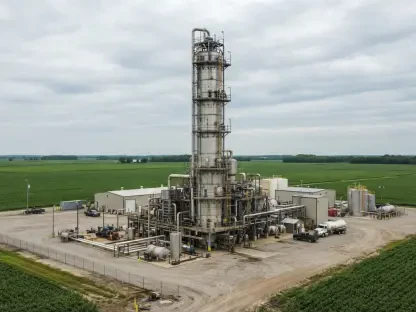
Beyond the immediate needs of data centers, this partnership addresses the critical strategic goal of onshoring the nuclear fuel cycle and reducing dependence on foreign energy sources. The production of High-Assay Low-Enriched Uranium has historically been concentrated in limited international markets, creating a potential bottleneck for domestic reactor developers. By leveraging private capital from the tech sector to support the expansion of Centrus Energy’s American Centrifuge Plant in Ohio, this deal helps rebuild the domestic enrichment capacity necessary for national energy security. This onshoring trend is being driven by the realization that energy independence and technological leadership are inextricably linked in the twenty-first century. As more technology firms follow Meta’s lead, the infusion of private funding into the nuclear sector could accelerate the development of a robust domestic supply chain that supports not only the tech industry but also the broader push for a cleaner grid.
Future Milestones: Navigating the Advanced Energy Supply Chain
The alliance between Oklo, Centrus, and Meta established a significant precedent for how the private sector successfully bridged the gap between technological innovation and industrial scale. This partnership addressed the immediate challenges of fuel scarcity by securing a stable supply of HALEU, which was previously a major hurdle for the commercialization of fast-fission reactors. By utilizing a prepayment structure for future electricity, the participants demonstrated a new method for financing the heavy infrastructure required for the artificial intelligence era. This arrangement moved the conversation beyond environmental pledges and into the realm of concrete capital deployment for the domestic energy supply chain. Ultimately, the deal provided a blueprint for how large-scale energy consumers and technology developers coordinated their efforts to overcome the systemic risks inherent in modernizing the power grid, ensuring that the necessary resources were available for the next generation of reactors.
Looking ahead, the successful maturation of this partnership required a rigorous focus on operational execution and the stabilization of the broader energy ecosystem. Stakeholders prioritized the alignment of regulatory timelines with industrial expansion to prevent bottlenecks that could have delayed the delivery of the 2029 powerhouses. It was essential for the industry to adopt standardized construction practices to mitigate the rising costs that historically plagued large-scale nuclear projects. Additionally, other technology leaders evaluated similar prepayment frameworks as a means to secure long-term energy stability while supporting the growth of domestic fuel enrichment. The success of this model encouraged a shift toward more integrated energy strategies where data center planning and power generation were treated as a single, cohesive development process. By fostering closer ties between high-performance computing and advanced nuclear energy, the sector built a more resilient and sustainable foundation for the digital economy.