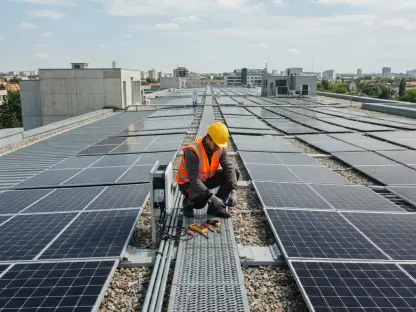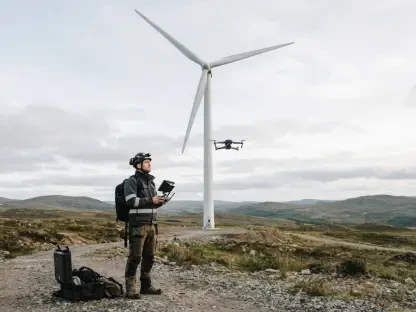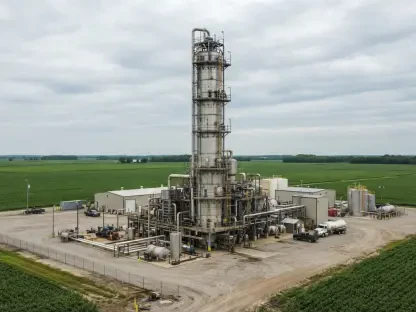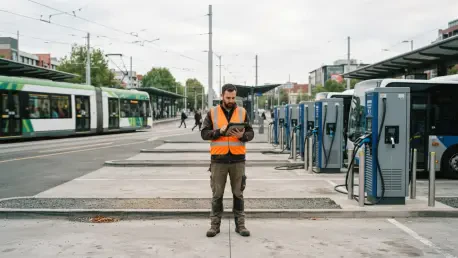

Statistical analysis of power systems indicates that predictive modeling can reduce system frequency deviations by thirty-five percent through coordinated management frameworks as the global energy landscape undergoes a massive shift while distribution networks integrate electric vehicles and renewable energy resources. This evolution requires a move away from traditional management toward intelligent optimization and coordinated control. A comprehensive review of over 270 studies highlights the need to harmonize these factors to ensure grid stability while meeting growing environmental goals. The primary challenge lies in balancing mobile electrical loads, which are often high-consumption and unpredictable, with variable distributed generation from weather-dependent sources like wind and solar. Without advanced management, the simultaneous surge in charging demand and intermittent energy production can destabilize infrastructure. Advanced strategies aim to transform electric vehicles from passive burdens into active, flexible energy resources capable of supporting the grid during peak times, turning a potential liability into a robust asset for the modern electrical era.
Managing Operational Stresses and Bidirectional Energy Flow
The rapid adoption of electric mobility creates unique operational stresses, particularly when charging cycles coincide with existing peak demand hours in residential and commercial sectors. This strain significantly affects local transformers and feeders, potentially leading to thermal overloads and reduced equipment lifespan if left unmanaged. Simultaneously, renewable energy sources such as solar and wind do not always produce power when it is most needed by the consumer, creating a significant mismatch between supply and demand. This discrepancy requires a sophisticated buffer system to maintain equilibrium and prevent the degradation of power quality. As more vehicles plug into the network simultaneously, the volatility of the grid increases, necessitating a shift from rigid distribution models to more fluid, responsive architectures that can handle high-density load clusters without triggering widespread system failures or requiring immediate, expensive hardware upgrades.
Coordinated management frameworks, such as Vehicle-to-Grid (V2G) and Grid-to-Vehicle (G2V) systems, allow mobile batteries to act as vital storage units that respond to real-time grid conditions. These systems enable vehicles to exchange both active and reactive power, absorbing excess renewable energy during periods of high production, such as midday solar peaks, and injecting it back during shortages. This bidirectional flow effectively smooths the net load curve and prevents severe degradation of the voltage profile across the network. By treating the collective battery capacity of a vehicle fleet as a virtual power plant, operators can mitigate the impact of intermittent renewables. This approach not only stabilizes voltage but also provides a secondary revenue stream for vehicle owners, encouraging participation in demand-response programs. The integration of these four-quadrant operations ensures that the distribution network remains resilient even as the penetration of decentralized energy sources continues to grow.
Mathematical Optimization: Measuring Efficiency and Hybrid Performance
Optimizing a distribution network requires rigorous mathematical formulations to calculate substation power intake and electrical losses with high precision. Total intake is determined by combining base generation with the output of various distributed generation units, which are categorized by their specific ability to deliver real or reactive power. Accurate modeling ensures that the grid can handle the influx of diverse energy sources without compromising efficiency or safety. Engineers utilize detailed power flow equations to predict how new charging stations will affect line resistance and voltage magnitudes at the edge of the network. These calculations are essential for identifying potential bottlenecks before they manifest as actual outages. By quantifying the relationship between real power injection and system stability, grid operators can establish firm limits on how much energy can be safely extracted from or returned to the distribution feeders at any given time.
The practical application of these theories is evident in multi-source hybrid systems, such as those combining fuel cells with lithium-ion batteries and supercapacitors for heavy-duty transit. Case studies on hybrid tramway systems, including those deployed in South America, demonstrate that intelligent power-sharing can significantly reduce fuel consumption and operational costs. These systems utilize a combination of stationary renewables, such as hydrokinetic and biomass installations, to provide a blueprint for how different energy carriers can work together to enhance the reliability of broader distribution networks. By applying automated supervisory systems to manage the interaction between hydrogen consumption and battery state-of-charge, these transit projects have achieved significant reductions in net present operational costs. This empirical evidence supports the broader transition toward multi-carrier energy hubs that prioritize efficiency and transit reliability while reducing the overall carbon footprint of municipal infrastructure.
Intelligent Control Strategies and Grid Stabilization
Model Predictive Control has emerged as one of the most effective strategies for stabilizing modern grids by anticipating future states rather than merely reacting to current ones. By using dynamic forecasting and constraint optimization, these algorithms can reduce frequency deviations and mitigate total harmonic distortion across the entire distribution feeder. These predictive frameworks also help extend the lifespan of vehicle batteries by ensuring that charging and discharging cycles are managed gradually rather than through sudden, damaging shifts in power flow. By calculating the optimal trajectory for power exchange over a rolling time horizon, predictive controllers can account for predicted weather changes and scheduled vehicle departures. This foresight allows the system to prepare for surges in demand by pre-charging batteries or throttling non-essential loads, thereby maintaining a steady voltage profile even during the most volatile periods of renewable energy generation.
The integration of artificial intelligence further enhances the responsiveness of these systems to random events, such as sudden changes in cloud cover affecting solar arrays or unexpected spikes in EV charging. Studies show that AI-driven predictive control improves system agility by nearly twenty-five percent compared to traditional, deterministic methods. This increased responsiveness is critical for maintaining a steady flow of electricity in a landscape characterized by high volatility and consumer-driven fluctuations. Machine learning models can analyze historical data to predict driver behavior, allowing for more personalized and efficient charging schedules that do not inconvenience the user. Furthermore, AI-enabled systems can detect anomalies in the grid faster than human operators, initiating protective measures within milliseconds to isolate faults. This level of automated intelligence is essential for managing the complexity of a decentralized energy economy where millions of devices interact in real-time.
Emerging Research Trends and Frontier Digital Architectures
A statistical breakdown of current literature reveals that while conventional analytical methods still prevail, intelligent AI and hybrid optimization techniques are growing rapidly in both frequency and sophistication. Research priorities have shifted heavily toward voltage control and energy management, which now account for the majority of recent studies published in the field. This trend reflects the urgent need for tools that can handle the complexity of modern smart grids where the number of active nodes is exponentially higher than in traditional systems. Scholars are increasingly focusing on the intersection of cybersecurity and grid management, recognizing that a more connected system is also more vulnerable to digital threats. The transition toward intelligent optimization is not just a technological choice but a necessary response to the massive data volume generated by smart meters, sensors, and connected vehicles that now populate the modern electrical infrastructure.
Frontier technologies like digital twins and federated learning are revolutionizing how operators monitor and manage energy assets in real-time. Digital twins allow for the simulation of operational scenarios in a virtual environment, enabling predictive maintenance and stress testing without risking physical infrastructure. Meanwhile, federated learning addresses data privacy by allowing AI models to be trained across different locations without sharing sensitive consumer information, which is a key requirement for public trust. Blockchain technology and edge computing also play pivotal roles in decentralizing the grid by moving authority to the perimeter of the network. Blockchain enables secure, peer-to-peer energy trading between vehicle owners and the grid, reducing administrative costs and empowering small-scale producers. Edge computing allows for data processing near the physical source, such as at a charging station, which ensures sub-second decision-making and prevents local network congestion that could lead to cascading failures.
Interoperability Standards and Resilience against Uncertainty
For a smart grid to function effectively, hardware and software from different manufacturers must communicate seamlessly using a unified language. International standards like IEC 61850 and ISO 15118 are essential for substation automation and “Plug-and-Charge” capabilities, respectively. These protocols ensure that encrypted communication and power transfers are standardized across the industry, facilitating global adoption and ensuring that an EV from one manufacturer can charge safely and intelligently at any station. Without these standards, the grid would remain a fragmented collection of proprietary islands, unable to pool resources for collective stability. The enforcement of the Open Charge Point Protocol has also simplified the management of large charging networks, allowing operators to monitor energy flow and equipment health regardless of the specific hardware used. This interoperability is the backbone of a reliable and scalable energy ecosystem.
The uncertainty of human behavior and weather patterns remains a significant hurdle in grid optimization that requires new approaches to risk management. “Uncertainty-aware” optimization techniques use probabilistic modeling to account for varying vehicle arrival times and departure deadlines, ensuring that the grid remains resilient even when faced with unpredictable fluctuations. These strategies allow the system to maintain a safety margin that can absorb unexpected shifts in energy production or consumer usage. Resilient optimization also protects the grid from extreme weather events through strategies like intentional microgrid islanding. This allows specific sections of the grid to operate independently during a larger system failure, preventing a total blackout. Furthermore, electric vehicle batteries can be used for automated restoration, providing the necessary power to jump-start the system after a major disruption. These methods ensure that even in the face of nature’s unpredictability, the energy supply remains continuous.
Addressing Implementation Gaps and Strategic Policy Evolution
Researchers established that a significant gap remained between laboratory models and real-world utility networks, as many early algorithms were tested only on simplified systems. The transition to practical application required the development of physics-informed AI models that provided better explainability for grid operators who needed to trust automated decisions during high-stakes events. It became clear that real-time latency and the long-term physical cost of battery degradation were often overlooked in theoretical economic models, creating barriers to widespread commercial use. Consequently, the industry moved toward more robust hardware-in-the-loop testing to validate how these complex algorithms behaved in environments with thousands of active nodes. The focus shifted from pure optimization to practical reliability, ensuring that every digital command translated into a safe and predictable physical response within the electrical infrastructure.
The transition to a carbon-neutral grid necessitated a coordinated policy effort that went beyond simple technological innovation. Regulators recognized that standardized market compensation tariffs served as the primary incentive for vehicle owners to participate in grid services. By rewarding users for the wear and tear on their batteries, authorities encouraged the mass participation needed to balance the grid effectively during peak hours. This phase of development also saw the modernization of physical metering infrastructure to support the high-speed data exchange required for coordinated charging. Policy frameworks were updated to allow for peer-to-peer energy trading, which decentralized the market and reduced the reliance on large, centralized power plants. Through these combined efforts, the integration of electric vehicles and renewable energy moved from a technical challenge to a cornerstone of a sustainable and resilient energy future that prioritized both efficiency and consumer empowerment.