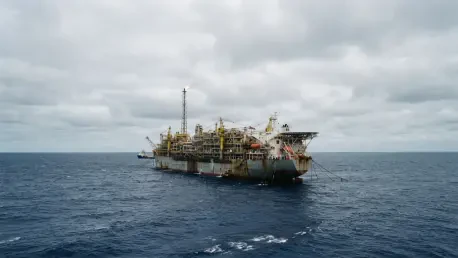

As Guyana prepares for the Longtail project to go online in 2030, the nation continues to see a record-breaking pace of development within its deepwater offshore territories. This momentum is currently defined by a $12.5 billion final investment decision for the Longtail project, which serves as the eighth major offshore development in the region. Led by a consortium comprising ExxonMobil, Hess Guyana Exploration, and CNOOC Petroleum Guyana, the venture represents a significant move toward the extraction of non-associated gas. Unlike previous projects that were heavily weighted toward oil, Longtail targets condensate-rich reservoirs that promise to reshape the local energy landscape. This shift reflects a strategic effort to maximize the economic value of the Stabroek block by diversifying the types of resources being harvested. As production levels in other fields reach new heights in 2026, the introduction of large-scale gas production provides a crucial pathway for industrial growth.
Strategic Infrastructure and Technical Capabilities
Engineering the Next Generation of Gas Recovery
The technical core of this massive undertaking involves the deployment of a specialized Floating Production Storage and Offloading vessel, which is being designed and constructed by SBM Offshore. This vessel is expected to process approximately 1.2 billion standard cubic feet of gas every day, marking a substantial increase in the region’s overall processing capacity. In addition to gas, the facility will manage the production of 250,000 barrels of condensate daily, ensuring a high-yield output of liquid hydrocarbons. This dual-focus processing capability allows the consortium to address multiple market demands simultaneously while optimizing the footprint of offshore operations. The choice of FPSO technology reflects a commitment to utilizing proven, scalable solutions that can withstand the unique environmental conditions of the deepwater Atlantic. By integrating advanced filtration and compression systems, the project aims to minimize carbon intensity while maximizing the recovery of gas and liquids.
Managing Subsea Logistics and Reservoir Pressure
Complementing the offshore vessel is an expansive subsea infrastructure network designed to maintain reservoir integrity over a projected 30-year lifecycle. This network will consist of 45 wells, with 27 dedicated to production and 18 utilized for gas injection to ensure efficient pressure management within the reservoirs. Saipem has been tasked with the engineering and installation of these complex subsea structures, which must operate reliably at extreme depths. The inclusion of injection wells is a critical design feature that facilitates the recovery of an estimated 776 million barrels of condensate during the life of the field. This engineering strategy highlights a transition toward more complex resource management techniques compared to earlier oil-only developments. The logistics of installing such a vast array of equipment require precise coordination between international suppliers and local support services. This collaborative approach ensures that subsea components are integrated with the FPSO.
Economic Integration and Regional Energy Security
Supporting Domestic Industry and Grid Modernization
Beyond the immediate export potential, the Longtail project is a cornerstone of the domestic strategy to modernize the national energy grid and support industrial growth. The Guyanese government is advancing plans for a second offshore gas pipeline that will transport resources directly to the mainland to fuel power plants and industrial zones. This infrastructure is intended to provide a stable and affordable energy supply, which is necessary for the development of local industries such as fertilizer production and mineral processing. By reducing the cost of electricity, the project aims to improve the standard of living for the population while attracting foreign direct investment into the manufacturing sector. This domestic focus ensures that the benefits of offshore wealth are felt across all levels of the economy rather than being limited to export revenues. As the nation approaches a total output of one million barrels of oil per day in 2026, natural gas provides the stability needed for a powerhouse economy.
Strategic Frameworks for Sustainable Resource Management
The project stakeholders prioritized the establishment of a robust regulatory framework to manage the influx of natural gas safely. They determined that the integration of localized supply chains was essential for long-term viability and economic resilience. Industry analysts concluded that focusing on vocational training provided the necessary human capital for this complex transition. The government finalized plans for rigorous environmental monitoring to ensure the Atlantic ecosystem remains protected during decades of production. These decisions established a foundation for Guyana to move toward a truly diversified economy that values both energy and environmental stewardship. Leaders identified that the synergy between offshore production and onshore processing was the most effective way to secure national energy independence. The strategy emphasized that collaborative investment models were the key to unlocking the full potential of the Stabroek block. Ultimately, the industry recognized that corporate goals matched national priorities.