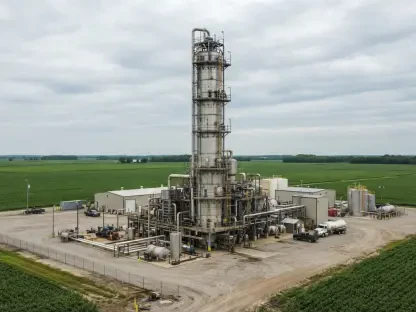

The integration of Edge User Plane Function technology allows data processing to occur physically closer to wind farms, ensuring high security and low latency. In a landmark development for the global renewable energy sector, China Unicom’s Inner Mongolia Branch, in strategic partnership with Huawei and the Inner Mongolia Energy Group, successfully implemented a large-scale 5G-Advanced and AI smart wind power solution. Officially highlighted in Erenhot on November 17, 2026, this initiative represents a significant shift in how renewable energy infrastructure is managed across vast, rugged terrains. The project initially covers twenty-one wind farms and is slated for an expansive rollout across more than fifteen hundred wind turbines. This collaboration serves as a technological benchmark, demonstrating a replicable and scalable model for high-quality green energy development under ambitious carbon neutrality frameworks designed to peak emissions while fostering regional growth.
Modern Operations: Addressing Hazards and Connectivity
The transition to intelligent operations has become a necessity rather than a luxury as wind farms move into increasingly remote and geographically challenging areas of Inner Mongolia. Historically, wind farm maintenance was a labor-intensive, hazardous, and inefficient process that placed significant strain on human resources. Technicians were frequently required to climb hundred-meter-high towers to perform manual inspections of massive turbine blades with the naked eye. These inspections often took place in cramped spaces and harsh weather conditions, leading to significant safety risks and high labor costs that slowed down the entire energy production cycle. Furthermore, the sheer physical scale of these installations meant that many small defects went unnoticed until they became critical failures, necessitating expensive repairs and resulting in significant downtime for the energy grid which could have been avoided with more modern monitoring methods.
Traditional communication infrastructures, such as 4G networks or physical fiber-optic cables, faced severe limitations when trying to bridge the gap between remote turbines and central control hubs. 4G networks lacked the necessary uplink bandwidth to transmit high-definition data, and fiber deployment in rugged, mountainous terrain was often prohibitively expensive and difficult to maintain over long distances. Signal dead zones inside the massive metal structures of turbine towers further hampered communication, preventing real-time data exchange during critical maintenance windows. To solve these issues, the project utilized 5G-A macro base stations and pico Remote Radio Units to provide seamless wireless coverage. These low-power, microcellular base stations ensure that communication remains uninterrupted regardless of structural interference, providing a stable uplink speed of at least forty megabits per second per turbine for constant monitoring.
Intelligent Systems: Streamlining Maintenance via Aerial Tools
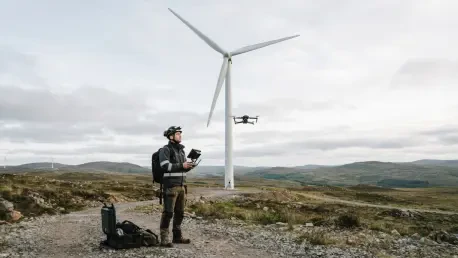
The synergy between high-speed connectivity and artificial intelligence has enabled a new era of autonomous maintenance that replaces dangerous manual checks with precision robotics. Equipped with 4K high-definition cameras, drones now perform blade inspections by flying autonomously along pre-programmed paths, transmitting crystal-clear footage to control centers in real time. This technological shift eliminates the need for engineers to climb towers for routine checks, dramatically improving workplace safety while ensuring that inspections are conducted more frequently. AI algorithms are specifically trained to detect and categorize blade defects with a level of precision that exceeds human capability, identifying hairline fractures or surface erosion that the human eye might miss. By shortening inspection cycles and providing accurate data, the system allows for proactive maintenance, ensuring that minor issues are addressed before they lead to catastrophic equipment failures.
Managing the enormous volume of data generated by 4K high-definition drone inspections requires localized intelligence to avoid overwhelming central network infrastructures. By utilizing Edge User Plane Function technology, the architecture moves data processing and traffic control to the network edge, physically closer to the wind farms where the information is generated. This reduction in the load on the core network ensures the immediate responsiveness required for real-time AI defect detection and drone navigation. Furthermore, this decentralized approach provides a robust layer of data security by keeping sensitive operational information on-site rather than transmitting it over long distances to remote servers. This architecture not only enhances system performance but also guarantees compliance with strict data security regulations, making the smart wind power solution a secure and efficient model for modern industrial operations that require both high speed and reliability.
Strategic Growth: Measuring Results and Future Scalability
The implementation of these advanced smart solutions yielded immediate and measurable improvements in operational efficiency and regional economic performance. Data from the initial deployment phase indicated that operation and maintenance time was reduced by ten percent, while overall costs decreased by twenty-one percent compared to traditional methods. Furthermore, turbine downtime rates were lowered by fifteen percent due to the early detection of structural issues, ensuring a more consistent supply of energy to the grid. These optimizations are expected to result in an additional 1.76 million kilowatt-hours of green electricity generated annually from the existing infrastructure. As the largest power generator in the region, the Inner Mongolia Energy Group utilized this framework to support the integration of various green technologies, including solar power and energy storage systems, which paved the way for a more stable and resilient energy ecosystem.
The successful integration of 5G-A and AI into wind power management demonstrated that digital transformation is the primary driver for a carbon-neutral industrial future. This project established a replicable model that successfully transitioned traditional, reactive maintenance into a proactive and intelligent operational paradigm. Moving forward, organizations should prioritize the evaluation of their existing network bandwidth and edge computing capabilities to determine their readiness for similar AI-driven upgrades. It was proven that high-speed connectivity combined with localized intelligence can solve complex safety and efficiency challenges in heavy industries like mining and chemical manufacturing. To maximize these benefits, industry leaders should focus on fostering strategic partnerships between telecommunications providers and energy experts. Future efforts must emphasize the scaling of these technologies to ensure that the global transition to green energy remains sustainable.