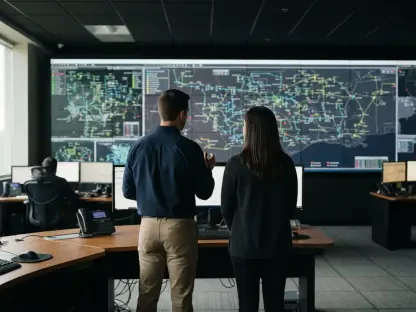

Without enforceable ride-through mandates, a single major blackout caused by data center equipment tripping could lead to a regulatory backlash that halts industry expansion. As the digital infrastructure footprint expands rapidly across the United States, the sheer scale of electricity consumption by individual facilities has transformed them from passive users into active participants in grid dynamics. In high-density regions, such as the data center alleys of Northern Virginia or the burgeoning tech corridors in central Ohio, the concentration of massive power loads creates a fragile ecosystem where minor technical hiccups can ripple through the entire interconnected network. The challenge lies in the sensitivity of modern server hardware and power distribution units, which are often designed to disconnect from the grid at the first sign of voltage instability to protect internal components. This defensive posture, while beneficial for individual hardware longevity, poses a severe collective risk to the power system’s overall reliability.
Understanding Ride-Through Capabilities
The Shift Toward Load-Side Regulation
Historically, grid reliability focused almost exclusively on the supply side, ensuring that power plants and transmission lines remained stable during faults. However, the rise of super-loads—facilities consuming hundreds of megawatts—has shifted the focus toward the demand side. When a data center abruptly disconnects due to a minor voltage dip, it acts as a negative generator, causing a sudden surge in system frequency that can be just as destabilizing as a power plant failure. This behavior was illustrated during the July 2024 Northern Virginia incident, where a standard fault on a 230-kV line led to nearly 4 gigawatts of load tripping offline. The resulting instability was felt thousands of miles away, highlighting the fact that these massive facilities are now integral components of the bulk power system. Regulators are consequently moving away from voluntary guidelines toward mandatory ride-through standards to prevent such massive, uncoordinated shifts in demand.
Implementing load-side regulation is no longer a matter of preference but a necessity for regional transmission organizations trying to balance supply and demand in real time. The goal is to move the industry toward a model where large-scale electricity consumers are required to withstand brief periods of volatility without dropping off the grid. This ensures that the system has enough time to recover from minor faults without being overwhelmed by a simultaneous loss of load that complicates grid restoration efforts. By establishing enforceable performance standards, authorities can ensure that the rapid growth of digital infrastructure does not outpace the grid’s ability to maintain a steady state. This regulatory shift recognizes that as data centers become the backbone of the modern economy, their duty to the grid must evolve. Facilities that fail to adopt these capabilities risk becoming a liability to the public good, potentially leading to restricted access to high-capacity connections.
Technical Feasibility and Availability
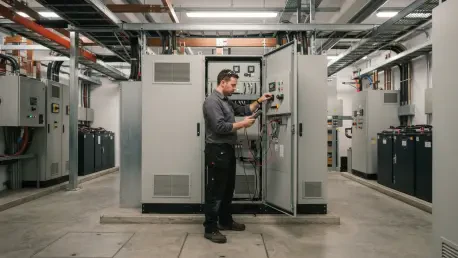
The transition to more resilient power consumption is supported by the fact that the necessary technology is already commercially mature and widely available. Modern uninterruptible power supply systems, commonly referred to as UPS, are the primary line of defense for data centers, but their current programming often favors immediate disconnection during grid events. By reconfiguring these systems and integrating large-scale battery energy storage solutions, data centers can remain connected and even provide support to the grid during frequency excursions. These advanced storage systems can inject or absorb power in milliseconds, effectively smoothing out the fluctuations that would otherwise cause a facility to trip. The engineering required to achieve these ride-through goals is well understood by professionals in the power electronics field, meaning the barrier to implementation is administrative rather than scientific. The focus must now turn to standardizing these technical settings to ensure uniform performance.
Furthermore, the deployment of battery energy storage within data center footprints offers a dual benefit that extends beyond simple grid stability. While these systems provide the necessary buffer to ride through voltage dips, they also serve as a potential revenue stream or cost-saving measure through peak shaving and demand response programs. As the grid transitions to more intermittent renewable energy sources, the ability of large loads to stabilize their own consumption becomes increasingly valuable. Manufacturers of power conversion equipment are already producing high-efficiency inverters capable of the high-speed response required to meet the most stringent ride-through mandates. The challenge for many operators is the initial capital expenditure, yet the long-term risk of forced curtailment or grid-wide blackouts provides a compelling financial incentive for adoption. By aligning technical capabilities with regulatory expectations, the industry can ensure that its massive power requirements are met with responsibility.
The Texas Model for Grid Stability
Implementation and Facility Exemptions
The Electric Reliability Council of Texas, better known as ERCOT, has pioneered a framework that addresses grid stability without stifling the rapid growth of the technology sector. A key element of this model is the clear distinction between existing infrastructure and new developments. By tying ride-through requirements to the date a facility begins drawing power, ERCOT provides a predictable environment for developers who have already finalized their designs and secured financing. This approach prevents the logistical and financial nightmare of retrofitting operational facilities that were designed under older standards. For new projects, the mandate is clear from the conceptual phase, allowing engineers to integrate ride-through technology into the initial build. This proactive policy ensures that as the grid grows to accommodate new demand, the new additions are inherently more resilient than their predecessors. It creates a rolling transition toward a stable architecture.
This exemption strategy is essential for maintaining the economic competitiveness of regions that are actively courting data center investment. Retrospective mandates often lead to litigation and delays, whereas forward-looking policies provide the certainty that global tech companies crave. By setting a firm energization date as the cutoff for compliance, regulators offer a transparent pathway for growth. Developers can accurately project costs and timelines, knowing exactly what is expected of their electrical systems. This model acknowledges that the physical infrastructure of a data center, once built, is difficult to alter, making early regulatory intervention the most efficient way to achieve system-wide goals. As other regions look to Texas as a blueprint, the success of this phased implementation serves as proof that grid reliability and industry expansion are not mutually exclusive. The focus remains on building a future-proofed network where each new megawatt contributes to the collective strength.
Managing Risks Through Cluster Assessment
A sophisticated component of the Texas strategy is the use of cluster risk assessments to manage the concentration of data center loads. Rather than treating each facility as an isolated user, grid operators analyze the cumulative impact of multiple sites within a specific geographic or electrical zone. They have identified critical thresholds, such as the maximum amount of load that can safely trip without causing a wider system failure. For example, by capping the total non-compliant load in a single cluster at 3,200 megawatts, operators can quantify the risk of a single fault causing a catastrophic outage. This data-driven approach allows for more precise management of the grid, as it identifies exactly where the system is most vulnerable. It also provides a clear signal to developers about which areas have headroom for traditional designs and where advanced ride-through equipment will be strictly necessary. This level of granularity is vital for preventing the creation of grid weaknesses.
In conclusion, the proactive adoption of these standards transformed the relationship between data center operators and power providers into a more stable and collaborative dynamic. By addressing the technical vulnerabilities of large-scale loads, the energy sector successfully mitigated the risks of uncoordinated disconnections that once threatened regional stability. The Texas blueprint and subsequent national adaptations provided the necessary transparency for developers to plan effectively, while grid operators gained the tools to manage high-density clusters with precision. These actions collectively ensured that the rapid expansion of digital infrastructure did not lead to a degradation of service for other electricity users. Moving forward, the industry prioritized the integration of advanced battery storage and smart UPS systems, which turned data centers into stabilizing assets for the grid. This shift not only protected the digital economy but also reinforced the overall reliability of the nation’s power systems.