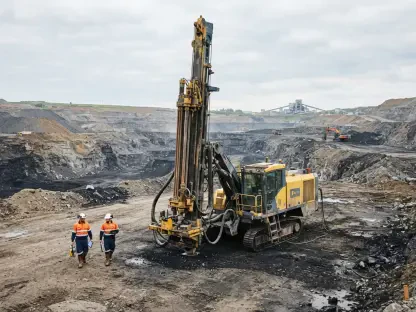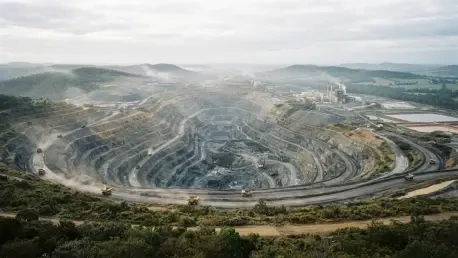

The passage of the Mount Pleasant Mine Act effectively overrides a landmark judicial decision that required coal projects to mitigate Scope 3 emissions to the greatest extent practicable. This legislative maneuver marks a significant and highly controversial shift in the intersection of environmental law, judicial independence, and political intervention within the state of New South Wales. By focusing exclusively on the Mount Pleasant open-cut coal mine in the Upper Hunter region, the Act provides a specialized legal pathway for extracting up to 16.5 million tons of coal annually through 2032. This specific authorization directly bypasses the legal barriers previously established by the High Court of Australia, which had initially been hailed as a transformative moment for climate change litigation. The move raises profound questions regarding the stability of democratic checks and balances and whether legislative power should be used to resolve individual judicial disputes. It represents a pivot toward industrial protectionism.
Judicial Conflict and Legislative Overrides
The origin of this legislative intervention lies in a pivotal High Court ruling that shook the foundations of fossil fuel approval processes. A local community group successfully challenged the 2022 expansion approval granted to MACH Energy, the operator of the Mount Pleasant facility. The court determined that the Independent Planning Commission had failed to adequately impose conditions to mitigate greenhouse gas emissions, particularly focusing on Scope 3 emissions. These represent the emissions generated when the coal is eventually burned by consumers, often in international markets. By mandating that these emissions be reduced to the greatest extent practicable, the judiciary set a high bar for environmental accountability. This requirement was viewed by climate advocates as a revolutionary tool that would force companies to prove their operations align with global climate targets, effectively making it harder for massive coal expansions to proceed.
Instead of allowing the Land and Environment Court to finalize its deliberations based on the High Court’s findings, the NSW government introduced this specialized legislation as a definitive workaround. This decision was largely driven by assertions from MACH Energy that approximately 400 jobs would be terminated if the mine’s annual production remained capped at the previously authorized levels. The political landscape of the Hunter region, which serves as a critical electoral battleground, likely influenced the government’s choice to prioritize immediate industrial output over the slow progress of judicial review. By creating a statutory path that runs parallel to the court’s jurisdiction, the state has effectively shielded a single project from the consequences of a negative legal ruling. This approach signals a willingness to use legislative supremacy to ensure that large-scale industrial projects remain operational regardless of the legal challenges raised by community groups.
Executive Power and the Henry VIII Clause
Central to the legal debate surrounding the Act is the inclusion of a controversial Henry VIII clause, a mechanism that grants the resources minister extraordinary power to modify state laws. Named after the historical monarch who sought the authority to rule by decree, these clauses allow a member of the executive branch to apply, suspend, or alter existing regulations as they pertain to the Mount Pleasant site without a fresh vote in Parliament. Although the government introduced amendments to restrict the minister from unilaterally raising production caps or interfering with anti-corruption laws, the remaining authority is still remarkably broad. This includes the ability to change how environmental protections and workplace safety standards are interpreted and enforced. Legal scholars argue that such provisions represent a dangerous departure from the principle of parliamentary oversight, centralizing too much control within a single office for the benefit of a specific corporation.
The concentration of this discretionary power has sparked warnings from anti-corruption advocates regarding the potential for undue influence and favoritism. By allowing a single official to tailor the legal landscape for one entity, the Act risks undermining the foundational idea that laws should be applied consistently and fairly across all industrial sectors. Critics suggest that this framework creates an environment where lobbying can lead to specific regulatory exemptions that are shielded from the usual public scrutiny associated with the legislative process. Furthermore, it complicates the task of regulatory agencies that must navigate a dual system where standard laws apply to most mines while the Mount Pleasant site operates under a unique set of rules defined by the minister. This fragmentation of the legal code could lead to confusion and a lack of accountability in the event of environmental accidents, as standard oversight mechanisms are essentially bypassed by decree.
Obstacles to Independent Judicial Oversight
Beyond the expansion of ministerial power, the Act introduces significant hurdles for future judicial oversight by attempting to insulate the mine’s operations from further legal challenges. A specific provision in the law is designed to prevent parties from seeking court reviews of the mine’s management under this new statutory framework. This is concerning because the intricate details of the mine’s environmental and operational conditions are not fully contained within the legislation itself. Instead, they are housed in separate documents that the planning minister has the authority to modify at will, away from the eyes of the public and the legislature. This structure creates a situation where the core rules governing the project are essentially moving targets, making it nearly impossible for community groups to mount effective legal arguments against specific operational impacts. The state has effectively allowed a private entity to decide which judicial mandates it follows.
Legal experts have questioned the constitutionality of these measures, noting that state parliaments generally cannot prevent courts from reviewing the legality of official actions. By providing MACH Energy with a legislative path that ignores the High Court’s ruling, the government has essentially allowed a private entity to decide if judicial mandates ever take effect. This sets a precedent where the executive branch can render high-level court deliberations irrelevant for over a decade. The creation of parallel approvals undermines the finality of court decisions and discourages citizens from using the legal system to address environmental grievances. If the judiciary is seen as a secondary power that can be easily bypassed by the executive, the long-term integrity of the legal framework is at risk. This move signals that political expediency can outweigh judicial findings, potentially discouraging future climate litigation and reducing the accountability of major fossil fuel emitters.
Economic Rationale and Climate Contradictions
The NSW government maintains that the Act is a necessary interim measure to ensure job security and economic stability for over 720 workers in the Hunter region. However, analysts point out that the legislation secures operations until 2032, which far exceeds the duration of a typical temporary stopgap. Furthermore, the law does not offer permanent employment guarantees, but rather establishes a framework that expires along with the mine’s legislative approval. From a climate perspective, the Act appears to contradict the state’s own environmental goals. The NSW Net Zero Commission has stated that expanding coal mines is inconsistent with legislated emissions targets, yet this law provides a template for other fossil fuel companies to seek political interventions. This shift suggests that projects with enough political weight can bypass standardized environmental assessments, potentially weakening the state’s long-term commitment to climate action and environmental sustainability efforts.
The situation surrounding the Mount Pleasant Mine Act demonstrates a clear tension between industrial maintenance and the state’s legislated climate targets. Moving forward, it is essential for the New South Wales government to align its legislative actions with the recommendations of the Net Zero Commission to maintain credibility. Legal frameworks should be strengthened to ensure that Scope 3 emissions are integrated into standard planning processes rather than being addressed through reactive laws. Stakeholders must now advocate for the removal of Henry VIII clauses from future industrial legislation to restore the integrity of parliamentary oversight and judicial review. Ultimately, the state chose short-term regional stability over long-term legal consistency, prioritizing coal output over climate litigation outcomes. Establishing clearer, non-negotiable environmental standards today is the only way to prevent such legislative conflicts from recurring in the coming years.