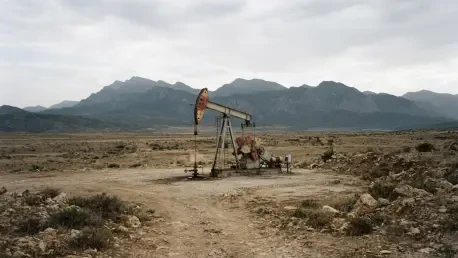

Independent evaluations have assigned a best-estimate contingent resource of 27.6 million barrels to Dune Oil’s gross interest in the North Field of Block M47. This assessment marks a critical juncture for the company as it shifts its operational focus from speculative exploration to active production within the high-potential Cudi-Gabar region of southeastern Türkiye. The region itself has undergone a massive industrial metamorphosis, evolving from a state of negligible activity to a powerhouse producing over 83,000 barrels per day. This growth has been catalyzed by the aggressive investment strategy of the state-owned operator, Turkish Petroleum, which has effectively de-risked the geological play for junior partners. For Dune Oil, which maintains a 29% working interest in the block, the current objective is to replicate this regional success by utilizing modern sidetrack drilling to tap into proven light-oil reserves. The company’s trajectory is now defined by a transition toward generating consistent cash flow while leveraging the surrounding infrastructure and state-led momentum to maximize the value of its Turkish assets.
Resource Valuation and Strategic Focus
Assessing Asset Worth and Potential
The independent evaluation performed by Chapman Hydrogen and Petroleum Engineering has highlighted a significant financial upside for the North Field of Block M47. Beyond the 27.6 million barrels of best-estimate contingent resources, the analysis suggests an unrisked net present value at a 10% discount rate of approximately US$734 million for the company’s interest. Even when the figures are adjusted to reflect the technical and commercial risks inherent in oil field development, the risked value remains robust at US$594 million. This valuation provides a clear benchmark for the company’s underlying asset strength, especially as it moves to convert these contingent figures into the more certain category of proven reserves. The current market environment has created a situation where the company’s enterprise value per barrel sits well below that of its international peers, suggesting that a successful transition to production could trigger a substantial re-rating of the stock.
Bridging the Market Valuation Gap
The disparity between the company’s current market capitalization and the intrinsic value of its resources is a primary driver behind the new development program. Currently, the company is valued at roughly US$0.90 per barrel of contingent resource, while similar non-producing international peers often command a median valuation closer to US$1.79 per barrel. This valuation gap indicates that the market has yet to fully price in the potential for commercial delivery from the Block M47 acreage. To address this, the management team is focused on proving the deliverability of the reservoir through sustained flow rates. By moving resources from the “contingent” to the “proven and producing” phase, the company aims to eliminate the technical skepticism that often suppresses the valuation of junior explorers. This re-rating strategy is supported by the overall success of the Cudi-Gabar trend, which continues to attract capital and technical expertise to the region.
Implementing a Production-First Methodology
Adopting a disciplined “production-first” methodology allows the technical team to prioritize low-risk, high-reward interventions over expensive and speculative wildcat drilling. The center of this strategy is the C-1 discovery well, which has already confirmed the presence of 32.4° API light oil but has faced historical challenges in maintaining consistent output. A detailed technical audit revealed that these past issues were the result of mechanical and engineering failures, specifically related to faulty cementing jobs, rather than any lack of reservoir potential. Consequently, the company has opted to bypass the original vertical completion in favor of a modern sidetrack. This engineering-led approach is designed to restore access to the oil-bearing zones while ensuring the mechanical integrity of the wellbore. By focusing on an existing discovery with known oil columns, the company significantly reduces the chance of a “dry hole” while focusing its capital on proven productive zones.
Optimizing Fractured Carbonate Deliverability
The geological complexity of the carbonate reservoirs in southeastern Türkiye necessitates a specialized completion strategy to maximize oil recovery. These reservoirs typically produce through extensive natural fracture networks, which are most concentrated at the crests of the anticline structures visible on the surface. Traditional vertical wells often fail to intersect a sufficient number of these fractures to sustain high flow rates. To overcome this, the current plan involves drilling a horizontal or deviated sidetrack of 200 to 300 meters through the fractured crest of the reservoir. This technique, which has been successfully employed in similar geological settings throughout the Middle East, increases the surface area of the wellbore in contact with the fracture network. By utilizing specialized engineering consultants with experience in fractured carbonates, the company intends to ensure that the new C-1 completion provides the necessary deliverability to meet commercial production targets and establish a repeatable model for future wells.
Market Dynamics and Financial Framework
Navigating Logistics and Domestic Demand
Türkiye remains one of the most attractive markets for domestic oil producers due to its high level of energy import dependency. The country currently imports more than 85% of its daily oil consumption, creating a permanent and insatiable demand for locally sourced crude. This macro-environment ensures that Dune Oil does not face the marketing or takeaway constraints often found in remote global oil plays. The logistical framework for Block M47 is remarkably efficient, as the field is located within trucking distance of the Tüpraş refinery in Batman. The cost of transporting the oil is estimated at a competitive US$5 per barrel, which is significantly lower than the transport costs associated with many North American or South American inland assets. This proximity to established refining capacity ensures that every barrel produced can be immediately monetized at prices that track international benchmarks, providing a direct link to global oil price recovery.
Maximizing Netbacks and Payback Efficiency
The economic profile of the Turkish operations is characterized by exceptionally high netbacks and rapid capital recovery. With Brent oil prices at US$72 per barrel, the company anticipates a netback of approximately US$50 per barrel after accounting for royalties, operating expenses, and transportation. The Turkish government’s royalty rate is fixed at 12.5%, providing a stable and predictable fiscal environment for long-term planning. Because the operational costs are relatively low and the fiscal terms are favorable, a successful well in this region can achieve full capital payback in as little as two months. This high level of capital efficiency is a cornerstone of the company’s financial strategy, as it allows for the organic reinvestment of cash flow into further drilling and expansion. In a scenario where oil prices reach US$100, the netback would increase to approximately US$75 per barrel, further accelerating the potential for regional growth and shareholder returns.
Securing Funding for 2027 Operations
To provide the liquidity necessary for the upcoming work program, the company has initiated a brokered offering aimed at raising up to C$8.3 million. This capital raise is specifically structured to fund the transition into a producing entity through the end of 2026 and into early 2027. A significant portion of these funds is earmarked for the C-1 sidetrack and the re-entry of the C-2 well, both of which are essential for proving the commercial scale of the North Field. Additionally, the company will allocate funds to retire existing debt and initiate a 45-kilometer seismic program designed to refine the imaging of the subsurface structures. This seismic data will be instrumental in identifying the optimal locations for future step-out wells. By securing this funding, the company ensures that its technical teams have the resources required to execute the 2027 development plan without interruption, maintaining the momentum generated by the initial production successes.
Contributing to National Energy Security
The development of Block M47 is closely aligned with Türkiye’s national strategic goal of achieving greater energy independence and reducing a massive annual import bill. The Cudi-Gabar region has become the focal point of this national effort, with the state-owned operator targeting production levels of 100,000 barrels per day by 2027. For a junior operator like Dune Oil, this state-led prioritization provides a highly supportive operating environment, including access to local service providers, specialized drilling equipment, and skilled labor. The regional infrastructure is also being continuously upgraded, with new pipelines and processing facilities being integrated into the area. By contributing to the domestic supply, the company benefits from the political and economic stability that comes with being a partner in a nationally significant energy corridor. This alignment not only facilitates smoother regulatory approvals but also ensures that the company remains part of a long-term industrial growth story.
Frequently Asked Questions
What Are the Key Technical Risks?
The primary technical risk involves the execution of the new completion design and the ability to achieve sustained commercial flow rates from the fractured reservoir. While the presence of oil has been confirmed, the fractured nature of carbonate rocks can lead to unpredictable flow patterns and water breakthrough if not managed correctly. To mitigate this, the company has engaged specialized engineering advisors who have previously managed similar challenges in the Middle East. Success depends on the precise placement of the horizontal sidetrack within the most densely fractured zones of the anticline crest. Any deviation from the planned trajectory or failure to isolate the target zone could impact the overall deliverability of the well. However, the use of modern seismic data and proven horizontal drilling techniques is expected to significantly reduce the mechanical risks that hampered previous vertical drilling attempts.
What Milestones Should Investors Watch?
Investors should closely monitor the completion of the C$8.3 million financing round and the subsequent mobilization of drilling and seismic equipment to the Block M47 site. The most critical milestone will be the flow test results from the C-1 sidetrack, which are expected to provide the first modern data on the reservoir’s commercial potential. Following this, the results of the 45-kilometer seismic program in early 2027 will be vital for de-risking the broader acreage and selecting locations for the next phase of development. Progress on the re-entry and deepening of the C-2 well will also serve as a secondary indicator of the field’s scale. These milestones will collectively determine the company’s ability to transition from a contingent resource story to a cash-flowing enterprise, providing a clear roadmap for the revaluation of the company’s assets in the public markets.
How Does the Location Benefit Dune Oil?
The location of Block M47 within the Cudi-Gabar trend provides an unparalleled geological and logistical advantage. Being situated just kilometers away from some of the largest oil discoveries in Türkiye’s history allows the company to benefit from the “neighborhood effect,” where state-run drilling activity provides a continuous stream of data on the regional oil charge and structural trends. The proximity to the Batman refinery significantly reduces the midstream hurdles that often plague junior producers in other jurisdictions. Furthermore, the regional infrastructure boom has made it easier and more cost-effective to move equipment and personnel to the site. This concentration of activity creates a competitive service market, ensuring that the company can access high-quality technical support at reasonable costs, which is essential for maintaining the low operating expenses required for high-netback production.
What Is the Long-Term Goal for M47?
The long-term objective for Block M47 is the full-scale development of the North Field and the exploration of the undrilled portions of the acreage to expand the company’s reserve base. By validating the fractured carbonate model through the C-1 and C-2 wells, the company aims to establish a self-sustaining cycle of production and reinvestment. The ultimate goal is to move the 27.6 million barrels of contingent resources into the proven and probable (2P) categories, which would represent a massive increase in the company’s book value. As the field matures, the company may also look to partner with larger operators or state entities to accelerate the drilling of deeper exploration targets. This phased approach ensures that the company remains capital-efficient while aggressively pursuing the upside potential of one of the most exciting onshore oil plays in the eastern Mediterranean.
Final Review of the Development Strategy
The evaluation of Block M47 determined that the integration of modern horizontal drilling with regional infrastructure provided a clear roadmap for junior operators. It was observed that the primary driver for future success relied on the precise execution of the 2027 seismic program to delineate further step-out locations. Stakeholders recognized that the transition to production required a sustained focus on mitigating mechanical risks while simultaneously expanding the regional footprint. This approach served as a template for navigating high-demand domestic energy markets during a period of intense national industrialization. Ultimately, the transition from exploration to production was managed through a combination of technical rigor and strategic capital allocation, ensuring the long-term viability of the Turkish assets within the broader international portfolio. Success in this region demonstrated that disciplined engineering could unlock significant value even in complex fractured reservoirs, providing a foundation for future growth in southeastern Türkiye.