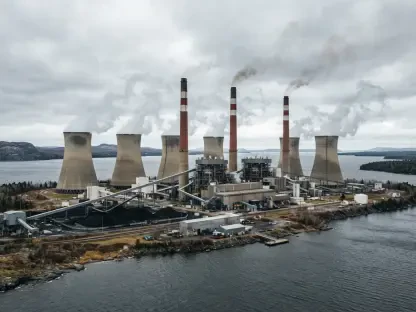

The application of the bio-inspired Firefly Algorithm allows microgrid operators to navigate complex nonlinear efficiency curves that traditional linear programming models frequently overlook. In the current industrial landscape of 2026, the demand for localized, resilient energy systems has reached a critical peak, especially for facilities with multifaceted thermal and electrical requirements. Commercial slaughterhouses serve as a prime example of this complexity, as they must simultaneously manage high-capacity power for machinery, intense refrigeration for product preservation, and high-temperature thermal energy for rigorous sanitation protocols. Traditional reliance on a centralized utility grid often exposes these facilities to volatile pricing and potential outages, which can lead to significant economic losses and food safety risks. By transitioning toward a hybrid microgrid model that incorporates solar photovoltaics, combined heat and power systems, and advanced biomass gasification, operators are now finding ways to stabilize their energy expenditures while drastically reducing their environmental impact. This shift represents a fundamental change in how industrial energy is conceptualized, moving away from passive consumption toward active, intelligent management that leverages diverse energy vectors to ensure operational continuity in an increasingly unpredictable market environment.
Architecture: The Infrastructure of Efficiency
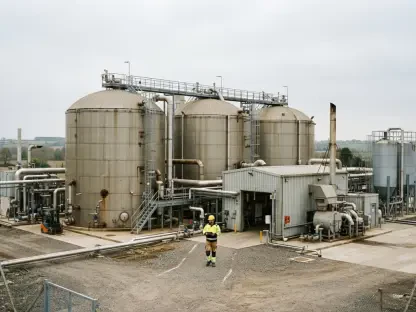
The technical foundation of this advanced microgrid is built upon a sophisticated array of generation and conversion technologies designed to work in perfect concert. At the center of the operation is a 700-kilowatt combined heat and power unit that functions as the primary engine for both electrical and thermal loads, operating with high electrical and thermal conversion efficiencies. This core is supported by a 3.5-kilowatt solar photovoltaic array that provides a low-marginal-cost renewable input, though its output is naturally subject to the fluctuations of local weather conditions. To further insulate the facility from the costs of external natural gas, the system integrates a 1000-kilowatt biomass-fired boiler fed by a dedicated gasification unit. This specific component is particularly advantageous for the slaughterhouse industry, as it allows for the conversion of biological waste products into a reliable fuel source, effectively turning a disposal liability into a valuable energy asset. This multifaceted generation strategy ensures that the facility can meet its baseline requirements while maintaining the flexibility to scale output based on real-time demand and the availability of various fuel types.
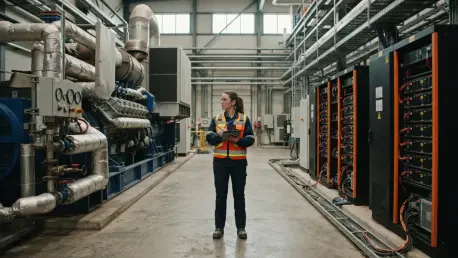
Complementing the generation side is an equally complex energy storage and management layer that provides the necessary buffer for economic optimization. A 500-kilowatt-hour battery energy storage system serves as the primary tool for energy arbitrage, allowing the facility to store surplus power during times of high renewable generation or low utility rates and discharge it when grid prices spike. This flexibility is mirrored in the thermal management system, which utilizes a 200-kilowatt absorption chiller and a high-capacity heat exchanger. These components are essential for converting excess thermal energy from the combined heat and power unit into cooling power, which is critical for the refrigeration needs of the slaughterhouse. By capturing and repurposing what would otherwise be waste heat, the system achieves a level of total efficiency that is impossible with traditional, siloed utility connections. The physical layout of these assets is designed to minimize transmission losses, ensuring that every kilowatt of power and unit of thermal energy is used at its highest potential value throughout the 24-hour operational cycle of the facility.
Modeling: Precision in Operational Expenditure
The management of such a complex microgrid requires a rigorous mathematical framework to handle the daily scheduling and dispatch of energy resources. Researchers have developed a single-objective optimization model that focuses on minimizing the total operational expenditure over a continuous 24-hour horizon. This model tracks seven distinct decision variables every hour, ranging from grid power imports and exports to the specific fuel inputs for the biomass and combined heat and power systems. By integrating these variables into a unified objective function, the system can calculate the most cost-effective path forward, accounting for time-of-use utility rates that can vary wildly throughout the day. In the current economic climate of 2026, where midday energy prices can be dozens of times higher than off-peak rates, this level of granular control is no longer a luxury but a necessity for industrial profitability. The model ensures that all electrical, thermal, and gas demands are met with mathematical precision, balancing the immediate needs of the facility against the long-term goal of cost reduction and resource conservation.
To ensure that the theoretical savings of the model translate into real-world results, the framework incorporates a comprehensive set of operational constraints that reflect the physical realities of the machinery. These constraints include strict limits on the rates of energy exchange with the utility grid and binary logic variables that prevent the battery storage system from attempting to charge and discharge simultaneously. This is a critical factor in maintaining the physical longevity of the storage assets, as erratic cycling can lead to premature degradation and high replacement costs. Furthermore, the model enforces energy balance constraints at every hourly interval, ensuring that the total supply from all sources always equals the facility’s demand plus any inputs into storage or exports back to the grid. By adhering to these strict logical boundaries, the optimization strategy provides a reliable roadmap for facility managers, allowing them to operate complex hardware at peak efficiency without risking equipment failure or violating service agreements with utility providers.
Intelligence: The Power of Swarm Logic
The complexity of navigating a multicarrier energy system often renders traditional linear programming methods inadequate, as they struggle with the nonlinear efficiency curves of modern batteries and the stepped nature of utility rates. To overcome these hurdles, the research team implemented the Firefly Algorithm, a bio-inspired swarm intelligence heuristic that mimics the bioluminescent signaling behavior of fireflies. In this computational model, each potential operational schedule is treated as an individual firefly, and its economic efficiency determines its perceived brightness. Brighter fireflies, which represent more cost-effective schedules, attract others in the population, causing the entire group to converge toward the most optimal solution. This approach is particularly effective at searching through vast and complex solution spaces where a traditional algorithm might get stuck in a local minimum—a solution that looks good in a narrow context but is suboptimal on a global scale. The stochastic nature of the Firefly Algorithm allows it to jump over constraint boundaries and explore unconventional dispatch strategies that a rigid linear model would likely ignore.
This decentralized logic provides a significant advantage for microgrid operators who must balance competing priorities such as peak-shaving, battery arbitrage, and the integration of intermittent renewables. Unlike earlier swarm algorithms that might converge too quickly on a single leader, the Firefly Algorithm allows the population to split into sub-swarms, effectively exploring multiple operational regimes simultaneously. This ensures that the final dispatch strategy is not just a guess, but a mathematically verified optimal path that accounts for the intricate interactions between electrical and thermal systems. Furthermore, the algorithm has demonstrated remarkable speed, often reaching convergence on standard computing hardware in under fifteen minutes. This rapid processing time is crucial for the transition toward real-time energy management, where controllers must be able to adjust system parameters on the fly in response to sudden changes in weather or grid conditions. By leveraging this bio-inspired intelligence, industrial facilities can achieve a level of coordination that was previously reserved for large-scale utility operators.
Performance: Validating the Integrated Strategy
The experimental validation of this framework involved a detailed analysis of six distinct hardware configurations, ranging from basic grid-reliant setups to fully integrated hybrid microgrids. Using realistic solar data and dynamic pricing models consistent with 2026 market conditions, the researchers demonstrated that configurations lacking energy storage or biomass integration were significantly more expensive to operate. The most critical finding was the contrast between a microgrid using standard combined heat and power and one that included a 500-kilowatt-hour battery energy storage system. The data showed that the inclusion of the battery allowed for a staggering 92.97 percent reduction in daily operating costs. The battery acted as the essential bridge between the facility’s fixed operational demands and the variable nature of renewable energy and utility pricing. By shifting the bulk of energy consumption away from high-rate windows, the system stabilized the daily operating cost at a remarkably low level, proving that intelligent storage is the key to unlocking the full potential of hybrid generation.
Beyond the headline cost savings, the performance of the system highlighted the strategic value of biomass gasification in an industrial context. During periods of low solar output, the biomass-fired boiler and gasification unit provided a steady, controllable source of thermal and electrical energy that reduced the need for expensive grid imports. The research showed that even in stress-test scenarios where the price of natural gas was doubled, the Firefly Algorithm successfully recalibrated the system to rely more heavily on biomass and solar inputs, maintaining a high level of economic efficiency. This resilience is a vital trait for semi-industrial facilities that are looking to insulate themselves from global fuel market volatility. The ability of the microgrid to maintain near-total independence from the primary grid during peak hours not only saves money for the operator but also reduces the overall strain on the regional power infrastructure. These results provide a compelling case for the widespread adoption of multicarrier energy systems as a standard for future industrial development.
Evolution: Strategic Steps for Industrial Networks
The successful implementation of the Firefly-optimized microgrid established a clear blueprint for the next phase of industrial energy evolution. Decision-makers in the manufacturing and processing sectors recognized that the transition toward these intelligent systems required more than just hardware investment; it demanded a fundamental shift in operational logic. One of the most actionable next steps involved the integration of demand response measures, where noncritical industrial processes were rescheduled to align with peak solar generation or low-cost battery discharge windows. By moving shiftable loads to these optimal times, facilities further enhanced the economic performance of their microgrids, creating a more harmonious relationship between production cycles and energy availability. This approach allowed operators to maximize the utility of their existing assets without requiring additional capital expenditure for larger batteries or more solar panels.
Looking ahead, the movement toward multicarrier energy ecosystems began to expand beyond individual facilities to encompass interconnected industrial hubs. The success of the slaughterhouse model showed that by sharing thermal and electrical resources across a network of nearby businesses, the overall efficiency of a local microgrid could be increased even further. Future considerations included the use of multi-objective optimization to balance economic costs with environmental metrics, such as carbon intensity and water usage. The application of bio-inspired algorithms provided the necessary computational power to handle these increasingly complex trade-offs, ensuring that industrial growth in the late 2020s remained both sustainable and profitable. By adopting these advanced management strategies, rural and semi-industrial sectors moved away from their historical vulnerability, emerging instead as resilient, self-sufficient pillars of a modern, decentralized energy economy.