
A specific modeling scenario warns that the northern reservoir system may fail to meet domestic water requirements as early as May 2027 if current usage patterns persist. This assessment comes from the Ministry of Agriculture and Rural Development, which has been tracking the health of the Red River–Thai Binh river basin with increasing concern as the dry season approaches. The primary focus of this hydrological concern is the cluster of seven major hydropower installations that serve as the backbone of the northern power grid. Installations like Son La and Hoa Binh are currently under intense scrutiny because their capacity to generate electricity is directly tied to water levels that are projected to drop significantly. As the regional demand for electricity continues to surge due to industrial expansion and urban growth, the margin for operational error has shrunk to nearly zero. The upcoming period from May to June 2027 is identified as the most critical window where a convergence of factors could trigger a collapse.
Climatic Drivers: The Impact of El Niño
The primary catalyst for this impending shortage is a projected “very strong” El Niño event that is expected to peak in early 2027. Meteorologists and environmental scientists warn that this climatic phenomenon will likely push regional temperatures between 1 and 2 degrees Celsius above historical norms during the first half of the year. Unlike previous cycles, the intense heat is anticipated to arrive early, with northwestern provinces experiencing severe heatwaves as soon as March. This premature onset of high temperatures creates a double-edged sword: it simultaneously increases the evaporation rates from open reservoirs and drives up the demand for air conditioning across major metropolitan areas like Hanoi. The residual effects of this El Niño cycle are expected to be profound, remaining at peak intensity through January before entering a gradual weakening phase. This prolonged duration ensures that the dry season will be exceptionally harsh, leaving little room for the natural cooling provided by spring rains.
Coupled with the record-breaking heat, significantly reduced rainfall across the Red River–Thai Binh basin has led to a dramatic reduction in river flows. Projections indicate that inflows to vital reservoirs could drop by as much as 33 percent compared to multi-year averages, particularly in the Da River system which feeds the Hoa Binh facility. These environmental conditions mirror the severe drought cycles observed in previous decades, suggesting that the natural replenishment of the river systems will be insufficient to meet the cooling and power needs of a rapidly warming region. The lack of precipitation in late 2026 has already set a negative trend that is expected to persist through the first six months of 2027. Specifically, the Hoa Binh Reservoir is anticipated to see a deficit of 5 to 15 percent in its water intake through early summer. Without the necessary rainfall to recharge these deep mountain basins, the mechanical viability of the turbines remains at the mercy of a climate that is becoming increasingly volatile.
Reservoir Status: Assessing Infrastructure Risk
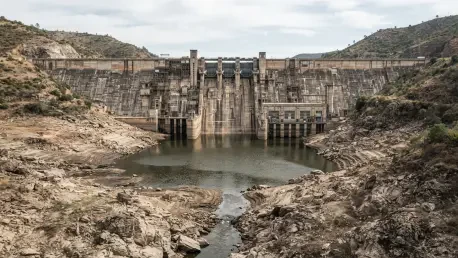
As of late 2026, the storage levels at the seven key reservoirs—Lai Chau, Son La, Hoa Binh, Ban Chat, Huoi Quang, Thac Ba, and Tuyen Quang—remain in a precarious state despite looking healthy on the surface. Although these facilities are currently holding about 92 percent of their total capacity, the combined volume of 25.6 billion cubic meters is already 500 million cubic meters below the multi-year average for this time of year. This lower starting point is particularly concerning because it leaves the regional infrastructure with almost no buffer as the most intense part of the dry season begins. Because these specific installations provide the vast majority of the renewable energy for the northern provinces, any significant drop in water elevation directly threatens the mechanical stability of the entire grid. Engineers point out that the efficiency of hydropower turbines decreases as water pressure drops, meaning that lower levels do not just represent less water, but also less effective power generation per liter.
The risk of reaching “dead water levels” is no longer a theoretical concern but a looming operational reality for plant managers across the north. Dead water level refers to the point at which the water in a reservoir is too low to be drawn into the intake valves for power generation without risking catastrophic damage to the mechanical components. If the current trajectory of depletion continues, several of the smaller reservoirs in the chain may reach this threshold by April 2027, followed by the larger installations in May. This would effectively paralyze the northern hydropower network, forcing a total reliance on coal, gas, and imports from neighboring regions. Furthermore, these reservoirs serve dual purposes, acting as the primary source of water for irrigation and domestic consumption for millions of people downstream. The intersection of energy production and basic survival needs creates a complex management challenge where the depletion of a single reservoir like Son La can have a cascading effect.
Strategic Mitigation: Policies and National Implications
To prevent a total collapse of the power and water supply, the Ministry has issued a series of urgent mandates focusing on conservation and strict operational discipline. Reservoir operators are now strictly required to prioritize domestic consumption and essential agricultural irrigation over power generation if water levels drop below critical safety thresholds. This policy shift means that during the peak heat of May and June, some hydropower plants may be ordered to stop their turbines to ensure that downstream communities have enough water for drinking and farming. Local authorities are also tasked with developing robust water-use plans that account for extreme scarcity, encouraging residents and businesses to reduce their consumption early in the season. By managing the discharge rates with extreme precision, the government hopes to stretch the existing water reserves through the most dangerous months, ensuring that the reservoirs do not hit dead water levels before the arrival of the summer monsoon.
Addressing these challenges requires immediate investments in high-tech monitoring systems and more resilient water infrastructure to safeguard the future of the Red River Delta. Authorities recommended that local governments accelerate the construction of secondary storage tanks and improve the efficiency of irrigation networks to minimize waste. Furthermore, diversifying the power grid by integrating large-scale battery storage and offshore wind projects was seen as a vital step to reducing the reliance on variable hydropower. Policymakers emphasized that the lessons learned from the 2027 projections led to more permanent shifts in how natural resources were valued and managed across the nation. By prioritizing sustainable development and long-term climate adaptation over short-term industrial gains, the country sought to build a more stable foundation for its energy and water security. These actions reflected a broader commitment to navigating the uncertainties of a changing climate with proactive planning.