
In dense metropolitan areas where vertical facade area exceeds horizontal rooftop area by a factor of 2.48, traditional solar technology fails to exploit the primary available surface for energy generation. As of 2026, the transition toward energy-independent cities has reached a critical juncture, with researchers prioritizing the integration of third-generation solar technology into the very skin of metropolitan infrastructure. A comprehensive synthesis of current benchmark publications reveals that while crystalline silicon has served as the backbone of the renewable transition, its inherent physical limitations—specifically its rigidity, weight, and opacity—prevent it from meeting the complex aesthetic and structural demands of modern urban facades. The emergence of perovskite solar cells offers a departure from these limitations, presenting a material that functions not just as a power generator but as a versatile architectural element. This shift represents a fundamental reimagining of the built environment, where skyscrapers and apartment blocks are no longer passive energy consumers but active participants in the regional power grid.
The Urban Necessity: Vertical Surface Potential
The spatial constraints of high-density metropolitan regions have necessitated a move beyond horizontal energy collection. For buildings exceeding four stories, the available rooftop surface area is historically insufficient to satisfy the total energy requirements of the occupants, leading to a sharp decline in energy self-sufficiency as structures grow taller. Comprehensive structural assessments conducted across hundreds of major global cities confirm that the vertical facade area provides a significantly larger footprint for solar harvesting, often more than double the available horizontal space. Utilizing these vertical boundaries is no longer an optional strategy for sustainable design but a mandatory requirement for achieving carbon neutrality in the built environment. Without tapping into these massive vertical expanses, cities will remain tethered to external power sources, unable to achieve the localized generation required for a resilient urban energy network.
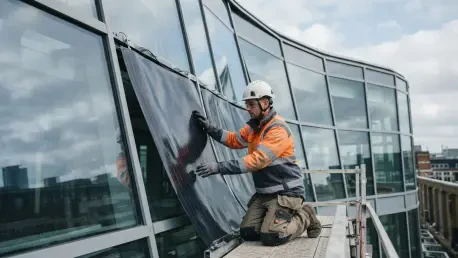
Current modeling of large-scale urban developments suggests that the deployment of photovoltaics on facades, when combined with traditional rooftop arrays, can increase the total electricity generation of a district by more than 60 percent. This potential, however, remains largely theoretical when restricted to traditional first-generation solar panels, which are far too heavy and inflexible for widespread vertical mounting on curtain walls or glazed fenestrations. The transition to a “solar city” necessitates the adoption of materials that are lightweight enough to be integrated into standard building envelopes without requiring massive structural reinforcement. Perovskites have emerged as the primary candidate to fill this role, offering the mechanical compliance needed to adapt to the varied surfaces of a city, from the curved glass of corporate headquarters to the expansive walls of residential towers.
Material Evolution: Comparing Photovoltaic Generations
The historical dominance of first-generation crystalline silicon has established a high bar for efficiency, yet its practical application in urban settings is hampered by its physical profile. These modules are characterized by rigid, opaque designs and a significant weight that averages between 12 and 20 kilograms per square meter. Such characteristics make them nearly impossible to install on weight-limited retrofits or complex, curved architectural features. Similarly, second-generation thin-film technologies, while lighter, often struggle with aesthetic consistency and a lack of color flexibility, frequently presenting a dark, uniform appearance that architects find difficult to integrate into high-end building designs. These legacy technologies have essentially restricted solar deployment to flat rooftops, leaving the most visible parts of the city untapped.
In contrast, third-generation perovskite solar cells utilize ultra-thin photoactive layers that can be manufactured using low-temperature processes, allowing for the creation of cells that are remarkably lightweight and flexible. These materials can achieve areal densities as low as 0.203 kilograms per square meter while maintaining their performance even after thousands of intense bending cycles. This mechanical flexibility allows perovskites to be applied to polyhedral roofs, curved curtain walls, and other intricate geometries that characterize modern architecture. The high specific power output of these cells—often measured in watts per gram—makes them particularly attractive for the renovation of existing structures that cannot support the heavy structural loads associated with traditional silicon arrays, thereby expanding the reach of solar power to the entire existing building stock.
Scaling Challenges: Bridging the Lab-to-Market Gap
While perovskites have shattered laboratory efficiency records, reaching certified levels that surpass 26 percent, the transition to commercial-scale modules remains a primary engineering challenge. There is a documented “efficiency gap” that occurs when moving from small-scale laboratory cells to the larger substrates required for the construction industry. As the surface area increases to several thousand square centimeters, the conversion efficiency typically experiences a noticeable drop compared to the record-breaking performance of tiny experimental samples. This decline is not a failure of the material itself but a consequence of the complex engineering required to maintain uniform film quality and electrical connectivity across a broad surface area, a hurdle that researchers are actively addressing through refined manufacturing techniques.
The primary mechanisms behind this efficiency loss include the creation of inactive “dead zones” during the laser-scribing process used to interconnect cells, as well as variations in film thickness during the coating of large sheets. Furthermore, the resistance losses in transparent conductive electrodes scale poorly with increased module width, leading to higher internal energy dissipation. To mitigate these issues, current industry trends favor the development of intermediate-sized architectural panels that balance module dimensions with overall efficiency. By aligning these panels with standard building curtain-wall grids, manufacturers are developing a product that fits seamlessly into the global construction market, ensuring that the high laboratory performance of perovskites can be translated into reliable, large-scale power generation for the metropolitan landscape.
Environmental Resilience: Performance in Modern Microclimates
Urban environments create unique stressors for photovoltaic systems, most notably the urban heat island effect, which can raise facade temperatures significantly above ambient levels. Traditional silicon panels are particularly sensitive to these conditions, losing a larger percentage of their efficiency as temperatures rise. Perovskites, however, demonstrate a superior thermal response with a much lower temperature coefficient, meaning they remain more productive in high-heat conditions typical of restricted-ventilation urban facades. This resilience allows perovskite-integrated buildings to maintain higher energy yields during peak summer hours, exactly when demand for air conditioning is at its highest, thereby providing a crucial cooling-load offset that traditional panels might fail to deliver as effectively.
Beyond thermal stability, perovskites are uniquely optimized for the diffuse and low-light conditions found in “urban canyons” or under artificial indoor lighting. In areas where direct sunlight is blocked by neighboring skyscrapers, perovskites lose significantly less relative efficiency compared to silicon heterojunction devices. Their ability to harvest energy from indoor light sources at high efficiency levels—often outperforming amorphous silicon—opens up new possibilities for internal energy harvesting within office buildings. Furthermore, the angular resilience of perovskite thin films allows them to capture light effectively even when the sun hits the facade at an oblique angle, ensuring consistent power generation throughout the day without the need for expensive and heavy anti-reflection coatings or complex tracking systems.
Architectural Integration: Aesthetics and Thermal Tuning
One of the most compelling arguments for the use of perovskites in cities is the ability to tune their visual and thermal properties to meet specific architectural needs. By adjusting the chemical composition of the crystal structure, manufacturers can create a palette of colors and varying levels of transparency. This allows for the production of neutral gray tones for semi-transparent window glazing or vibrant colors for decorative exterior panels. Such flexibility ensures that the solar technology enhances the aesthetic value of the building rather than compromising it. This capability is vital for gaining the approval of architects and urban planners who prioritize the visual identity of the city and require materials that can blend harmoniously into diverse design schemes.
Thermal regulation is another functional benefit that perovskites bring to sustainable urban design. Smart perovskite glazing can be engineered to control the solar heat gain coefficient, effectively reducing the amount of infrared radiation that enters a building while still providing adequate visible light. This dual-purpose functionality allows a building skin to generate electricity while simultaneously lowering the energy demand for climate control. In simulated large-scale office towers, the integration of these “smart” curtain walls has demonstrated the potential to reduce total building energy consumption by over 20 percent. By replicating the textures of natural materials like marble or steel through advanced printing techniques, perovskites are becoming a versatile multi-purpose tool that serves both as a structural finish and a power plant.
The Strategic Roadmap: Path to Implementation
The research community and industrial stakeholders have established a clear trajectory for the deployment of perovskite solar technology, focusing on bridging the remaining gaps between experimental success and commercial standards. Analysts confirmed that the most significant hurdle involved operational longevity, as the construction industry required materials to last at least 25 years with minimal degradation. While initial perovskite versions showed limited stability in outdoor environments, the introduction of robust encapsulation methods—such as laser-assisted glass frit sealing—provided a solution for protecting sensitive layers from moisture and oxygen. This engineering breakthrough shifted the focus from fundamental material science to long-term durability testing, ensuring that the technology met the rigorous safety and performance standards of the global building market.
The industry successfully identified specific strategies for addressing lead safety and environmental concerns by developing closed-loop recycling programs and using cation-exchange resin barriers to prevent potential leakage. Furthermore, the economic viability of perovskites was bolstered by the realization that integrated solar facades offered significant savings in labor and structural materials compared to traditional add-on systems. Moving forward, the adoption of this technology required the full integration of empirical performance data into building information modeling platforms, allowing architects to predict energy yields during the earliest stages of design. Stakeholders emphasized that linking these solar-active structures to intelligent microgrids and electric vehicle infrastructure would be the final step in transforming modern metropolitan areas into self-sustaining, clean-energy power plants.