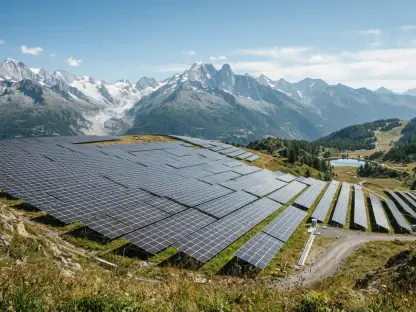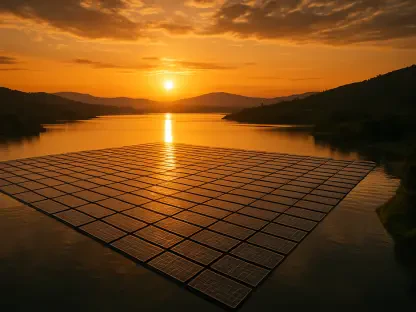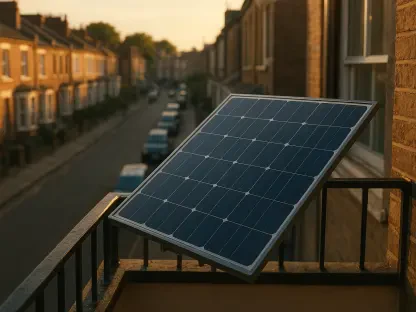

Judge Tanya Chutkan’s recent ruling effectively restores distributed solar access nationwide by invalidating the agency-wide policy used to justify the program's August 2025 termination. This decision marks a significant turning point for the $7 billion Solar for All initiative, a flagship project

Global sales for solar and wind equipment are projected to be 60% higher by 2050 compared to 2026 due to the rising demand for replacement parts. This projection highlights a pivotal transformation in the renewable energy sector, moving away from a decade of pure growth toward a period defined by

A standard IoT power system usually relies on disposable coin cells, but these components drive up total cost of ownership by thirty to fifty percent. As the industry advances in 2026, the reliance on these single-use batteries has become a major hurdle for scalability and environmental
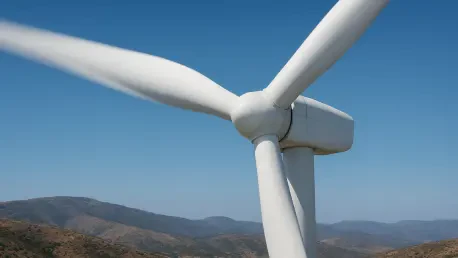
The transformative power of the wind and sun is no longer just an environmental aspiration but a fundamental pillar of economic survival for a nation once tethered to foreign fossil fuel imports. Türkiye has executed a decisive pivot toward domestic energy sources, positioning itself as a dominant
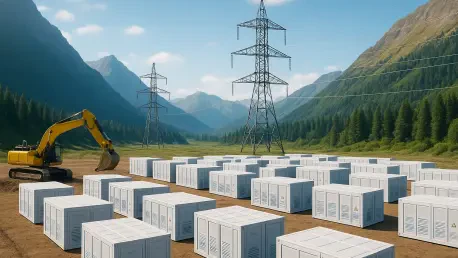
The global race to secure massive amounts of electricity has fundamentally shifted the focus from long-term cost efficiency to the immediate availability of power generation capacity. In the current energy landscape, the surge in demand from data centers and the widespread electrification of
A Strategic Crossroads for Sterling and Wilson Renewable Energy Sterling and Wilson Renewable Energy Limited (SWREL) is currently navigating a complex period defined by high-stakes international growth and a sudden domestic regulatory hurdle. As the global push for decarbonization accelerates, the