
Christopher Hailstone, a renowned authority on utility-scale energy management and grid reliability, joins us to discuss the pivotal role of storage in the global energy transition. With India aggressively pursuing a 500 GW non-fossil fuel capacity goal by 2030, his expertise in de-risking infrastructure and managing grid volatility offers a crucial perspective on the shift toward long-duration systems. As the energy sector navigates the complexities of variable renewable integration, our conversation explores the financial mechanisms, regulatory definitions, and technological diversities required to build a resilient and cost-effective power grid.
India aims to reach 500 GW of non-fossil fuel capacity by 2030, yet billions of kilowatt-hours of solar power are currently lost to grid constraints. What specific operational adjustments can grid operators make to stop this curtailment, and how do long-duration systems fundamentally change the math of renewable integration?
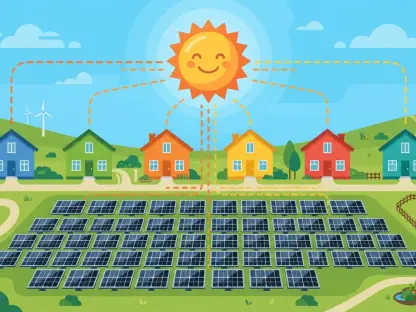
Grid operators are currently facing a massive hurdle where they are forced to discard 2.3 terawatt-hours of solar power in just an eight-month span because the infrastructure simply cannot absorb the surge. To stop this curtailment, we need to shift from a reactive management style to a predictive one that utilizes large-scale storage as a primary buffer. Long-duration systems change the fundamental math by decoupling the timing of energy generation from its consumption, allowing us to store that 2.3 terawatt-hours and deploy it during peak evening hours. This transition ensures that the 500 GW of capacity we are building isn’t just a theoretical peak on a graph but a usable, consistent resource for the entire population.
Current projections suggest India needs over 34 GWh of battery storage by 2027, but most existing tenders focus on short-duration solutions. How does the lack of a formal statutory definition for long-duration storage hinder investment, and what specific technical criteria should be included in a new regulatory framework?
The lack of a formal statutory definition creates a climate of uncertainty that makes institutional investors hesitate before committing capital to these multi-year projects. When there is no clear distinction between a two-hour battery and an eight-hour system, it becomes difficult to value the unique grid services that long-duration assets provide. A robust regulatory framework needs to specifically define “long-duration” as any system capable of at least eight hours of continuous discharge to qualify for dedicated funding streams. This clarity would provide a much-needed roadmap for the 195 GWh of projects currently in the pipeline, ensuring they can meet the 34.5 GWh requirement projected for the 2027 fiscal year.
While 195 GWh of storage projects are currently under tender or awarded, scaling to meet global 2040 targets will require trillions of dollars. What are the primary barriers to securing large-scale private investment today, and how could a viability gap funding mechanism specifically de-risk these long-term capital expenditures?
The primary barrier to securing the $4 trillion needed for the global 140 TWh target is the high upfront capital intensity of these technologies compared to their long-term payback periods. Private investors are often wary of the “first-of-a-kind” risks associated with emerging storage technologies that haven’t been deployed at a multi-gigawatt scale. Viability gap funding acts as a financial bridge, covering the initial cost deficit of these projects to make them commercially attractive from day one. By lowering the entry barrier, this mechanism allows us to tap into the $540 billion in annual system-wide savings that these storage solutions are expected to generate.
Different technologies like flow batteries, iron-air batteries, and pumped hydro offer varying storage cycles from eight hours to several days. How should planners determine the optimal mix of these technologies for industrial applications, and what are the step-by-step logistical challenges of deploying these at scale?
Planners must perform a granular analysis of the specific energy load, matching flow batteries to daily eight-to-twelve-hour cycles while reserving iron-air batteries for multi-day resilience against weather-related generation gaps. The logistical challenge is immense, starting with the procurement of specialized materials for flow systems and moving into the complex civil engineering required for pumped hydro and compressed air storage. We have to move 195 GWh of capacity from “awarded” to “operational” by coordinating global supply chains and local grid interconnections simultaneously. It is a massive task that requires a technology-neutral approach to ensure the right tool is used for the right duration.
Transitioning to long-duration storage is estimated to save hundreds of billions of dollars in system-wide costs annually. Beyond the immediate financial benefits, how does this shift impact the overall resilience of the power system during multi-day periods of low renewable generation or unexpected spikes in demand?
This shift fundamentally transforms the power system from a fragile network into a fortified one that can withstand extended periods of low wind or solar output. Having long-duration assets means that even if renewable generation drops for several days, the 117 GW of capacity we had operational in 2025 can be leveraged to keep the lights on without firing up expensive gas or coal plants. Resilience is about more than just avoiding blackouts; it is about maintaining a stable frequency and voltage during unexpected demand spikes. When we can store energy for days rather than minutes, the grid becomes an unshakeable foundation for the modern economy.
What is your forecast for long-duration energy storage?
I forecast that long-duration storage will move from a niche utility requirement to the backbone of the global energy market, with capacity needing to grow more than sixty-fold to reach the 8 TW global benchmark. In the coming years, we will see a rapid shift where viability gap funding becomes the standard policy tool, moving those 195 GWh of pending Indian projects into active construction. As iron-air and thermal storage technologies mature, they will drastically reduce our reliance on fossil fuel backups, making a 24/7 carbon-free grid not just a goal, but an operational reality. The next few years will be defined by an explosion of diverse storage chemistries that will finally solve the intermittency problem of renewable energy.