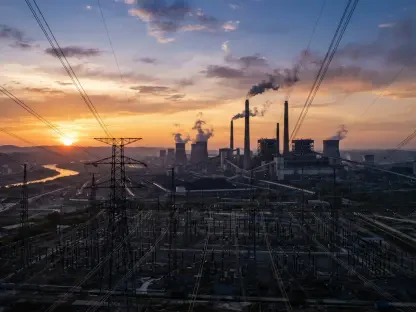

While renewable sources accounted for only one-seventh of the power generated in 2020, they now provide one out of every four kilowatt-hours in the province. This rapid evolution signifies a profound departure from the region’s historical identity as a monolithic coal producer. As China advances toward its 2030 and 2060 climate targets, Shanxi has positioned itself as a critical laboratory for large-scale energy systemic change. The current landscape is no longer defined by simple excavation but by a sophisticated, multi-layered strategy that integrates cutting-edge automation into heavy industry while simultaneously rolling out massive wind and solar arrays. By leveraging its existing industrial heritage to fund and facilitate high-tech innovations, the province is demonstrating how legacy fossil-fuel hubs can transition without sacrificing economic stability or national energy security. This transformation represents a blueprint for a future where energy is managed with digital precision rather than brute manual force, turning a carbon-heavy legacy into a sustainable asset for the next generation.
Modernizing the Traditional Coal Industry
The Rise of Smart Mining: Integrating 5G and AI
The integration of 5G connectivity and artificial intelligence has fundamentally altered the physical and operational nature of coal extraction within the province. For decades, the industry was synonymous with grueling manual labor and high-risk underground conditions, but major enterprises like the Huayang New Material Technology Group have effectively removed workers from the hazardous frontlines. Operators now manage complex machinery from climate-controlled, surface-level remote stations, utilizing real-time video feeds and low-latency sensor data to guide shearers and conveyor systems deep within the earth. This shift to intelligent mining has not only improved the quality of life for employees but has also drastically reduced the incidence of workplace injuries. By creating a digital twin of the mine, engineers can predict mechanical failures before they occur and optimize the flow of materials through the shaft, ensuring that the entire process is both safer and more predictable than the traditional methods used just a few years ago.
Productivity Surges: Remote Control and Labor Reduction
This technological leap has directly translated into unprecedented productivity gains that were previously unattainable through human labor alone. At specialized demonstration sites like Huayang’s No. 1 Mine, the total labor requirement for underground shifts has been slashed by one-third, even as the raw output of the facility continues to soar. A single operational cycle that once yielded roughly 3,500 tonnes of coal can now consistently produce upwards of 6,000 tonnes thanks to the precision of automated cutting and haulage. With more than 360 intelligent coal mines currently operating across the region, Shanxi accounts for over a third of the national total of such high-tech facilities. This concentration of innovation signals a clear move toward a high-tech industrial base where the objective is to maximize resource recovery while minimizing the environmental and human cost of extraction. The consensus among regional leaders is that coal must become smart to remain relevant in a modern economy, serving as a reliable baseline as the broader energy mix continues to diversify.
Expanding the Renewable Energy Footprint
Industrial Green Power: The Private Sector Pivot
Beyond the modernization of coal, the province is aggressively scaling its wind and solar infrastructure to fundamentally shift its energy profile. This transition is being spearheaded by the private industrial sector, where heavy manufacturers like the Shanxi Jinnan Steel Group are integrating renewable energy directly into their massive operational footprints. These companies are no longer passive consumers of electricity; instead, they have become active producers by utilizing every available surface area, including factory rooftops, south-facing industrial walls, and even the rugged terrain of nearby hillsides, to host sprawling solar arrays. The implementation of the green electricity direct supply model has allowed these industrial giants to match their immense energy demands with local renewable generation. This decentralized approach reduces the strain on the national grid and provides a template for how heavy industry can decouple its growth from carbon emissions. By generating billions of kilowatt-hours of green electricity internally, these firms are securing their competitive edge in a low-carbon global market.
The Clean Energy Tipping Point: Surpassing Fossil Fuels
The cumulative impact of these renewable investments reached a historic tipping point recently when clean energy capacity officially surpassed fossil fuel capacity in the regional mix. As of the current period, the province’s installed capacity for wind and solar power has climbed to over 80 million kilowatts, a figure that represents a monumental shift from the status of just a half-decade ago. This diversification is critical for a region formerly defined solely by its mineral wealth, as it provides a more resilient and sustainable foundation for economic growth. The transition is reflected in the fact that renewable sources now account for over 54 percent of the total energy capacity, proving that even a traditional coal powerhouse can successfully reinvent its power generation portfolio. This massive influx of clean power is not just an environmental achievement; it is a strategic economic move that ensures the province remains a central pillar of national energy security while contributing significantly to the reduction of the national carbon footprint through the export of surplus green energy.
Managing Grid Complexity and Stability
Digital Orchestration: Virtual Power Plants and Spot Markets
To manage the inherent variability of solar and wind power, the region has pioneered the deployment of virtual power plants and advanced digital grid management. These are not physical structures built of concrete and steel but sophisticated software platforms that aggregate and coordinate thousands of scattered energy resources, including small-scale solar arrays and industrial battery storage. Companies like Shanxi Fengxingcekong utilize these digital orchestrations to participate in the electricity spot market, where prices and demand fluctuate every few minutes. When renewable production is at its peak and market prices are low, the virtual power plant automatically encourages industrial users to increase their consumption, thereby preventing the waste of clean energy that would otherwise be curtailed. Conversely, during periods of high grid demand, the system can signal users to reduce their loads or discharge stored power. This real-time balancing act has proven essential for maintaining grid stability, with the technological control success rate jumping from 33 percent to 80 percent.
Flexibility Upgrades: Coal as a Supportive Backup
Complementing this digital orchestration is a tactical repurposing of existing coal-fired power plants to serve as a flexible safety net for the green grid. Rather than being decommissioned immediately, over half of the province’s coal units have undergone extensive flexibility upgrades that allow them to operate efficiently at varying loads. These plants are now designed to dial back their output to a fraction of their capacity when renewable generation is high, ensuring that green energy is prioritized for consumption. However, they remain ready to ramp up production within minutes if wind speeds drop or cloud cover reduces solar output unexpectedly. This hybrid model ensures a reliable and consistent power supply while maximizing the utilization of clean energy, which currently remains above 90 percent across the region. By transforming legacy infrastructure into a supportive mechanism for modern renewables, the province has created a practical transition path that avoids the risks of energy shortages while steadily reducing the overall carbon intensity of the regional power grid.
Strategies for a Sustainable Industrial Future
The systemic overhaul of the energy landscape provided several critical insights into the future of industrial sustainability. It was observed that the integration of digital infrastructure was just as vital as the installation of physical power generators, as software and algorithms became the primary tools for ensuring grid reliability. Furthermore, the strategic choice to repurpose coal assets rather than abandon them allowed for a smoother economic transition, preserving jobs while shifting the industry’s role from a primary fuel source to a secondary support system. Moving forward, the focus must shift toward expanding long-term energy storage solutions and further refining the artificial intelligence models used in virtual power plants to achieve even higher precision. The province demonstrated that legacy industrial hubs could lead the global energy transition by adopting a pragmatic, technology-first approach that harmonized the reliability of traditional fuels with the innovation of renewables. These findings suggested that a successful green transition required a diverse toolkit of automated mining and digital grid management.