
The transition of microbial fuel cells from laboratory curiosity to industrial reality is currently hindered by high material costs and the challenge of maintaining efficiency at scale. Despite these obstacles, the pursuit of sustainable energy has intensified throughout 2026, leading researchers to explore the microscopic world where specific bacteria have evolved to breathe solid minerals rather than oxygen. This unique biological process, known as extracellular electron transfer, forms the primary foundation for microbial fuel cells, which are designed to capture the energy released during microbial metabolism. By integrating these “electric” microbes into specialized reactors, it becomes possible to simultaneously purify contaminated water and generate clean electricity. This dual-purpose technology offers a transformative alternative to traditional wastewater treatment methods, which currently rank among the most energy-consuming components of municipal and industrial infrastructure. By shifting the paradigm from waste removal to resource recovery, these systems treat organic pollutants as a valuable fuel source, effectively pushing society toward a more circular and energy-efficient economy.
The Mechanisms of Microbial Electricity
Biological Wiring and Conductive Pathways
For a bacterium to contribute to power generation, it must successfully transport electrons from its internal metabolic processes to an external electrode located outside the cell membrane. Because the lipid membranes of most microorganisms are naturally nonconductive, certain electroactive species like Geobacter sulfurreducens have developed sophisticated biological machinery to bridge this gap. These organisms grow specialized filamentous appendages known as microbial nanowires, which function like biological cables that provide a direct physical connection between the cell and a conductive surface. Unlike chemical reactions that require direct contact, these nanowires allow bacteria to reach electrodes that are micrometers away, creating a dense, three-dimensional network of conductive pathways within a biofilm. This physical “hardware” is essential for high-performance systems because it minimizes the energy loss typically associated with moving charge across the biological-electronic interface.
The adaptive nature of these microorganisms is particularly evident when they are placed in environments where an electrode serves as the sole available electron acceptor. Scientific observations have noted that under such conditions, bacteria like Geobacter do not merely survive; they actively rewire their internal genetic expression to optimize their electrical output. For instance, researchers have documented a significant increase in the production of multiheme c-type cytochromes, which are proteins that facilitate the movement of electrons along the cell surface and through the nanowires. This metabolic shift demonstrates that the efficiency of a microbial fuel cell is not just a result of static biological traits but is driven by an active, dynamic response to the electronic environment. By understanding how these organisms prioritize protein synthesis to improve conductivity, engineers can design systems that encourage faster biofilm development and more resilient electrical connections, leading to higher overall energy yields.
Chemical Shuttles and Mediated Transfer
While some bacteria possess the specialized physical hardware for direct contact, many other species rely on soluble molecules to facilitate electrical communication through a process called mediated electron transfer. These molecules, often referred to as redox shuttles or mediators, act as chemical ferries that pick up electrons from the bacterial cell membrane and deliver them to the anode through the surrounding fluid. Some researchers have experimented with adding synthetic mediators like methylene blue to boost current production, but the modern industry focuses more on endogenous mediators that the bacteria produce themselves. Species such as Pseudomonas aeruginosa secrete pyocyanin, while Shewanella species utilize flavins to manage their electron transfer needs. These natural shuttles are highly efficient because they are produced as needed by the microbial community, reducing the cost and potential toxicity associated with external chemical additives in large-scale wastewater treatment plants.
The impact of these chemical shuttles on the speed of energy conversion is substantial, as even minute concentrations can significantly alter the performance of the fuel cell. Investigations into the behavior of Shewanella oneidensis have revealed that secreted flavins can account for up to 90 percent of the total electron transfer capacity in certain environments. Furthermore, adding small amounts of natural mediators like riboflavin has been shown to accelerate the internal metabolic reactions of the cell by over 60 percent. This acceleration suggests that the chemical environment is just as vital as the biological structure of the microbes themselves. By optimizing the concentration of these shuttles within a reactor, it is possible to achieve much higher power densities without the need for complex genetic modifications. This chemical optimization pathway offers a versatile tool for treating diverse wastewater streams where maintaining direct physical contact between every microbe and the electrode surface would be physically impossible.
Engineering the Microbial Environment
Advancements in Electrode Material Science
The overall efficiency of any microbial fuel cell is largely determined by the characteristics of the anode, which serves as the physical home for the electroactive biofilm. In the early stages of development, researchers relied on simple graphite rods or plates, but these materials lacked the necessary surface area to support large-scale industrial applications. To address this, current engineering strategies involve the use of advanced carbon nanomaterials, including graphene and carbon nanotubes, to create highly porous, three-dimensional scaffolds. These structures provide a massive surface area relative to their volume, allowing bacteria to inhabit the interior of the electrode rather than just forming a thin layer on the outside. This architectural shift dramatically increases the number of active microbes contributing to the electrical current, leading to a much higher power density than was previously achievable with traditional flat-surface materials.
Beyond just increasing surface area, material scientists are now “doping” these carbon scaffolds with specific elements like nitrogen or iron to enhance their catalytic properties. By incorporating these elements into the electrode structure, engineers can effectively mimic the active centers of biological enzymes that the bacteria use for electron transfer. For example, nitrogen-doped carbon cloth has been shown to significantly improve the rate at which bacteria attach to the surface and begin producing power. These modifications trick the microorganisms into forming a more robust and efficient connection by providing a surface that chemically resembles their own natural electron-carrying proteins. This synergy between biology and material science has enabled the development of anodes that are not only more conductive but also more biocompatible, ensuring that the microbial community remains healthy and productive over long periods of operation in harsh wastewater environments.
Sustainability Through Biomass and Consortia
As the industry moves toward a more sustainable future in 2026, there is a growing emphasis on using eco-friendly materials to build the components of microbial fuel cells. Instead of relying on expensive synthetic polymers or rare metals, researchers are repurposing biological waste products like tea polyphenols or chitin from shellfish shells to functionalize electrodes. These biomass-derived materials often provide natural binding sites for bacteria and can be manufactured with a much lower environmental footprint. By using waste to create the very tools that process more waste, the technology aligns perfectly with the principles of industrial ecology. This approach not only lowers the initial capital investment required for new treatment facilities but also ensures that the components of the fuel cell do not themselves become a source of pollution at the end of their functional lifespan.
The complexity of real-world wastewater necessitates a shift away from laboratory-pure cultures toward diverse microbial communities known as consortia. In a natural wastewater environment, a single species of bacteria is rarely capable of breaking down all the various pollutants present, such as complex carbohydrates, fats, and proteins. In a managed consortium, different species play specialized roles: some microbes act as primary degraders that break down large organic molecules into simpler sugars, while others ferment those sugars into acetate. The “electric” bacteria then consume the acetate to produce the final electrical current. This natural division of labor allows the system to process “dirty” or variable water sources that would otherwise overwhelm a single-strain reactor. By fostering these cooperative relationships, engineers can create more resilient systems that maintain consistent power output even when the composition of the incoming wastewater fluctuates significantly.
Integrating Solar Power and Overcoming Hurdles
The Synergy of Algae and Photosynthesis
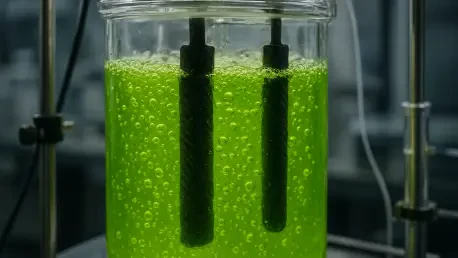
One of the most promising recent developments in bioelectrochemical systems is the integration of photosynthetic microalgae into the fuel cell architecture, creating what is known as a biophotovoltaic system. In traditional fuel cells, oxygen must be mechanically pumped into the cathode to serve as an electron acceptor, a process that can consume up to 50 percent of the total energy the system generates. By placing algae like Chlorella pyrenoidosa at the cathode, the system can utilize natural sunlight to perform photosynthesis, which releases oxygen as a byproduct directly into the fluid. This biological aeration eliminates the need for energy-intensive mechanical pumps, significantly improving the net energy balance of the entire treatment process. Furthermore, the algae consume carbon dioxide during this process, allowing the fuel cell to act as a carbon sink while it cleans the water and generates electricity.
The integration of algae also introduces the possibility of multiple revenue streams, which makes the technology much more economically attractive for municipal utilities. Beyond generating electricity, these algal-assisted systems produce a valuable biomass that can be harvested and processed into various high-value products. For instance, the lipids extracted from the algae can be converted into high-quality biofuels, while the leftover proteins and pigments like astaxanthin can be sold to the agricultural and pharmaceutical industries. Some diatom-based systems have even demonstrated the ability to remove heavy metals and synthetic dyes from industrial runoff while simultaneously increasing their own lipid production by over 60 percent. This multi-product approach transforms a simple wastewater treatment plant into a sophisticated biorefinery, where the production of electricity is just one of several valuable outputs derived from the processing of organic waste.
Challenges on the Path to Commercialization
Despite the impressive scientific milestones achieved by 2026, the widespread commercial adoption of microbial fuel cells faces several significant practical obstacles. The primary concern remains the high cost of the specialized materials, such as graphene-based electrodes or high-tech membranes, which are often too expensive for large-scale municipal projects. Additionally, while these systems work exceptionally well in small laboratory setups, scaling them up to treat millions of gallons of water introduces problems with internal electrical resistance. As the size of the reactor increases, the distance the electrons must travel grows, leading to energy losses that can quickly diminish the overall efficiency of the system. Solving these “shunting” issues requires a complete rethink of reactor design, moving away from large tanks toward modular, decentralized arrays that can be easily managed and maintained.
The harsh and unpredictable nature of industrial wastewater also poses a threat to the long-term durability of these biological systems. Raw sewage can be highly corrosive, and over time, non-productive microbial species can invade the reactor and outcompete the “electric” bacteria, leading to a steady decline in power output. Furthermore, the current regulatory landscape lacks standardized certifications or financial incentives for bioelectricity, which discourages private companies from making the long-term investments needed to bring this technology to market. Without clear policies like feed-in tariffs or carbon credits specifically designed for microbial energy, the financial risk often outweighs the potential rewards. Addressing these systemic issues will require a coordinated effort between scientists, engineers, and policymakers to create an environment where bioelectrochemical technologies can compete on a level playing field with traditional renewables.
Strategic Pathways for Industrial Integration
The path toward industrial reality relied on the adoption of modern manufacturing techniques and advanced digital tools to bridge the gap between laboratory success and field application. Researchers focused on the development of 3D-printed porous structures that allowed for the mass production of complex, high-surface-area electrodes at a fraction of the traditional cost. By using bioinformatics to map the genomes of the most resilient electroactive species, it became possible to “seed” reactors with specialized microbial starters that could withstand the fluctuations of real-world industrial runoff. These efforts moved the technology away from the goal of powering entire cities and toward decentralized, niche applications where it could provide the most immediate value.
Decentralized systems, such as self-powering water sensors and specialized treatment modules for remote locations, provided the necessary testing ground for these innovations. These smaller-scale deployments allowed for the continuous monitoring of biofilm health and electrical stability in real-world conditions, providing the data needed to refine reactor designs. As the engineering community perfected the interface between microbes and machines, the concept of a sewage plant as a passive waste site was replaced by the vision of an active power station. The progress made in understanding microbial wiring and material science ultimately paved the way for a future where every drop of wastewater held the potential for a spark of sustainable energy.