
U.S. Defense Secretary Pete Hegseth has categorized the American military presence in the Middle East as an ironclad blockade designed to maintain control over vital transit lanes. This assertion arrives at a critical juncture as the Strait of Hormuz has devolved into a high-stakes theater of maritime aggression, fundamentally altering the risk profile of global energy transit in 2026. Since the beginning of October, the frequency of kinetic strikes against commercial vessels has surged, leaving the international community to navigate a volatile landscape of conflicting claims and physical danger. The disruption of this narrow chokepoint, through which a significant portion of the world’s petroleum flows, has moved beyond a regional concern to become a central pillar of global economic anxiety. As commercial tankers face the threat of fire and propulsion failure, the intersecting interests of the United States, Israel, and Iran are creating a feedback loop of escalation that threatens to decouple energy prices from standard supply-and-demand fundamentals.
Escalating Maritime Conflict in the Strait of Hormuz
Kinetic Attacks and Persistent Threats
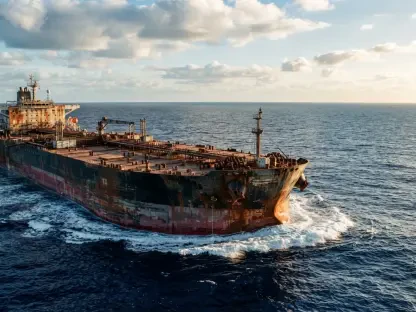
The physical reality on the water remains precarious as maritime monitors record a steady stream of incidents that compromise the structural integrity of heavy-duty vessels. Specifically, reports from the UK Maritime Trade Operations have highlighted recent strikes on the port sides of crude oil tankers, with some occurring as close as four nautical miles off the Omani coast. These actions are not merely isolated mishaps but appear to be part of a calculated campaign to instill uncertainty within the insurance and shipping sectors. When a vessel loses propulsion or catches fire in these waters, the ripple effects are felt instantly in commodity trading hubs from London to Singapore. The sheer unpredictability of these unidentified projectiles has forced many shipping firms to reconsider their routes or demand significant hazard pay for crews. This environmental instability serves as the backdrop for a much larger geopolitical chess match where the safety of global fuel supplies is increasingly used as a primary bargaining chip.
Conflicting Perspectives on Maritime Law
In stark contrast to the reports issued by Western security agencies, Iranian state media outlets have presented a narrative of regulatory enforcement rather than random aggression. Tehran asserts that many of the tankers targeted, including a supertanker carrying 2.5 million barrels of crude that caught fire near Oman, were operating on unauthorized routes that violated Iranian maritime standards. The Iranian Revolutionary Guard Corps has specifically identified several vessels, such as the AL RUWAIS and MERSIN PROSPERITY, as habitual offenders affiliated with the United Arab Emirates. By framing these kinetic engagements as necessary interventions against repeat violators, Iran is attempting to legitimize its use of force within the international waterway. This divergence in reporting creates a dense fog of information that makes it difficult for global markets to assess the true level of risk. While the United States and its allies see a campaign of maritime terrorism, Iran portrays itself as a regional gatekeeper.
The Geopolitical Standoff and Resulting Energy Crisis
Jurisdictional Disputes and Market Volatility
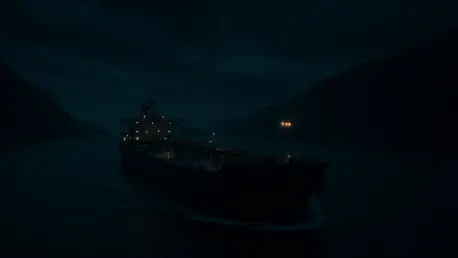
The dispute over the Strait of Hormuz has transitioned into an existential struggle over maritime sovereignty. Brigadier General Hossein Mohebbi of the IRGC has issued unequivocal warnings that any ship entering the passage without direct Iranian clearance faces the threat of naval engagement or underwater mines. This aggressive stance represents a direct challenge to the established principles of freedom of navigation, as Iran seeks to implement a de facto permitting system for global energy transit. In response, the United States has doubled down on its commitment to maintaining the flow of commerce, utilizing carrier strike groups to monitor movement within the gulf. To adapt to this hostile environment, many commercial operators have shifted their transit schedules, opting to move through the most dangerous zones under the cover of night. This tactical shift allows vessels to minimize their visual and radar signatures, though it also increases the technical complexity of navigating the world’s most congested waterway.
Global Countermeasures and Future Security
Recognizing the potential for a catastrophic market failure, the G7 nations joined forces with the International Energy Agency to implement a massive emergency intervention. The centerpiece of this strategy was the release of 100 million barrels of oil from strategic reserves over a four-month period. The primary objective of the initial phase was to flood the market with diesel-grade petroleum to alleviate the immediate pressure on fuel prices, which had reached a staggering record of $6.50 per gallon in the American market. Beyond the release of stockpiles, the G7 established a new framework for refinery coordination that aimed to maximize global production capacity and synchronize maintenance schedules. In light of these challenges, the global community took decisive steps to diversify supply routes and fortify domestic production capabilities. This proactive stance allowed industrial sectors to maintain operational continuity even as the geopolitical climate remained tense, ensuring that no single waterway could hold the economy hostage.