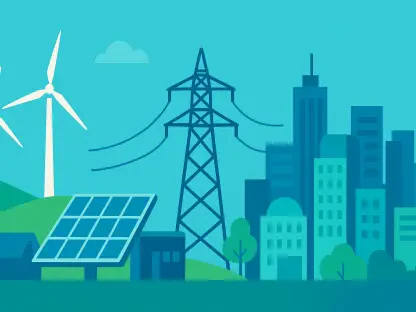

The rapid transition from a centralized utility model to a distributed energy framework in Kenya has reached a critical juncture where the surge in private solar adoption is fundamentally challenging the operational logic of the national power grid. This movement is characterized by a significant departure from the traditional reliance on large-scale, state-controlled power plants toward a more fragmented and democratic generation map. The Energy and Petroleum Regulatory Authority (EPRA) is now tasked with a complex balancing act, attempting to foster green energy growth while ensuring the national distributor remains financially solvent. The introduction of the 2026 Gazette Notice represents the most definitive step yet in managing this evolution, providing the legal teeth required to govern how private entities interact with the public infrastructure.
The Energy and Petroleum Regulatory Authority has assumed a more assertive role in steering national policy by defining the boundaries of what is permissible for independent power producers and domestic solar owners alike. This regulatory pivot is largely driven by the need to maintain a reliable supply as the number of intermittent energy sources connected to the grid continues to climb. The new directives emphasize that while individual energy autonomy is a valid pursuit, it cannot come at the expense of the systemic integrity of the national distribution network. As more households and factories install their own panels, the traditional revenue model for the utility sector faces a disruption that necessitates a rethink of tariff structures and interconnection agreements.
Balancing the financial viability of Kenya Power with the rapid adoption of renewable technology remains the central challenge for policymakers in this current fiscal cycle. The utility has historically relied on high-volume industrial consumers to cross-subsidize domestic tariffs, but as these industrial players move off the grid, the remaining cost burden threatens to become unsustainable. The 2026 regulations seek to mitigate this by ensuring that grid-connected solar users contribute to the upkeep of the transmission system they still use as a backup. This creates a more equitable distribution of infrastructure costs, ensuring that those who generate their own power do not inadvertently pass on the maintenance expenses of the grid to those who cannot afford private solar installations.
Market Dynamics and the Proliferation of Variable Renewable Energy
Emerging Trends in Captive Power and Decentralized Generation
The market for “Behind-the-Meter” solar solutions is experiencing an unprecedented expansion as both residential and industrial consumers seek to mitigate the rising cost of traditional electricity. This shift is not merely about cost savings but also reflects a broader evolution in consumer behavior, where users have transitioned from being passive recipients of energy to active prosumers. These prosumers manage their own generation and consumption in real time, often utilizing sophisticated smart inverters that allow for granular control over how much electricity is used on-site versus how much is potentially fed back into the system. The desire for energy independence is now a primary driver of investment in the Kenyan private sector.
Technological advancements have played a pivotal role in this transformation, particularly with the widespread adoption of zero-export limiting devices. These components are essential for consumers who wish to enjoy the benefits of solar power without entering the complex regulatory territory of grid injection. By ensuring that no electricity flows back through the meter, these devices protect the user from the newly introduced dumping charges while still allowing them to maximize their solar self-consumption. Moreover, the integration of digital monitoring systems provides these prosumers with the data necessary to optimize their energy use patterns, further reducing their reliance on the national grid during peak hours.
The expansion of the Commercial and Industrial solar segment has served as a critical hedge against the volatility of global energy markets and local tariff adjustments. Large facilities are increasingly turning to captive power plants to ensure a stable and predictable energy cost structure, which is vital for long-term operational planning. This trend has fostered a competitive environment among solar service providers, leading to more innovative financing models such as power purchase agreements that require no upfront capital from the business owner. As these commercial installations become larger and more sophisticated, their impact on the national energy balance becomes a significant factor that the regulator can no longer ignore.
Performance Indicators and National Growth Projections
A statistical breakdown of the current capacity reveals a stark contrast between grid-connected solar and captive power installations across the country. While official grid-connected solar accounts for approximately 210.3 megawatts, the volume of captive generation has surged to an estimated 575 megawatts as of the current reporting period. This disparity highlights the fact that the majority of solar growth is happening at the consumer level rather than through large-scale utility projects. The data suggests that private investment is outpacing state-led renewable initiatives, placing the responsibility of grid management on the shoulders of the utility provider who must now accommodate these thousands of decentralized points of generation.
The impact of Solar Home Systems on rural electrification continues to be a cornerstone of energy access in Kenya, with roughly 200,000 systems currently in operation. These smaller installations have succeeded where traditional grid extension often failed, providing essential lighting and power to remote areas with remarkable efficiency. This success has influenced the National Energy Policy 2025, which projects a steady increase in solar sector growth from 2026 through 2028. The policy aims to harmonize these off-grid successes with the national distribution strategy, ensuring that rural development is supported by a mix of standalone systems and future-ready microgrids.
Current energy mix data indicates that Kenya is rapidly approaching the technical threshold for variable renewable energy, which currently fluctuates between 34 percent and 36 percent of total demand. Managing this percentage is a delicate task for grid operators, as the variability of solar and wind can lead to imbalances if not matched with flexible base-load power or significant storage capacity. The regulator is monitoring these thresholds closely, as exceeding them without adequate grid stabilization measures could lead to localized outages or more systemic failures. This reality underscores the necessity of the recent regulations, which aim to provide the utility with better visibility and control over the power flowing into the system.
Addressing Grid Instability and Technical Integration Obstacles
The technical risks associated with uncoordinated solar injections are primarily centered on voltage fluctuations and frequency drops that can occur when large amounts of solar power suddenly drop off the grid. This typically happens during sudden cloud cover or at sunset, forcing the utility to rapidly ramp up other generation sources to fill the gap. If the distribution network is not prepared for these shifts, the resulting instability can damage sensitive electronic equipment and compromise the reliability of the power supply for all users in the vicinity. Consequently, the regulator has prioritized the implementation of strict technical standards for any hardware that interfaces with the national grid.
A significant challenge lies in the fact that many of Kenya’s legacy distribution networks were designed for a one-way flow of electricity from centralized plants to the end-user. The introduction of bi-directional energy flow requires a fundamental upgrade in protection systems and transformer configurations to prevent back-feeding issues. Without these upgrades, the presence of unauthorized solar exports can lead to “islanding,” a condition where a portion of the grid remains energized even when the main utility supply is cut off. This creates a lethal hazard for utility workers who may believe a line is de-energized for maintenance, only to find it being powered by a nearby private solar array.
To mitigate these risks, the current regulatory framework incentivizes the adoption of battery storage and digital monitoring systems that can smooth out the output of solar installations. By storing excess energy during the day and releasing it during the evening peak, these systems reduce the strain on the national grid and improve the overall stability of the energy supply. Furthermore, the mandatory use of anti-islanding hardware in all grid-connected systems has become a non-negotiable safety requirement. These technical strategies are essential for the safe integration of renewable energy, ensuring that the transition to a greener grid does not compromise the safety of the professionals who maintain it.
Navigating the New Regulatory Framework and Fiscal Penalties
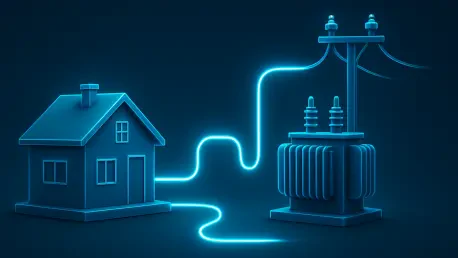
The term electricity dumping has been officially codified to describe the unauthorized export of power into the national distribution network. Under the new rules, any electricity that flows back into the grid from a system without an approved net-metering agreement is measured and billed at the applicable base tariff. This means that instead of receiving a credit for the energy they provide, unauthorized exporters are actually charged for the power they dump, effectively paying the utility for the privilege of giving them electricity. This fiscal penalty is designed to be a strong deterrent against uncoordinated grid injections, pushing solar owners toward formal compliance and technical verification.
Navigating the 2024 Net-Metering Regulations is now a prerequisite for any solar owner looking to legally export power and receive financial recognition for their contribution. These regulations set clear capacity limits, restricting domestic single-phase users to 4 kilowatts and three-phase users to 10 kilowatts, while commercial installations can reach up to 1 megawatt. However, the financial arrangement is not a simple one-to-one swap; it utilizes a 50 percent credit mechanism. This means that for every unit of energy exported to the grid, the consumer only receives a credit for half a unit, reflecting the utility’s costs for providing the grid infrastructure and balancing services that make the exchange possible.
Compliance and liability have become major points of concern for the solar industry, as Kenya Power now has the clear legal recourse to seek damages for grid malfunctions caused by unauthorized systems. If an uncertified inverter causes a surge that damages local transformers or leads to personal injury, the owner of that system can be held financially and legally responsible. Additionally, a significant controversy has emerged regarding the 14-month retrospective implementation of these export charges. The decision to backdate the effective date of the dumping penalties to July 1, 2025, has created a sense of uncertainty among early adopters, though enforcement has largely focused on encouraging future compliance rather than mass historical billing.
The Future of Prosumerism and Smart Grid Innovation
The movement toward a digitized grid is expected to transform how ancillary services and frequency response are managed across the country. In the coming years, the utility will likely look to private solar and battery owners to provide these critical services, potentially creating new revenue streams for those with high-capacity systems. By integrating these decentralized assets into a smart grid, the national operator can use them as a virtual power plant to stabilize the network during periods of high demand. This evolution represents a shift from viewing prosumers as a technical burden to seeing them as a vital asset in the national energy strategy.
Potential market disruptors such as peer-to-peer energy trading and community solar microgrids are beginning to gain traction in the policy discourse. These models would allow neighbors to trade excess solar power among themselves, bypassing the traditional utility model for local distribution. While such innovations are still in the early stages of regulatory consideration, they represent the logical next step for a market that is increasingly comfortable with decentralized generation. The expected evolution of net-metering credits will likely play a role in this, as the 50 percent rate may be adjusted to better reflect the changing value of solar energy during different times of the day.
Global economic conditions continue to influence the local market, particularly regarding the cost of solar hardware and advanced storage solutions. As international prices for lithium-ion batteries and high-efficiency panels continue to fluctuate, the financial attractiveness of different solar configurations will shift. Kenyan prosumers must remain adaptable, choosing between zero-export configurations that maximize on-site use and formal net-metering setups that offer long-term grid integration. The ability of the local industry to navigate these global trends while adhering to the new domestic regulatory framework will determine the pace of Kenya’s transition to a truly modern and resilient energy economy.
Conclusion: Balancing Individual Energy Autonomy with National Grid Stability
The strategic shift toward a highly regulated, bi-directional energy market in Kenya marked a significant milestone in the nation’s energy history. Stakeholders across the spectrum recognized that the era of uncoordinated private generation had to end to protect the collective stability of the power supply. The introduction of the dumping penalties and the formalization of the net-metering framework provided the necessary structure to manage thousands of independent power sources. This transition moved the conversation away from simple solar adoption toward a more sophisticated understanding of grid responsibility and technical compliance.
Solar owners and investors adapted to the new landscape by prioritizing technical transparency and safety over immediate, unregulated exports. The choice between zero-export configurations and formal net-metering became a standard part of the feasibility studies for every new installation. By opting for approved hardware and following the established legal pathways, prosumers ensured that their investments remained secure from punitive billing. This shift also encouraged a more widespread use of energy storage, which allowed individuals to gain the autonomy they desired without placing an undue burden on the national distribution infrastructure.
Ultimately, the journey toward becoming a regional leader in renewable energy integration required a balance of firm regulation and market incentives. The necessity of maintaining an efficient and non-bureaucratic approval process remained a top priority for the government to sustain green growth. As the grid became more digitized and responsive, the synergy between the central utility and decentralized producers grew stronger. The Kenyan energy sector successfully navigated the complexities of this transition, setting a precedent for how other emerging markets might handle the rise of the prosumer in a way that benefited the entire national economy.