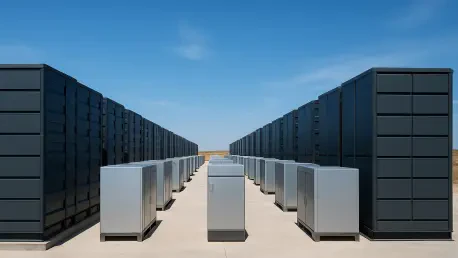

Technical specifications for new projects in Sardinia reveal a move toward four-hour storage durations using forty-eight containerized battery and inverter units per site. This technological shift coincides with Italy’s unprecedented expansion in energy infrastructure, where the Ministry of Environment and Energy Security authorized a record-breaking 3.25 gigawatts of Battery Energy Storage Systems in just a few weeks. This rapid regulatory acceleration indicates a robust commitment to stabilizing the national power grid as it transitions away from fossil fuels toward a more volatile, renewable-heavy energy mix. By green-lighting twenty-six distinct projects, the government has set a precedent for how bureaucratic efficiency can align with environmental goals. The current momentum, stretching from 2026 toward the end of the decade, highlights a systematic approach to handling surplus energy. This surge in approvals ensures that Italy remains a central figure in the European energy transition, providing a necessary buffer for solar power.
Regional Strategy: Strengthening the Mediterranean Energy Hub
The geographical distribution of these authorized storage projects reflects a strategic emphasis on Southern Italy and the island regions, where the disparity between energy generation and grid capacity is most pronounced. These territories, renowned for their intense solar radiation and wind corridors, accounted for roughly 58% of the total authorized capacity, equating to nearly 1.89 gigawatts. Puglia emerged as a frontrunner in this regard, securing 673 megawatts across five distinct provinces, including Brindisi and Foggia. This concentrated effort in the south is not merely coincidental but is a targeted response to the historical challenges of grid congestion that have often forced renewable curtailment. By situating large-scale battery systems in proximity to major wind and solar farms, the national grid operator can effectively capture excess production that would otherwise be lost. Sardinia follows closely, utilizing its unique island geography to pilot innovative storage solutions that enhance its autonomy from the mainland grid.
In contrast to the solar-heavy focus of the south, the projects authorized in Central and Northern Italy address the high energy demands of the nation’s primary industrial and urban hubs. The Lazio region, for instance, secured over 500 megawatts of capacity, featuring significant installations near Rome and Viterbo that provide critical support to the metropolitan power supply. Moving further north, although the number of individual projects is smaller, their average capacity remains remarkably high, often approaching 200 megawatts per site. Locations in Piedmont and Lombardy are specifically designed to serve as high-capacity reservoirs for the northern industrial grid, ensuring that the heavy manufacturing sectors remain powered during fluctuations in renewable output. This balanced nationwide approach ensures that the energy transition does not favor one region at the expense of another, instead creating a unified network where storage assets are placed precisely where they offer the most utility for both producers and high-volume consumers.
Future Considerations: Scaling Infrastructure for Long-Term Resilience
The surge in regulatory approvals has also signaled a maturing market that successfully attracts a diverse range of international and domestic capital. Specialized firms like ACL Energy and Fvg Renewables have taken the lead in terms of total capacity and project volume, demonstrating the agility of independent power producers in this rapidly evolving sector. Furthermore, the presence of global energy giants such as Iberdrola, Engie, and Hanwha highlights Italy’s status as a top-tier destination for energy storage investment on the continent. Domestic heavyweights like Eni and Edison have not lagged behind, often utilizing joint ventures to leverage local expertise alongside extensive financial resources. This competitive landscape has fostered an environment of innovation where developers are pushed to offer more efficient and reliable storage solutions. The influx of foreign investment has brought with it advanced technical standards and best practices, which has helped professionalize the ecosystem in record time.
The successful authorization of such massive capacity established a clear roadmap for the immediate future of the Mediterranean energy landscape. Stakeholders recognized that the integration of high-density lithium-ion systems was no longer a theoretical exercise but a functional necessity for maintaining industrial productivity. Italy demonstrated that a combination of streamlined permitting and diverse international investment could overcome the traditional barriers to large-scale infrastructure deployment. These initiatives moved the country closer to its mid-decade climate targets while simultaneously reducing its reliance on imported gas for peak-load balancing. Authorities recommended that the focus now shifted toward optimizing the software layers of these storage assets to ensure seamless communication with the national transmission operator. By prioritizing regional stability and technical standardization, the nation provided a replicable model for other European states seeking to bolster their own domestic energy security.