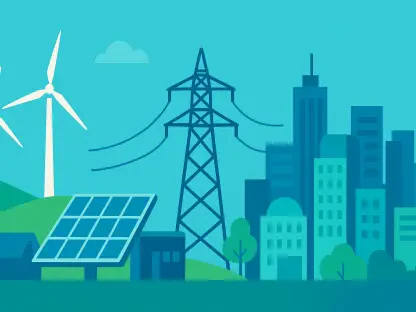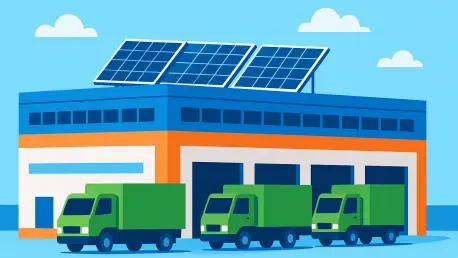

The sprawling steel and concrete expanses of the British warehousing landscape, once seen merely as storage shells, are rapidly evolving into the front line of a renewable energy revolution that could redefine the nation’s power grid. This sector represents a critical pillar of the United Kingdom’s economy, encompassing millions of square feet of physical footprint that serves as the backbone of modern commerce. As 2026 unfolds, the traditional view of these structures is shifting, with logistics hubs moving from passive consumers of electricity to central players in the national energy transition. This evolution is no longer a peripheral environmental goal but a core operational requirement for businesses facing high energy costs and strict carbon mandates.
Major market players and property developers are driving this transition by reimagining warehouses as green energy hubs. This shift is prompted by a necessity to decarbonize large-scale distribution centers that historically required massive amounts of energy for lighting, climate control, and automated sorting systems. By leveraging their vast rooftop areas, these companies are beginning to mitigate the pressure to find renewable solutions while simultaneously future-proofing their operations against energy market volatility. The transformation of these industrial horizons marks a fundamental change in how the logistics sector perceives its role within the broader economic infrastructure.
Harnessing the Industrial Horizon: The Current State of UK Logistics Infrastructure
The current state of the UK logistics infrastructure is defined by a massive expansion in capacity and a simultaneous pivot toward environmental sustainability. Large-scale warehouses now cover more than half a billion square feet across the country, providing an unprecedented opportunity for rooftop solar deployment. As land-use concerns make ground-mounted solar farms more controversial, the focus has naturally turned toward utilizing existing industrial roofs. This transition is being led by a handful of forward-thinking developers who view green energy as a value-add for their tenants rather than a burdensome compliance cost.
Energy consumption patterns within these facilities have become increasingly complex as automation and electrification of delivery fleets gain momentum. High-volume distribution centers often operate twenty-four hours a day, placing a heavy load on the regional energy infrastructure. To combat this, the sector is integrating on-site generation to offset grid dependency, which is essential for maintaining thin margins in a competitive market. This proactive stance on sustainability is transforming the warehousing sector from a contributor to carbon emissions into a leading force for renewable energy adoption.
Emerging Trends and the Data-Driven Case for Solar Integration
Technological Innovations and Shifting Energy Paradigms
The technological landscape of industrial solar has moved far beyond simple panel installation to include sophisticated energy ecosystems. Modern rooftop photovoltaic systems are now paired with advanced smart energy management platforms that optimize electricity consumption in real time. These systems allow logistics hubs to monitor generation patterns and prioritize energy flow to high-demand areas like cold storage or automated conveyors. Furthermore, the rise of Power Purchase Agreements has provided a viable financial mechanism for companies to bypass high capital expenditure, allowing them to benefit from solar power without the upfront costs of system ownership.
This paradigm shift is also characterized by the transition from passive storage to active energy generation. In the past, roofs were viewed solely as protective coverings, but they are now treated as valuable energy-generating assets. By utilizing Power Purchase Agreements, tenants can lock in stable energy prices for extended periods, providing a hedge against the price spikes seen in recent years. This financial innovation, combined with more efficient solar cells, has made the business case for integration much more compelling for both small-scale operators and international logistics giants.
Market Projections: The 17.3 GW Opportunity
Data from the UK Warehousing Association highlights a staggering potential for 17.3 GW of untapped solar capacity on the country’s warehouse rooftops. While the industry has historically utilized only about 5% of this available space, the growth trajectory from 2026 to 2030 suggests a rapid acceleration in adoption rates. This vast capacity could provide enough electricity to power millions of homes or satisfy a significant portion of the industrial sector’s total demand. As the national renewable targets become more stringent, the pressure to tap into this “dead space” is reaching a critical mass among stakeholders.
The economic forecast for this transition is equally significant, with potential energy cost savings across the industry projected to reach hundreds of millions of pounds annually. Carbon reduction targets are also a major driver, as companies strive to meet net-zero commitments before the end of the decade. This 17.3 GW opportunity represents not only a technological challenge but a strategic opening for the UK to enhance its energy security by distributing power generation across thousands of industrial sites.
Navigating the Labyrinth: Overcoming Structural and Financial Obstacles
Despite the obvious benefits, the “split incentive” dilemma remains one of the most persistent barriers to solar adoption in the logistics sector. This situation occurs when a landlord owns the building but the tenant pays the energy bills, leaving neither party with a clear financial motivation to invest in solar infrastructure. To overcome this, new lease structures are being developed that allow both parties to share in the savings generated by on-site power. Additionally, technical challenges such as roof load-bearing capacities must be addressed, as many older warehouses require structural reinforcement to support the weight of modern solar arrays.
Beyond structural issues, complex insurance requirements and the risk of dilapidation charges often deter tenants from committing to long-term renewable projects. Many companies fear that installing solar will lead to high “exit charges” or a requirement to return the roof to its original state at the end of a lease. Furthermore, the bottleneck of grid connection delays continues to frustrate developers who are ready to export excess energy back to the national grid. Strategies to accelerate local energy distribution, such as private wire networks and localized micro-grids, are being implemented to bypass these administrative hurdles.
The Regulatory Framework and the Evolution of Green Standards
The impact of UK government net-zero policies has fundamentally altered the regulatory landscape for new warehouse developments. Building regulations now frequently mandate high levels of energy efficiency, pushing developers to incorporate renewable generation at the design stage rather than as a retrofit. This move toward “solar-ready” standards ensures that new buildings have the necessary structural integrity and electrical infrastructure to support large-scale PV arrays. These standards simplify the process of achieving environmental compliance and reduce the long-term costs of sustainability for property owners.
Legal complexities regarding long-term energy contracts within standard commercial lease structures are also being resolved through standardized agreements. These contracts provide the legal certainty required for thirty-year solar projects to coexist with five-year or ten-year property leases. Moreover, the influence of tax incentives and capital allowances is becoming more pronounced, providing financial relief for firms that invest in renewable technology. These regulatory and fiscal measures are essential for stimulating the volume of investment needed to meet national decarbonization goals within the industrial sector.
The Future of Logistics: From Distribution Centers to Renewable Power Plants
The evolution of warehouses into decentralized power stations is the next logical step in the modernization of the logistics industry. These facilities will soon be capable of feeding significant amounts of energy back into the national grid during periods of low on-site demand. This transition is being furthered by the integration of large-scale battery storage and EV fleet charging hubs, which allow warehouses to manage their energy loads with high precision. By combining generation, storage, and consumption in a single location, the logistics sector is becoming a cornerstone of the future energy landscape.
Landlord-tenant partnerships, exemplified by collaborative models like the Europa-Prologis initiative, are becoming the industry blueprint for successful solar deployment. These partnerships move away from adversarial lease negotiations toward a model where energy resilience is a shared goal. Global economic conditions and ongoing concerns over energy security are serving as primary drivers for this accelerated adoption. As fossil fuel prices remain unpredictable, the ability to generate clean, local energy provides a competitive advantage that is increasingly difficult for logistics firms to ignore.
Industry Prospects: Transforming Dead Space into Strategic Assets
The logistics sector eventually realized that the most effective way to dismantle historical barriers was through a fundamental shift in the landlord-tenant relationship. By treating rooftops as strategic energy assets rather than mere maintenance liabilities, companies successfully unlocked a massive source of renewable power. The industry found that collaborative financing models, such as Power Purchase Agreements, were the key to overcoming the high capital costs that previously stalled progress. These partnerships proved that environmental goals and commercial profitability were not mutually exclusive but were actually deeply interconnected.
Stakeholders who prioritized energy resilience found themselves better equipped to handle the fluctuations of the national energy market throughout the late decade. Proactive infrastructure management allowed the sector to meet the UK’s renewable energy and land-use goals without sacrificing operational efficiency. Moving forward, the industry was encouraged to maintain this momentum by standardizing “solar-ready” designs and continuing to advocate for faster grid connection protocols. Ultimately, the transformation of warehouse roofs into decentralized power plants provided a resilient solution for a nation in need of sustainable, large-scale energy alternatives.