
The silent hum of a city at night represents a complex ballet of electrons moving through a vast network of copper and steel that is now being governed by invisible algorithms. This orchestration of energy is no longer a simple matter of matching supply with demand through manual switches and mechanical relays. In 2026, the global power grid has evolved into one of the most sophisticated examples of cyber-physical systems in existence. The significance of this transformation cannot be overstated, as the stability of modern civilization relies on the ability of the grid to adapt to the volatile nature of renewable energy while satisfying the insatiable appetite of a digital-first economy. Artificial Intelligence has transitioned from a peripheral experimental tool to the very backbone of energy infrastructure, ensuring that the lights stay on even as the world moves toward a decentralized and decarbonized future.
The necessity of this shift is driven by a fundamental change in how the world consumes and generates power. Previously, utilities operated on a predictable schedule, but the integration of intermittent sources like solar and wind has introduced a level of complexity that human operators can no longer manage alone. By leveraging machine learning and real-time data processing, energy providers are now capable of predicting fluctuations before they occur. This predictive capability is the cornerstone of the modern smart grid, allowing for a level of precision and reliability that was previously thought to be impossible. As the world faces the dual challenges of climate change and surging energy needs, the marriage of intelligence and infrastructure has become the primary defense against instability.
The New Frontier of Energy: Intelligence Meets Infrastructure
The contemporary energy landscape is defined by a paradigm shift where the physical infrastructure of the grid is being overlaid with a dense layer of digital intelligence. This new frontier is not just about efficiency; it is about creating a system that is inherently resilient and self-healing. Under the strategic vision of leaders like Stanley Huang at SP Group, the traditional utility model has been reimagined as a high-tech ecosystem. The focus has moved from merely maintaining assets to extracting maximum value from every byte of operational data. This data-centric approach allows for a granular understanding of grid health, enabling utilities to optimize energy flow across entire continents with minimal human intervention.
The significance of this evolution lies in its ability to manage the increasing unpredictability of energy patterns. As consumers transition into prosumers—individuals who both consume and produce energy through residential solar panels—the grid must handle multi-directional flows that traditional designs were never intended to support. Intelligence in this context serves as a traffic controller, ensuring that surplus energy is routed to where it is needed most, whether that is a neighboring household or a large-scale storage facility. Consequently, the grid has become a living, breathing entity that learns from its environment and adapts to the needs of the population in real-time.
Furthermore, the integration of AI into infrastructure management has paved the way for a more sustainable economic model. By reducing waste and improving the efficiency of energy distribution, utilities are able to lower operational costs and, by extension, provide more stable pricing for the end-user. This transformation is not limited to a single region but is a global movement that is redefining the relationship between technology and society. The power grid of 2026 is a testament to the fact that when engineering excellence meets advanced computation, the result is a system that is far greater than the sum of its parts.
From Mechanical Networks to Digital Ecosystems
Historically, the power grid was a mechanical marvel designed for a simpler time, characterized by centralized power plants and a one-way flow of electricity to passive consumers. For over a century, the primary objective was to maintain a steady frequency and voltage through physical adjustments and scheduled maintenance. This rigid structure was highly reliable under stable conditions but lacked the flexibility required to integrate modern technologies. The origin of today’s digital ecosystem can be traced back to the early efforts to digitize utility sensors, which eventually blossomed into the comprehensive AI frameworks that define the current era.
As the energy sector began to embrace digital transformation, the grid started to evolve from a static network of cables into a dynamic environment capable of two-way communication. This shift was necessitated by the rapid growth of distributed energy resources, which demanded a more sophisticated method of coordination. The credibility of this new digital framework is built on its ability to handle massive datasets with a speed and accuracy that far exceeds human capabilities. By moving away from reactive maintenance and toward proactive management, utilities have established a new standard for infrastructure resilience that is essential for the survival of the modern economy.
Key Innovations Reshaping Power Systems
The current year, 2026, marks a period where several key innovations have converged to redefine the capabilities of the power grid. These advancements are not isolated improvements but are interconnected components of a larger strategy to enhance reliability and sustainability. From the way assets are monitored to the way energy is balanced, every aspect of utility management has been touched by the influence of artificial intelligence. These innovations have provided the tools necessary to navigate the complexities of a high-demand, low-carbon world.
Digital Twins and Virtual Simulation
Digital twins have emerged as a revolutionary tool for utility operators, providing a highly accurate virtual replica of physical assets and entire network segments. These simulations allow engineers to perform rigorous stress tests and model various “what-if” scenarios without ever putting the physical grid at risk. For instance, before a new fleet of electric vehicle charging stations is deployed in a densely populated district, the digital twin can predict the impact on local transformers and identify potential bottlenecks. This foresight enables utilities to make targeted infrastructure investments that are based on data rather than estimates, ensuring that every dollar spent contributes to the overall stability of the system.
Moreover, virtual simulation plays a critical role in disaster preparedness and long-term planning. By simulating extreme weather events or sudden spikes in demand, operators can develop robust response strategies that are ready to be implemented at a moment’s notice. This capability has transformed the grid into a more agile system, where the risks associated with modernization are mitigated by the precision of digital modeling. Consequently, the transition to newer, more efficient technologies can occur at a much faster pace, as the digital twin provides a safe environment for experimentation and optimization.
Predictive Maintenance and Fault Diagnosis
The transition from a “fix-it-when-it-breaks” model to an AI-driven predictive maintenance strategy has significantly reduced downtime and extended the life of critical hardware. By utilizing advanced waveform analysis, AI systems can detect subtle anomalies in electrical signals that often precede a major equipment failure. These systems monitor the health of transformers, switchgear, and underground cables in real-time, identifying patterns that would be invisible to the human eye. When a potential issue is detected, maintenance teams are dispatched to perform targeted repairs, preventing minor faults from cascading into widespread outages.
In addition to preventing failures, AI-powered fault diagnosis has drastically reduced the time required to restore power when an incident does occur. In the past, identifying the root cause of a voltage disturbance could take hours of manual data review. Today, algorithms can analyze complex data from thousands of sensors in seconds, providing engineers with an immediate diagnosis and a clear path to resolution. This rapid response is particularly vital for industrial sectors and data centers, where even a few minutes of power instability can result in significant financial losses.
Virtual Power Plants and Decentralized Management
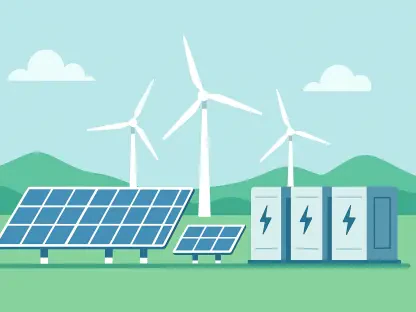
Virtual Power Plants (VPPs) represent one of the most innovative applications of AI in modern energy management, acting as a bridge between decentralized energy sources and the main grid. By aggregating the capacity of thousands of small-scale solar panels, residential batteries, and electric vehicles, a VPP can function as a single, reliable power source. AI is the conductor of this orchestra, balancing the intermittent output of renewables with the real-time demands of the network. This allows for a much higher penetration of clean energy without compromising the stability of the grid, as the VPP can quickly inject or absorb power as needed.
The decentralization of energy management has also empowered consumers to take an active role in the energy market. Through AI-driven platforms, participants can optimize their energy usage and even sell excess power back to the grid during peak demand periods. This bidirectional relationship creates a more flexible and efficient market, where the burden of energy production is shared across a diverse range of contributors. Subsequently, the grid becomes less reliant on massive, centralized power plants, making the entire system more resilient to both physical and cyber threats.
The Dual Role: AI as a Consumer and a Savior
A unique characteristic of the current energy landscape is the paradoxical relationship between artificial intelligence and the power grid. On one hand, the massive growth of AI-driven data centers and high-performance computing has placed an unprecedented load on energy infrastructure. These facilities require constant, high-density power to train large language models and run complex simulations, making AI one of the fastest-growing consumers of electricity. On the other hand, AI is the only tool capable of managing the very complexity it creates, serving as the “savior” that optimizes grid operations to accommodate this surging demand.
This dual role sets AI apart from previous technological advancements, as it is both the problem and the solution. To address the heavy consumption of data centers, utilities are deploying AI to optimize cooling systems and improve the power usage effectiveness of these facilities. Furthermore, AI helps the grid manage the lumpy, high-demand profiles of AI workloads by intelligently scheduling tasks during periods of low overall grid stress. This symbiotic relationship ensures that the progress of digital technology does not come at the expense of energy security, creating a sustainable path forward for both industries.
The Current Landscape of Smart Grid Deployment
Today, the deployment of smart grid technologies has reached a critical mass, with major utility providers like SP Group leading the way in operationalizing AI at scale. Projects such as the FUSION.AI initiative have successfully integrated data analytics into every level of the workforce, from field technicians to executive management. Real-time monitoring of over 200 worksites via AI-powered CCTV ensures that safety protocols are followed, while natural-language assistants provide technicians with instant access to asset histories and safety documentation. These developments have transformed the day-to-day operations of the utility sector, making it more efficient, safer, and more data-driven than ever before.
In addition to operational improvements, the current landscape is characterized by a strong focus on cybersecurity and governance. As the grid becomes increasingly digitized, the protection of national infrastructure has become a top priority. Utilities have established rigorous AI governance frameworks to ensure that every algorithm is transparent, accountable, and secure. This disciplined approach to deployment ensures that while the grid becomes more automated, human oversight remains a central pillar of the system. This balance between machine intelligence and human expertise is the hallmark of the modern intelligent power grid.
Reflection and Broader Impacts
Reflection
The journey toward an AI-managed grid has revealed both significant strengths and formidable challenges. One of the primary strengths is the unprecedented level of visibility that operators now have over their assets, leading to a drastic reduction in unplanned outages and a more efficient allocation of resources. However, the reliance on high-quality data remains a constant challenge; algorithms are only as effective as the information they receive, making data integrity a critical concern. Furthermore, the rapid pace of technological change requires a continuous commitment to workforce upskilling, ensuring that the human element of the grid remains capable of managing its digital counterpart.
Broader Impact
The implications of an intelligent power grid extend far beyond the energy sector, influencing urban planning, transportation, and environmental policy. A resilient and flexible grid is the essential foundation for the widespread adoption of electric vehicles and the total decarbonization of industrial processes. By proving that AI can manage critical infrastructure with high reliability, this transformation serves as a blueprint for other sectors, such as water management and telecommunications. The broader impact is the creation of a more stable and sustainable society where technology and infrastructure work in harmony to support economic growth and environmental stewardship.
Building a Resilient Energy Future
The evolution of the power grid from a mechanical network to an intelligent digital ecosystem represented a pivotal moment in the history of infrastructure. This transition was marked by the successful integration of digital twins, predictive maintenance, and virtual power plants, all of which worked together to enhance the reliability and efficiency of energy distribution. The strategic implementation of these technologies by leading organizations proved that the challenges of rising demand and renewable intermittency could be overcome through a combination of engineering prowess and advanced computation.
The progress achieved by 2026 demonstrated that the path to a sustainable future was paved with data and guided by intelligence. The grid ceased to be a passive set of wires and instead became an active participant in the economic and environmental health of nations. This era of transformation highlighted the necessity of a disciplined approach to AI governance and a commitment to workforce safety and development. The foundations laid during this period ensured that the global energy infrastructure remained robust and capable of supporting the next generation of technological breakthroughs. Consequently, the intelligent grid stands as a testament to human ingenuity and its ability to reinvent the most fundamental systems of our world.