
A new agreement between Ineratec and Haltermann Carless aims to convert 60,000 tonnes of regional wood residues into high-energy fuels for the aviation and racing sectors. This initiative addresses the urgent global need for carbon-neutral alternatives in industries that are notoriously difficult to electrify, such as long-haul aviation and competitive motorsports. By leveraging wood waste from the lush forests of Normandy, the partnership seeks to create a circular economy model that mitigates reliance on fossil fuels while repurposing industrial byproducts. The collaboration represents a significant milestone in the scale-up of synthetic fuel production, moving from experimental laboratory setups to large-scale industrial applications. As the energy transition accelerates in 2026, the focus has shifted toward high-density energy carriers that can utilize existing engine infrastructure. This project not only aims to provide sustainable alternatives but also to prove the commercial viability of power-and-biomass-to-liquid processes on a global stage.
1. Establishing the Strategic Partnership and Offtake
The collaboration centers on a formal letter of intent between Karlsruhe-based Ineratec and the specialty chemicals manufacturer Haltermann Carless. Under this agreement, Haltermann Carless has committed to purchasing a significant volume of bio-e-SAF and bio-e-naphtha for at least a decade once the ERA T.H2 plant is fully operational. This offtake agreement is crucial because it ensures a steady market for the facility’s output, allowing for predictable revenue streams in an otherwise volatile energy market. Haltermann Carless, a major player in the specialty hydrocarbons sector, views these fuels as a vital addition to its existing portfolio, particularly for its ETS Racing Fuels brand. By securing high-energy-density alternatives for the motorsport and aviation industries, the company provides essential solutions for high-performance applications. This strategic alignment between a technology innovator and a seasoned distributor demonstrates the maturity of the e-fuel sector.
Financial viability is a prerequisite for the success of such large-scale industrial projects, and Ineratec’s recent progress highlights this stability. The company recently secured 118 million euros in a Series B funding round from a diverse group of investors, including Piva Capital, Safran, and Honda. This capital injection supports the expansion of their modular plant technology, which was previously demonstrated at the ERA ONE facility in Frankfurt. While the Frankfurt plant focuses on using biogenic carbon dioxide and hydrogen, the new Normandy project is designed to be five times larger, showcasing the scalability of Ineratec’s approach. Chief Executive Tim Böltken emphasized that these long-term agreements provide the financial bedrock necessary to convince banks and investors to fund the significant capital expenditures required for plant construction. As the project moves forward, this blend of private investment and guaranteed offtake serves as a model for future cleantech ventures.
2. Implementing the Technical Production Sequence
The ERA T.H2 facility, located near Caen in Normandy, represents a cutting-edge application of Power-and-Biomass-to-Liquid technology. It is operated as a joint venture between Ineratec and TERTU, a local specialist in wood processing, ensuring that the project is deeply integrated into the regional industrial landscape. This plant is designed to convert local wood residues into liquid hydrocarbons through a multi-stage process that maximizes carbon efficiency. By situating the facility close to the source of raw materials, the partners minimize the logistical complexities and carbon emissions associated with transporting bulky biomass. Commissioning is currently scheduled for 2029, with financial support coming from a mix of regional and international sources, including the European Regional Development Fund and the French investment bank Bpifrance. This backing underscores the project’s strategic importance in achieving regional energy autonomy.
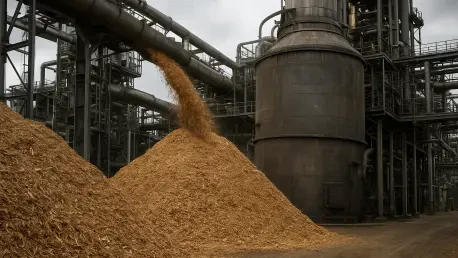
The technical sequence within the plant begins with the processing of roughly 60,000 tonnes of wood waste each year. This feedstock, primarily sourced from local forests and industrial sites, undergoes thermal gasification to produce synthesis gas, a mixture of hydrogen and carbon monoxide. To improve the final fuel yield, the system integrates renewable energy in the form of green hydrogen, which allows a higher percentage of the carbon in the wood to be converted into fuel rather than being lost as a byproduct. Using Ineratec’s proprietary Fischer-Tropsch technology, this gas is then transformed into at least 13,000 tonnes of liquid hydrocarbons annually. This output includes bio-e-naphtha for the chemical industry and bio-e-SAF for aviation, providing high-quality, drop-in fuels that require no modifications to existing engines. This integrated approach ensures the facility remains at the forefront of sustainable energy production.
3. Formulating Next Steps for Regulatory and Economic Scaling
The transition toward sustainable aviation and racing fuels faced several economic challenges that the Ineratec project sought to address through industrial optimization. Historically, the cost of producing e-fuels was significantly higher than traditional fossil fuels, often reaching levels that were five to ten times more expensive. Furthermore, the energy efficiency of the conversion process remained a central concern, as only about half of the initial renewable electricity was retained in the final liquid product. To navigate these hurdles, stakeholders prioritized the application of e-fuels in sectors where few other alternatives existed. This strategic focus ensured that the energy of synthetic hydrocarbons was utilized where it provided the most value. By targeting niche markets like professional motorsports and international aviation, the partnership demonstrated how high-cost fuels could still find a viable commercial path through specialized use cases.
Regulatory frameworks like the ReFuelEU Aviation mandate provided the necessary legal structure to support the ramp-up of synthetic fuel production across Europe. These rules established clear quotas for sustainable fuel usage, which encouraged long-term investments in hybrid processes like the Power-and-Biomass-to-Liquid system. However, the complexity of carbon accounting required the industry to adopt more transparent monitoring and certification standards to distinguish between biogenic and synthetic components. Moving forward, the industry prioritized the development of regional biomass hubs to ensure a sustainable supply of wood residues without depleting forest resources. These hubs worked in tandem with energy providers to optimize the integration of green hydrogen into the production cycle. Ultimately, the ERA T.H2 facility served as a template for cross-industry cooperation, highlighting the value of aligning technical innovation with robust policy support.