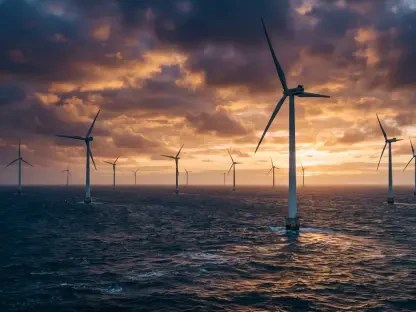

The sheer scale of the energy transition often clashes with the slow-moving gears of bureaucracy and the volatile nature of state politics, yet some projects find a way to thrive. The Macorna wind farm in northern Victoria stands as a prominent example of this resilience, successfully navigating a landscape fraught with infrastructural and legislative uncertainty. As the renewable energy sector matures, developers are increasingly forced to think beyond technical specifications and address the shifting sands of political mandates and community expectations. This 850-megawatt project, overseen by Atmos Renewables, has emerged as a blueprint for strategic adaptability in an era where grid connection and environmental approvals are frequently the primary causes of project failure. By integrating flexible infrastructure designs and front-loading regulatory assessments, the developers have managed to secure a path forward that remains robust even as political rhetoric threatens transmission works.
Navigating Political and Infrastructural Volatility
Resilience: Redundant Connection Designs
The viability of large-scale renewable energy assets is often tied to the development of massive transmission lines, such as the controversial 500-kilovolt VNI West project. However, the Macorna project has demonstrated a remarkable level of strategic foresight by ensuring it is not solely dependent on this specific piece of infrastructure. While the original plan favored a connection to the high-capacity VNI West line, Atmos Renewables has identified and integrated alternative connection pathways into their technical roadmap. This includes utilizing an existing 220-kilovolt line that already traverses the project site, providing a critical buffer against the possibility of the larger transmission project being scrapped or delayed by shifting political tides. This multi-track connection strategy ensures that the wind farm can begin delivering power to the grid even if the broader state infrastructure plan undergoes significant modifications. This signals a shift toward risk mitigation.
Decoupling: Managing State Political Flux
Mitigating the impact of political opposition is a complex task, especially when major opposition parties pledge to dismantle key energy projects upon taking office. In Victoria, the Liberal Party has made no secret of its intentions regarding the VNI West line, creating a climate of uncertainty for many developers who have pinned their hopes on that specific high-voltage corridor. By pivoting toward a dual-connection model, Macorna’s developers have effectively decoupled their project’s financial bankability from the whims of election cycles. This approach not only provides security for investors but also demonstrates to regulatory bodies that the project can function within the constraints of the current grid if necessary. The ability to pivot between different transmission capacities without compromising the project’s overall integrity is becoming a vital skill. It reflects a deeper understanding of the interplay between engineering requirements and the socioeconomic realities.
Efficiency in Regulatory and Ecological Planning
Acceleration: The Environmental Report Pathway
One of the most significant achievements for the Macorna project is securing a “no Environmental Effects Statement” decision from the Victorian government, a rare feat for a development of this magnitude. Traditionally, large-scale wind farms in the region have been required to undergo the most rigorous tier of environmental assessment, often leading to delays that can stretch between three and four years. Instead, Atmos Renewables will pursue the “environmental report” pathway, a middle-ground approach that targets a much more efficient twelve-month approval timeline. This transition was made possible by the developer’s decision to “front-load” their environmental studies, addressing potential concerns long before they could become insurmountable roadblocks. By proactively engaging with specialists to map out the ecological sensitivities of the site, the team was able to provide a comprehensive dataset that satisfied state planners. This methodological shift is an industry benchmark.
Optimization: Footprint Reduction and Ecological Harmony
To achieve this streamlined regulatory outcome, the developers had to make difficult choices regarding the total capacity and footprint of the wind farm. Originally envisioned as a massive 1,400-megawatt facility, the project was strategically downscaled to 850 megawatts, involving approximately 114 turbines. This reduction was not a sign of retreat but rather a calculated move to better align the project with environmental constraints, specifically those related to nearby Ramsar-listed wetlands and local irrigation districts. By reducing the physical footprint and the density of the turbine clusters, the developers were able to mitigate the ecological impact to a level that justified the faster assessment track. This disciplined approach to scaling demonstrates that bigger is not always better if it results in perpetual planning limbo. The focus on quality over sheer quantity has allowed the project to maintain its momentum while other developments remain stalled in the high-tier environmental process.
Implementation: Future Actions for Project Bankability
The strategic choices made by Atmos Renewables provided a definitive framework for future large-scale energy projects attempting to navigate volatile regulatory environments. By prioritizing a dual-connection infrastructure and adopting an accelerated environmental reporting model, the project leaders established a precedent that emphasized agility over rigid adherence to single-path plans. Stakeholders recognized that the reduction in total capacity was a necessary trade-off for speed and certainty, ultimately securing the project’s position as a leader in the Victorian market. Industry observers noted that the proactive engagement with ecological data and community concerns allowed the developer to bypass years of potential litigation and administrative delay. Moving forward, developers should look to this model of “front-loading” assessments and maintaining infrastructural flexibility as the primary means of ensuring project delivery. The success of the project showed that the next phase would rely on risk management.