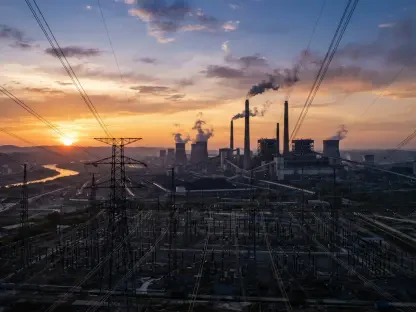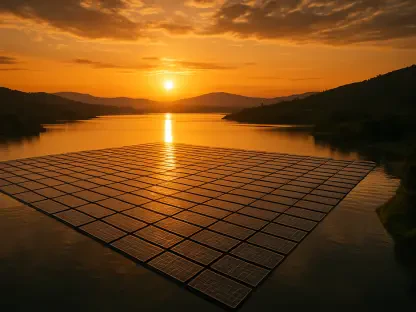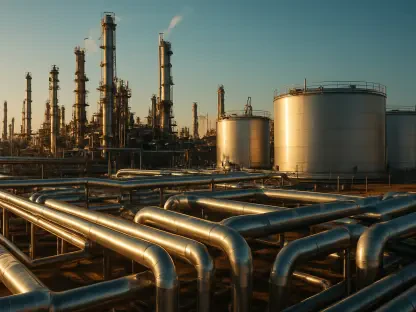

Extending the operations of major thermal coal mines ignores the projected decline in global demand as international power grids move toward decarbonization. As the global energy landscape undergoes a fundamental transformation, Australia finds itself caught between its legacy as a fossil fuel powerhouse and the undeniable momentum of a clean energy future. Historically, the nation has relied on massive coal and gas exports to underpin its economic stability, but a significant disconnect has emerged between current policy and the reality of rapid technological disruption. Policymakers frequently rely on linear projections to justify long-term infrastructure, viewing the future through a “rear-view mirror” that fails to account for the exponential speed of modern adoption. This approach risks committing the country to an outdated economic model, leaving the domestic market vulnerable to sudden shifts in international demand.
By focusing on historical trends rather than forward-looking data, leadership risks creating a massive misallocation of capital. The primary danger lies in the potential for stranded assets—multi-billion-dollar investments in mines, refineries, and pipelines that may become obsolete long before their projected lifespans. When a project is planned with a forty-year horizon, but the market undergoes a structural shift in twenty, the resulting economic fallout can be devastating. This is not merely a concern for private equity; the burden often falls on taxpayers who may be required to provide subsidies for failing industries or manage the complex fallout of regional job losses. Avoiding these pitfalls requires a deep understanding of how disruptive technologies move through markets and why the pace of change is accelerating in the current decade.
Understanding the Mechanics of Technology Adoption
The Mathematical Reality of the S-Curve: A New Pattern of Growth
The transition to renewable energy is not a slow, steady progression but follows the specific trajectory of an S-curve, which characterizes how new technologies displace established incumbents. In the early nascent phase, growth often appears deceptively sluggish because costs are high and supply chains remain unrefined, leading many observers to underestimate the long-term impact. However, once a critical tipping point is reached, the technology enters a steep acceleration phase where economies of scale and improved performance drive rapid adoption. Australia is currently navigating this aggressive middle section of the curve for solar power, battery storage, and electric vehicles, meaning that the displacement of traditional fuels is happening far faster than older, linear forecasts ever suggested.
This exponential growth creates a self-reinforcing cycle where every new installation further drives down the cost for the next one, creating a feedback loop that incumbents find impossible to match. While skeptics often point to the limitations of early-stage adoption, the current data shows that the cost of renewable generation and storage has plummeted to levels that make fossil fuels fundamentally uncompetitive on a purely economic basis. As the curve continues its upward trajectory, the transition becomes a matter of market inevitability rather than just policy preference. Recognizing this pattern is essential for any realistic long-term planning, as failing to anticipate the speed of the S-curve leaves the nation holding onto infrastructure that the rest of the world has already moved past.
Global Momentum: The End of the Linear Era
International shifts in manufacturing and trade are fueling a surge in clean technology that is fundamentally reshaping the global economy. Massive investments in battery production and renewable hardware overseas are driving down prices at an unprecedented rate, making it increasingly difficult for high-carbon energy sources to compete. Even if domestic policies attempt to slow the transition or protect legacy industries, global market forces—such as international carbon regulations and changing consumer preferences—will likely force Australia’s hand. The world is moving away from combustion-based energy systems with a speed that was considered fanciful just a few years ago, rendering linear projections of fossil fuel demand increasingly irrelevant.
Furthermore, major trading partners are rapidly decarbonizing their own grids, which directly impacts the demand for Australian exports. As nations implement stricter environmental standards and look for low-carbon supply chains, the global market for traditional thermal coal and liquefied natural gas is beginning to contract. This shift is not a distant possibility but a present reality that is influencing investment decisions and trade agreements across the globe. For Australia, the risk of remaining tethered to a slow-moving, linear view of energy is that it leaves the economy exposed to international volatility. The transition is being driven by a global consensus on technology and economics, making the pursuit of a fossil fuel-centric strategy an increasingly hazardous bet for national prosperity.
The Economic Risk of Fossil Fuel Persistence
High-Profile Projects: The Threat of Impending Obsolescence
Despite the clear indicators of a rapid energy transition, several major Australian projects are continuing to bet on a slow-motion decline of the fossil fuel industry. For example, recent government support for new oil refinery feasibility studies and the extension of massive liquefied natural gas facilities until 2070 ignore the probability of shrinking long-term demand. By the time these projects are fully operational or reach their commercial mid-life points, the electrification of light transport and heavy industrial machinery is likely to have significantly eroded their domestic and international customer base. Planning for five decades of operations assumes a static global market that simply does not exist in the current technological climate.
These extensions and new approvals are often framed as measures for fuel security, yet they may achieve the opposite by locking the country into expensive, high-carbon dependencies. The persistence of these projects reflects a refusal to acknowledge that international climate commitments and the falling cost of alternatives are fundamentally changing the value proposition of traditional energy. If a project requires several decades of steady, high-priced demand to break even, but global demand peaks much earlier, the investment becomes a liability. This disconnect between infrastructure planning and technological reality creates a precarious situation where the nation is doubling down on the past at the very moment it should be pivoting toward the future.
The True Cost of Stranded Assets: A Systemic Economic Drain
A stranded asset is not merely a business failure; it represents a significant misallocation of national resources that can have long-lasting effects on the economy. When coal mines or gas processing plants lose their profitability due to the emergence of cheaper renewable competitors, the capital invested in them is effectively trapped. This leads to a situation where infrastructure that was expected to provide decades of tax revenue and employment instead becomes a financial burden. In many cases, the decommissioning costs and environmental liabilities of these projects fall to the public, especially if the operating companies face financial distress as their markets evaporate.
This systemic risk is compounded by the fact that true energy security in the modern age is found in diversification and domestic generation rather than a reliance on volatile commodities. As international financing and insurance for high-carbon projects become increasingly difficult to secure, the cost of maintaining these legacy assets will continue to rise. If Australia continues to prioritize these investments over modern infrastructure like high-capacity transmission lines and large-scale storage, it risks being left with expensive, non-functional relics of a bygone era. The economic stability of the country depends on moving capital toward sectors that are aligned with the global shift toward electrification, rather than attempting to prolong the life of industries that are reaching their natural conclusion.
Pivoting Toward a Green Industrial Future
From Raw Materials to Value-Added Exports: A New Economic Model
Australia possesses a unique combination of geographic and mineral advantages that could facilitate a transition from a “dig-and-ship” economy to a global leader in green manufacturing. The nation is home to vast reserves of critical minerals such as lithium, copper, and cobalt, all of which are indispensable for the global production of batteries and electronics. Rather than simply exporting these materials in their raw form, there is a significant opportunity to process them domestically using abundant solar and wind resources. This shift would allow Australia to capture a larger share of the global value chain, exporting high-value products like battery components and processed chemicals rather than just raw ore.
This transition toward value-added exports would create a more resilient and sophisticated economic base that is less susceptible to the boom-and-bust cycles of the commodities market. By integrating renewable energy into the industrial process, Australian manufacturers can produce “green” versions of essential materials, such as green steel or aluminum, which are increasingly in demand by global companies looking to decarbonize their supply chains. This evolution represents a strategic pivot that leverages the country’s natural wealth to build a sustainable industrial future. Moving beyond the extraction-only model ensures that Australia remains a central player in the global economy, providing the essential building blocks for a net-zero world while fostering domestic innovation.
Capitalizing on Natural Resources and Human Talent: The Competitive Edge
The path to becoming a renewable superpower is supported by both the country’s physical landscape and its world-class intellectual capital. Australia features some of the highest solar radiation levels and most consistent wind corridors in the world, providing a natural advantage in the production of low-cost clean energy. This abundance of land and resources allows for the development of massive renewable energy hubs that can power both domestic industry and the production of green hydrogen for export. By utilizing these natural assets, the nation can attract new, energy-intensive industries that are searching for locations with reliable, carbon-free power at a competitive price point.
Furthermore, the country has a long and distinguished history of research in renewable technology, having pioneered many of the solar cell designs that are now used globally. This legacy of innovation, combined with a highly skilled engineering workforce, provides the human talent necessary to lead the transition to high-tech manufacturing and complex energy systems. By fostering a closer link between research institutions and industrial applications, Australia can ensure that it stays at the forefront of the technological S-curve. This combination of physical resources and human expertise is a powerful competitive edge that, if properly supported by policy, can drive a new era of national prosperity independent of fossil fuel extraction.
Implementing a New Regulatory Framework
The Necessity of Independent Stress Testing: Assessing Future Viability
To safeguard the national interest, a more rigorous and transparent approach to infrastructure approval is required, centered on the implementation of independent “stranded-asset stress tests.” Before any large-scale fossil fuel project receives government approval or public subsidies, it must be subjected to a detailed evaluation of its long-term viability under a “fast transition” scenario. This process would move beyond optimistic industry forecasts to determine if a project remains profitable if electric vehicle adoption accelerates or if international demand for coal and gas drops more sharply than anticipated. A project that can only survive by assuming a slow and failing global energy transition is a high-risk liability that should not be supported.
These stress tests would provide a much-needed layer of protection for both investors and taxpayers, ensuring that capital is not funneled into projects that are likely to become economic burdens. By forcing a realistic assessment of market risks, including the potential for sudden policy shifts in major export markets, the government can better align its infrastructure strategy with the reality of the global energy market. This regulatory shift would encourage a more disciplined allocation of capital, favoring projects that are resilient to change and capable of operating in a decarbonized world. Implementing these tests would signal a move toward a more sophisticated and risk-aware energy policy that prioritizes long-term economic stability over short-term industrial interests.
Preparing for a Decarbonized Global Market: Navigating New Trade Barriers
As major economies like the European Union and the United States implement stricter environmental standards, including carbon-border adjustment mechanisms, Australian exports will face new challenges if they are not produced sustainably. These mechanisms essentially act as tariffs on high-carbon imports, meaning that goods produced with fossil fuel-intensive processes will become more expensive and less competitive in key global markets. A proactive policy framework must anticipate these changes by prioritizing the rapid decarbonization of the domestic grid and supporting the development of low-carbon industrial zones. Failure to adapt to these international trade realities could result in Australian products being locked out of the world’s most lucrative markets.
Strategic investment in transmission infrastructure, large-scale battery storage, and green hydrogen production is essential to maintaining trade competitiveness in a net-zero global economy. By focusing on the systems that support a renewable-powered industry, the nation can ensure that its exports meet the stringent environmental requirements of the future. This shift is not just about environmental compliance; it is a pragmatic economic move to protect market access and attract international investment. As the global market increasingly rewards low-carbon production, Australia’s ability to provide clean energy and sustainably produced materials will be its greatest asset. Transitioning the energy system is therefore a fundamental requirement for maintaining the nation’s standing as a leading global exporter.
Securing Long-Term National Prosperity
Choosing Innovation Over Stagnation: The Path to Future Stability
The choice facing the nation is between subsidizing a fading past and investing in a vibrant, sustainable future. Success requires a departure from the “rear-view mirror” style of planning and a full embrace of the rapid trajectory of global innovation. By aligning domestic policy with the pace of the S-curve, Australia can avoid the catastrophic economic consequences of stranded assets while capturing the immense benefits of the green industrial revolution. The transition is already well underway, and the speed at which the nation adapts will determine its economic standing and prosperity for the next century. Choosing to lead through innovation and agility is the only way to ensure a stable and prosperous future for all citizens.
Historically, the nation successfully navigated numerous economic shifts, and the current energy transition offered a similar opportunity for renewal and growth. Leaders eventually recognized that the old rules of the energy market no longer applied and that holding onto legacy systems provided only a false sense of security. By prioritizing the development of a renewable-powered grid and fostering high-value manufacturing, the country effectively shielded its economy from the volatility of the fossil fuel era. The transition was managed with a focus on long-term resilience, ensuring that the workforce was prepared for new industries and that the national infrastructure was ready for a decarbonized world. This forward-looking strategy ultimately secured the nation’s place as a leader in the global clean energy economy.
Redefining the National Interest: A Legacy of Adaptation
True energy security was achieved when the focus shifted from extracting volatile commodities to harnessing the consistent power of the sun and wind. The nation moved beyond the narrow constraints of the fossil fuel industry, embracing a broader vision of prosperity that included the domestic processing of critical minerals and the export of green energy technology. This strategic pivot was not merely a reaction to global pressure but a proactive embrace of a more sophisticated and durable economic model. By subjecting new projects to realistic stress tests and investing in the infrastructure of the future, the country proved that economic growth and environmental responsibility were not mutually exclusive but were, in fact, deeply interdependent.
In the end, the decision to move away from the certainties of the past was validated by the emergence of a robust and competitive green industrial sector. The transition allowed the country to maintain its status as a premier global exporter while creating new, high-quality jobs in the manufacturing and technology sectors. Those who once argued for a slower transition saw that the rapid adoption of clean tech provided a more stable and affordable energy system for everyone. By looking forward and preparing for the inevitable shifts in the global market, Australia ensured its continued prosperity in an era defined by clean innovation and sustainable growth. The lessons learned during this period of change became a blueprint for national success in the twenty-first century.