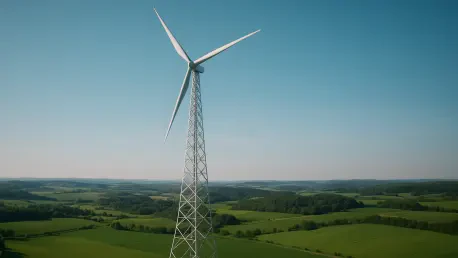

To ensure structural integrity, engineers had to temporarily halt construction in late 2025 to address quality issues identified in specific steel components of the massive tower. This monumental project in Schipkau, Germany, now stands as a testament to human ingenuity and the relentless pursuit of renewable energy efficiency. Reaching a staggering height of 365 meters, the structure serves as a vertical bridge to the untapped power of high-altitude wind currents. For decades, the Lusatia region was defined by the soot and scale of massive coal mining operations, providing the literal fuel for Germany’s industrial engine. Today, however, that same landscape is being redefined by the sleek, towering presence of a turbine that rivals the Berlin TV Tower in its sheer physical presence. This transition represents more than just a change in technology; it is a profound industrial pivot toward a sustainable future where energy sovereignty and environmental stewardship are finally synchronized through high-level engineering.
Overcoming Engineering Hurdles and Construction Limits
The construction of such a massive, free-standing structure necessitated a complete departure from traditional building techniques that have governed the wind industry for decades. Because conventional cranes lacked the physical reach to assemble a turbine of this magnitude, engineers utilized a patented telescopic device that fundamentally changed the assembly sequence. This specialized equipment allowed the turbine to be built in distinct stages, starting at a height of 150 meters before the telescopic system raised the entire assembly to its final 300-meter hub height. Throughout the two-year construction period, the team faced unprecedented logistical challenges that tested the limits of modern materials science. Jochen Großmann, the CEO of the construction firm GICON, maintained that safety and precision remained the absolute priorities for this first-of-its-kind project, ensuring every joint could withstand the immense forces found at these altitudes without any risk of failure.
Beyond the mechanical triumph of the assembly, the primary motivation behind building taller turbines lies in the complex physics of atmospheric wind behavior. Scientific data collected from wind-measuring masts in the nearby town of Klettwitz confirmed that at altitudes exceeding 300 meters, wind is both stronger and significantly more consistent than at ground levels. By tapping into these high-altitude currents, the Schipkau turbine is expected to generate between 30 and 33 gigawatt hours of electricity annually, marking a massive leap in productivity. This output represents a 220 percent increase in efficiency compared to conventional turbines located in the same geographic vicinity. From a purely economic perspective, the project aims to drive electricity production costs below five cents per kilowatt hour, making it highly competitive with traditional energy sources. A single turbine of this scale now possesses the capacity to power approximately 7,500 four-person households.
Strategic Land Use and Strengthening Energy Security
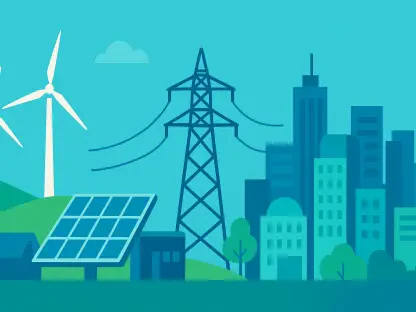
The site in Schipkau is envisioned as a hybrid power plant that maximizes efficiency through a sophisticated “triple-use” approach to land management. This model features two distinct levels of wind power generation integrated with a ground-level solar park, creating a multi-layered energy harvest. By utilizing the vertical space above the terrain and the horizontal space on the ground, the facility can quintuple the energy yield per acre compared to standard solar-only installations. This strategy ensures year-round power generation regardless of seasonal variations, as high-altitude winds often compensate for the shorter daylight hours of the winter months. Local authorities have actively incentivized these clean energy projects, effectively transforming a former coal-dependent landscape into a hub for green innovation. This transformation serves as a blueprint for other industrial regions globally that are looking to repurpose land while meeting aggressive climate goals.
On a broader national level, the project is framed as a critical matter of energy independence and long-term security. Germany’s Federal Environment Minister noted that such projects are vital for reducing reliance on foreign oil and gas, particularly as global conflicts have historically destabilized energy prices. High-altitude turbines offer a strategic advantage because they can operate efficiently in regions with weak ground-level winds, allowing for a more decentralized expansion of wind power. By generating electricity closer to where it is consumed, these towers can alleviate pressure on the national grid and reduce the need for fossil-fuel backups. This decentralization is key to a robust energy infrastructure that can withstand external shocks and maintain a steady supply to both domestic and industrial consumers. These towers represent a reliable source of power that reinforces the nation’s commitment to a carbon-neutral economy while bolstering its strategic economic resilience.
Innovative Solutions for National Grid Stability and Policy Success
A recurring theme in the analysis of European renewables is the persistent disconnect between energy production and existing grid capacity. While Germany remains a leader in wind energy with nearly 78 gigawatts of installed capacity, outdated infrastructure often results in wasted energy. In recent years, billions of euros were lost because the grid could not transport electricity from the windy northern regions to the industrial centers in the south. High-altitude turbines provide a potential solution to this expensive irony by enabling power generation in southern and central regions where ground-level wind speeds were previously considered insufficient. This shift reduces the necessity for expensive grid expansions and ensures that renewable energy is produced exactly where it is needed most. By diversifying the geographic distribution of wind assets, the energy sector can mitigate the risks associated with regional lulls in wind activity, creating a more balanced and predictable power supply.
As Germany moved into the current phase of its energy transition, the Climate Protection Programme 2026 accelerated the deployment of these advanced technologies through specific legislative measures. These policies included expanding tenders for 2,000 additional wind turbines and ensuring that 12 gigawatts of new capacity were grid-ready by the end of the decade. The successful integration of the Schipkau giant served as a scientific benchmark, proving that high-altitude technology was a viable industrial reality rather than just a theoretical concept. Future developments prioritized the integration of battery storage systems with these towers to further stabilize the output. Engineers and policymakers worked together to streamline the permitting process for high-altitude sites, acknowledging their superior efficiency and lower environmental footprint per megawatt. By moving from concept to operation, the project demonstrated that the sky was no longer a limit but a resource.