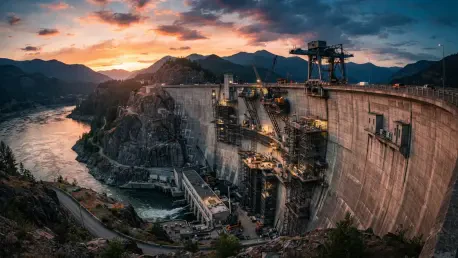

Contractors must navigate extraordinary logistical hurdles to install heavy anchors while working from barges and cranes positioned directly over the Columbia River flow. This complex endeavor at the Priest Rapids Dam is essential for maintaining the integrity of a facility that produces 950 megawatts of hydroelectric power. Built in the mid-1950s, the dam has reached a point in its lifecycle where original design assumptions must be reconciled with modern seismic engineering requirements. The Grant County Public Utility District is currently spearheading a multi-year effort to stabilize the spillway using thirty-eight post-tensioned anchors. This project represents a critical intersection of historical infrastructure and cutting-edge remediation techniques, ensuring that the facility remains a reliable component of the regional power grid. As engineers work to fortify the massive concrete blocks, they are essentially performing major surgery on a living river system that cannot be paused or redirected.
Identifying Structural Risks: The Physics of Concrete Dams
Structural Remediation: The Impact of Lift Joint Disbonding
The fundamental challenge facing the Priest Rapids Dam originates from the internal composition of its massive concrete monoliths. Although these structures appear to be solid, unified blocks, they were actually constructed in sequential horizontal layers known as lifts. During the original pouring process, each new layer was expected to bond perfectly with the one beneath it to create a monolithic whole. However, over several decades of operation, environmental pressures and thermal fluctuations can cause these horizontal seams, or lift joints, to lose their adhesive integrity. This phenomenon, known as disbonding, creates microscopic gaps within the internal structure. When these joints separate, they provide a pathway for pressurized water from the reservoir to penetrate the dam’s interior. This internal hydraulic pressure can gradually reduce the stability of the structure, making it more vulnerable to external forces like seismic activity or extreme river flows.
Crisis Mitigation: The 2018 Structural Discovery
The urgency for the current anchoring project intensified following a detailed inspection that took place several years ago. In early 2018, Grant PUD engineers identified a critical failure in a lift joint within the spillway section of the dam. Core samples revealed that water had begun to seep through the disbonded layer, leading to the classification of the situation as a non-failure emergency. While there was no immediate risk of a catastrophic breach, the presence of internal water pressure within the spillway monoliths necessitated immediate and long-term intervention. The utility initially responded by lowering the reservoir level and drilling drainage holes to relieve the pressure, but these were temporary measures. To ensure the facility’s safety through 2028 and beyond, a permanent mechanical solution was required. The ongoing installation of heavy-duty anchors is the culmination of years of monitoring and engineering analysis aimed at solving this hidden structural vulnerability permanently.
Implementing Advanced Reinforcements: Mechanical Precision
Engineering Innovation: The Precision of Bedrock Anchoring
The remediation strategy utilizes post-tensioned anchors to physically bolt the dam to the underlying bedrock. This process begins with the precision drilling of deep vertical shafts from the ogee, which is the curved upper surface of the spillway. These holes must pass through several dozen feet of concrete lifts before penetrating deep into the basalt foundation beneath the riverbed. The technical demands of this drilling are extreme, as the alignment must remain perfectly vertical over vast distances to ensure the structural integrity of the anchor. Once the shafts are cleared, high-strength steel tendons are lowered into the openings. The bottom sections of these tendons are then encased in specialized cement grout, which creates a permanent chemical and mechanical bond with the bedrock. This anchoring system essentially creates a series of massive vertical ties that bridge the internal lift joints and the foundation, providing a level of stability that far exceeds the dam’s original 1950s specifications.
Hydraulic Strength: Clamping the Spillway Foundation
After the grout at the base of the anchors has fully cured, engineers apply immense tension to the steel cables using specialized hydraulic jacks. This process, known as post-tensioning, creates a powerful clamping force that squeezes the horizontal layers of concrete together. By pulling the top of the cable against the surface of the dam while the bottom is fixed in the bedrock, the system effectively pins the spillway monoliths to the earth. This mechanical pressure serves a dual purpose: it seals the disbonded lift joints to prevent further water ingress and provides the necessary rigidity to withstand the violent ground motions associated with a major earthquake. This clamping force is monitored with high-precision sensors to ensure the tension remains consistent over time. The result is a structure that behaves as a single, unified mass, significantly increasing its safety margin against sliding or overturning during a seismic event, thereby protecting the downstream communities.
Navigating River Challenges: Logistical Mastery
River Operations: Maintaining Productivity During Construction
Executing these upgrades requires a delicate balance between intensive construction activities and the continuous operation of a high-capacity power plant. Because the spillway is located directly in the path of the Columbia River, the work environment is inherently dynamic and hazardous. Contractors have deployed a fleet of custom-built barges and massive cranes to create stable working platforms amidst the moving water. A primary requirement of the project is that the 950-megawatt facility must remain fully operational to provide electricity to the region. This means that drilling, grouting, and tensioning activities must be carefully coordinated with river management schedules and power generation demands. The ability to perform such high-precision engineering while suspended over a powerful river highlights the sophistication of modern infrastructure maintenance. This approach avoids the massive economic losses that would result from a complete plant shutdown, demonstrating how vital energy assets can be modernized without service interruption.
Project Procurement: Selecting Specialized Construction Firms
The specialized nature of installing post-tensioned anchors on a major dam significantly limits the number of firms capable of performing the work. When the Grant County PUD opened the bidding process, only one joint venture, consisting of Nicholson Construction and Kuney Construction, submitted a formal proposal despite nearly thirty firms being prequalified. The immense technical risk and the specialized equipment required for drilling through thick concrete into bedrock from waterborne platforms served as a high barrier to entry. Nevertheless, the contract was awarded for approximately $58.7 million, a figure that sat comfortably within the utility’s original engineering estimates. This partnership brings together expertise in geotechnical engineering and heavy civil construction, which is necessary for a project of this scale. The successful procurement of these services ensures that the project remains on its technical schedule, utilizing a workforce that is uniquely qualified to handle the complexities of the Columbia River’s environment.
Securing Energy Futures: Financial and Operational Outlook
Economic Sustainability: Investing in Regional Grid Security
The financial commitment to the Priest Rapids Dam reflects a long-term strategy for regional energy security and infrastructure longevity. With a significant portion of the budget earmarked for the 2027 fiscal year, the utility is systematically funding the project through its completion in 2028. These tens of millions of dollars represent an investment in the reliability of a carbon-free energy source that serves thousands of homes and businesses. Beyond the immediate repair of the lift joints, the project is a proactive move to align the dam with evolving regulatory standards for seismic safety. As climate patterns and geological understandings change, the requirements for large-scale dams become more rigorous. By addressing these needs now, the utility avoids the much higher costs associated with emergency repairs or potential structural failures. This strategic allocation of resources ensures that the Priest Rapids facility continues to be an economic and operational anchor for the Pacific Northwest power grid for the next half-century.
Technological Legacy: Historical Insights for Future Success
By implementing this strategy, the utility ensured the dam remained a primary power generator for the region while simultaneously mitigating the risks of internal hydraulic pressure. This process highlighted the necessity of constant monitoring and substantial reinvestment to maintain the safety of major infrastructure. The project demonstrated that even massive mid-century structures could be effectively adapted to modern standards through innovative engineering. The decision to pursue such a rigorous upgrade provided a reliable framework for future assessments of similar aging facilities across the river system. Stakeholders recognized that the proactive stabilization of the Priest Rapids Dam was a vital step in securing the electrical grid against the unpredictable nature of geological shifts. Ultimately, the engineering teams established a clear path forward, combining technical expertise with a commitment to long-term public safety and operational resilience for decades to come.