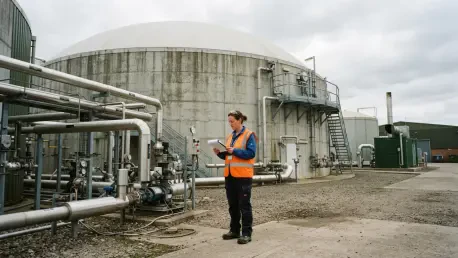

The structural complexity of lignocellulosic materials such as groundnut shells creates a biological bottleneck that significantly slows down the conversion process in anaerobic digesters. This fundamental challenge often discourages project developers from exploring diverse organic waste streams, leading them to rely on a limited selection of high-yield feedstocks that may not be sustainable in the long term. As of 2026, the global bioenergy sector has shifted its focus toward a more nuanced understanding of how different materials behave within complex circular systems. It is no longer sufficient to simply measure the amount of gas a material can produce in a sterile laboratory environment; instead, the industry now demands a comprehensive evaluation that accounts for the logistical, economic, and social realities of waste management. This evolution in thinking has sparked a renewed interest in underutilized biomass, ranging from industrial wastewater to agricultural residues that were previously dismissed as too difficult to process. By examining the interplay between biological availability and operational feasibility, engineers are uncovering new opportunities to stabilize the renewable energy grid using resources that were once considered mere liabilities for local industries and municipalities.
Overcoming the Limitations of Single-Yield Metrics
The reliance on biochemical methane potential as the primary metric for feedstock selection has historically led to numerous failures in commercial biogas projects. This “single-yield thinking” focuses almost exclusively on the volume of methane a specific substrate can generate under optimized conditions, often ignoring the energy-intensive reality of actually reaching those numbers. For instance, while certain agricultural residues appear promising due to their organic content, the energy required for mechanical or chemical pretreatment can often exceed the value of the energy produced. Furthermore, focusing solely on yield ignores the risk of biochemical inhibition, where high-protein substrates like slaughterhouse waste can cause a rapid buildup of ammonia. This toxicity can stall a reactor entirely, turning a theoretically high-performing system into a costly operational disaster. Modern bioenergy engineering now recognizes that a substrate’s value is determined not just by its carbon content, but by its ability to maintain a stable environment for the sensitive microbial communities responsible for fermentation and methanogenesis.
To bridge the gap between laboratory results and industrial reality, a shift toward multidimensional evaluation frameworks has become necessary. These frameworks integrate technical performance with environmental and economic considerations, ensuring that a feedstock is viable across its entire lifecycle. A material that offers moderate methane yields but requires no pretreatment and can be sourced locally at a low cost is often far more valuable than a high-energy material that must be transported over long distances or treated with expensive enzymes. This holistic perspective allows developers to identify “high-yield traps”—materials that look attractive in initial reports but carry hidden operational burdens that erode profitability and sustainability. By prioritizing process stability and ease of integration, the industry is moving toward a model where diversity in feedstock selection is seen as a strength rather than a complication, leading to more resilient energy systems that can adapt to changing regional conditions and waste availability patterns.
The Role of Mathematical Frameworks in Feedstock Selection
Implementing a structured decision-making process is essential for navigating the complex trade-offs inherent in choosing a biogas feedstock. The Analytic Hierarchy Process has emerged as a vital tool in this regard, providing a mathematical foundation for weighing competing priorities such as energy density, collection costs, and social acceptance. In this framework, technical criteria like biodegradability and methane potential typically receive the highest weight—often around 35 percent—reflecting the reality that a substrate must be biologically viable before any other factors can be considered. However, the importance of environmental and economic factors cannot be overstated, as they dictate whether a project can achieve carbon neutrality and financial independence. By assigning specific values to these dimensions, researchers can create a standardized ranking system that allows for an objective comparison between drastically different materials, such as liquid industrial effluents and solid agricultural husks. This rigor is critical for securing investment and ensuring that large-scale bioenergy facilities are built on a foundation of sound data rather than optimistic projections.
The reliability of these mathematical models is often verified through consistency ratios, which ensure that the subjective judgments made by experts are logically aligned. For example, a consistency ratio of 0.011 indicates a high degree of reliability, far below the industry-standard threshold of 0.10. This mathematical precision allows for the identification of top-tier feedstocks that perform consistently across all categories. It also enables sensitivity analysis, which tests how the rankings might change if economic or environmental priorities are adjusted. This level of transparency is particularly important for municipal planners and policymakers who must justify the use of public funds for renewable energy infrastructure. When a decision-making model shows that a particular waste stream, such as beverage wastewater, consistently ranks as the most viable option regardless of minor fluctuations in weighting, it provides the confidence necessary to move forward with large-scale implementation. This systematic approach transforms biomass selection from a trial-and-error process into a precise engineering discipline that supports the broader goals of the circular economy.
Analyzing the Viability of Industrial and Agricultural Waste
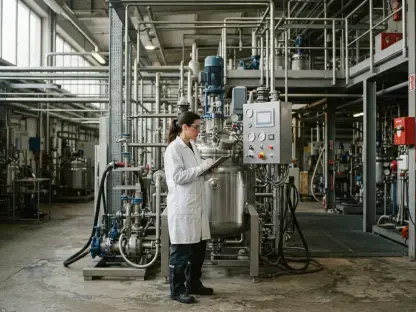
Beverage wastewater has emerged as a premier candidate for sustainable biogas production due to its unique chemical and logistical advantages. Unlike solid biomass, which often requires complex steps to break down cellular structures, beverage wastewater contains high concentrations of dissolved sugars and ethanol that are immediately accessible to anaerobic bacteria. This lack of a “hydrolysis barrier” means that the conversion process begins almost instantly, leading to higher efficiency and smaller reactor footprints. From a logistical standpoint, the centralized nature of beverage production plants simplifies the supply chain significantly. Wastewater can often be piped directly from the manufacturing facility to an on-site digester, eliminating the need for expensive trucking, fuel consumption, and the associated greenhouse gas emissions. This direct integration not only lowers operational costs but also provides the beverage industry with a reliable way to meet increasingly strict environmental regulations regarding industrial discharge.
In contrast, agricultural residues like mango and pineapple waste offer a different set of benefits and challenges. These materials are excellent for waste diversion, as they are typically discarded in landfills where they decompose anaerobically, releasing uncontrolled methane into the atmosphere. Capturing this waste for controlled energy production provides a significant environmental credit, effectively doubling the climate benefit of the biogas plant. However, the viability of fruit residues is often hampered by their seasonal availability and geographical dispersion. Collecting waste from hundreds of small farms requires a robust aggregation infrastructure that many regions still lack. Furthermore, while fruit waste is highly biodegradable, it often requires careful management to prevent rapid acidification within the reactor. Despite these hurdles, the high energy potential of fruit residues makes them a valuable component of a mixed-feedstock strategy, especially in regions where agricultural processing is a major economic driver and where waste management infrastructure is currently being modernized to support renewable energy goals.
Navigating Technical Barriers and Logistical Constraints
The logistical complexity of certain feedstocks often outweighs their theoretical energy potential, as seen in the case of animal blood and other slaughterhouse byproducts. While these materials are incredibly energy-dense and can produce significant volumes of methane, they represent a significant handling challenge. Animal blood requires refrigerated transport and strict adherence to pathogen control protocols, which can dramatically increase the cost of the supply chain. Beyond the technical requirements, there are often socio-policy barriers to using slaughterhouse waste, ranging from cultural taboos to rigid veterinary regulations that classify it as a hazardous material rather than a resource. These factors can create a “logistical nightmare” for project developers, making it difficult to secure permits or public support. Consequently, even though animal blood might perform well in a laboratory digester, it often ranks lower in comprehensive viability assessments because the “hidden” costs of safety and compliance make it less competitive than simpler industrial or agricultural alternatives.
Structural and chemical inhibitors also play a critical role in determining which materials are suitable for long-term energy production. Lignocellulosic materials like groundnut shells possess a rigid, wood-like architecture that is evolutionarily designed to resist biological breakdown. Without intensive and often expensive pretreatment, these materials decompose so slowly that they can become a bottleneck in the digestion process, reducing the overall throughput of the plant. Similarly, certain industrial waste streams, such as wastewater from the cosmetic industry, can be actively toxic to the microbial communities inside a digester. The presence of synthetic preservatives, surfactants, and antimicrobial agents can inhibit or kill the sensitive methanogens required for gas production. When the biology of the reactor is compromised, the entire energy system becomes unstable, leading to unpredictable gas yields and potential mechanical failures. This highlights the importance of rigorous screening and the need to prioritize feedstocks that support, rather than hinder, the natural biological processes that drive anaerobic digestion.
Strategies for Ensuring Long-term Operational Success
A critical factor in the success of modern biogas systems is the concept of co-digestion, where different waste streams are mixed to create a balanced biological “diet” for the reactor. This approach allows operators to overcome the limitations of individual feedstocks by balancing carbon-to-nitrogen ratios and stabilizing pH levels. For example, nitrogen-heavy wastes like animal manure or slaughterhouse effluents can be balanced by adding carbon-rich materials like beverage wastewater or fruit residues. This synergy not only prevents the buildup of toxic ammonia but also increases the overall gas yield by providing a more diverse range of nutrients for the bacteria. In 2026, the use of advanced monitoring systems has allowed plant operators to fine-tune these mixtures in real-time, ensuring that the reactor remains at peak performance even as the availability of different waste streams fluctuates. This operational flexibility is essential for creating a reliable energy source that can compete with traditional fossil fuels in terms of consistency and cost-effectiveness.
The research conducted into multi-criteria decision frameworks provided a clear roadmap for the future of the bioenergy industry. By moving away from a narrow focus on methane yield and embracing a holistic evaluation of technical, economic, and social factors, developers were able to identify beverage wastewater as the most viable resource for immediate scaling. The studies confirmed that the stability of a feedstock’s performance across different scenarios was more important than its peak energy potential. The application of sensitivity analysis proved that the rankings of top-tier materials remained consistent even when priorities shifted, giving investors the data they needed to support large-scale infrastructure projects. As the industry moved forward, these frameworks facilitated a more integrated approach to waste management, where energy production was no longer an isolated goal but a core component of regional sustainability strategies. By prioritizing materials that were easy to transport, process, and regulate, the bioenergy sector successfully transformed problematic waste streams into the backbone of a resilient and truly circular energy economy.