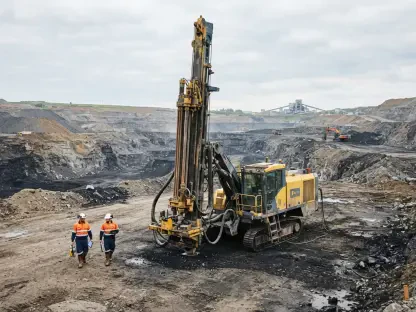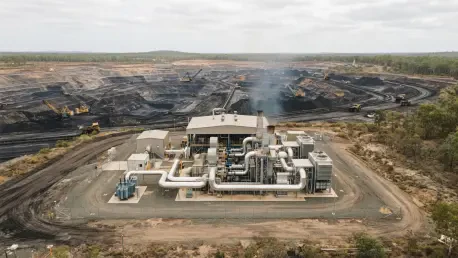

The development of on-site power generation at the Centurion and Kestrel mines illustrates a strategic attempt to lower site costs while satisfying regulatory requirements. In the rugged landscapes of the Bowen Basin, where metallurgical coal remains a cornerstone of the regional economy, the traditional approach to managing underground methane is rapidly evolving from a dangerous liability into a valuable energy asset. For decades, methane—a byproduct of coal formation—was simply an obstacle to be vented into the atmosphere as quickly as possible to ensure worker safety. Today, the landscape is shifting as industrial giants like Peabody and Yancoal implement sophisticated capture technologies that transform this waste gas into a localized power source. This transition is not merely a philanthropic nod to environmentalism; it represents a calculated maneuver to navigate the increasingly stringent carbon policies of the Australian Government while simultaneously shielding mining operations from the volatility of external energy markets. By integrating these systems, Queensland’s coal operators are attempting to prove that high-quality steelmaking coal can maintain its relevance in a global market that is increasingly sensitive to the carbon intensity of its supply chains. The move signals a broader industry trend where operational resilience is defined by how well a company can internalize its environmental footprint.
Strategic Methane Utilization
Operational and Environmental Integration
The primary focus of this industrial shift is the development of on-site power generation facilities that utilize captured methane to create a self-sustaining energy loop. Historically, the ventilation air methane and pre-drainage systems in underground mines were designed solely to keep gas concentrations below explosive limits, often resulting in massive volumes of methane being released directly into the atmosphere. The current strategy, however, prioritizes the installation of “behind-the-meter” power stations that can consume this gas on-site. By doing so, mines like Centurion and Kestrel can significantly reduce their reliance on the Queensland electricity grid, which is often subject to price spikes and transmission inefficiencies in remote mining corridors. This integration aligns perfectly with the Queensland Government’s low-emissions investment framework, which seeks to reduce the carbon intensity of traditional industries without compromising their economic output. As mining depths increase and gas concentrations become more challenging, the ability to turn a required safety process into a profit-saving energy stream becomes a critical differentiator for top-tier mining assets. This approach also simplifies the logistics of energy procurement, as the fuel source is literally beneath the feet of the operators, providing a layer of energy security that is immune to external geopolitical or domestic market fluctuations.
Distinct Technical Approaches: Peabody Versus Yancoal
While the high-level objective of methane destruction is shared across the sector, the technical methodologies employed by major players like Peabody and Yancoal reflect their specific geological conditions and site histories. Peabody has focused its efforts on the Centurion mine near Moranbah, where it is expanding an existing 5 MW station into a much larger 20 MW facility. Their technical strategy centers on the capture of “goaf gas,” which is the methane that accumulates in the collapsed areas or voids left behind after the longwall mining machine has moved through a coal seam. By partnering with specialist firms like Carbon Logica, Peabody is effectively harvesting a byproduct that would otherwise leak through the surface or require extensive venting. In contrast, Yancoal’s approach at the Kestrel mine near Emerald involves a new 30 MW power station that prioritizes “pre-drainage gas.” This technique involves drilling and extracting methane from the coal seam years before the actual mining activity reaches that area. The scale of the Kestrel project is particularly ambitious, with projections suggesting it could generate enough electricity to satisfy the needs of approximately 40,000 residential homes if it were connected to the public grid. By targeting pre-drainage gas, Yancoal not only powers its operations but also earns valuable carbon credits, as the high-purity gas is easier to burn efficiently than the more diluted goaf gas mixtures.
Economic and Regulatory Drivers
The Impact of the Safeguard Mechanism
A major catalyst for these multi-million dollar investments is the Australian Government’s Safeguard Mechanism, which has fundamentally changed the financial equation for heavy emitters. Under this policy, large industrial facilities are required to keep their direct “Scope 1” emissions below a baseline that declines annually, creating a direct financial penalty for inaction. Methane is a particularly problematic gas under this framework because it has a global warming potential significantly higher than carbon dioxide—often cited as being 25 to 30 times more potent over a century-long timeframe. By capturing this methane and burning it to produce electricity, mining companies achieve a massive reduction in their CO2-equivalent footprint, even though the combustion process still releases carbon dioxide. The regulatory math is simple: destroying one molecule of methane is far more effective for compliance than almost any other site-level intervention. This physical abatement allows companies like Peabody and Yancoal to stay ahead of their declining baselines without having to purchase expensive carbon offsets on the open market. Furthermore, the ability to earn Australian Carbon Credit Units through the approved coal mine waste gas method provides an additional revenue stream that can help offset the high capital expenditure required to build specialized reciprocating engine power plants.
Financial Logic and Reliability
Beyond the immediate pressures of regulatory compliance, the financial logic of methane-to-power projects is rooted in the pursuit of long-term operational stability and cost reduction. For a large underground mine, electricity is often one of the largest non-labor operating expenses, driven by the massive power requirements of ventilation fans, longwall equipment, and processing plants. By rebranding a hazardous waste byproduct as a free fuel source, miners can effectively “insulate” themselves from the rising costs of grid-supplied electricity. This is especially relevant in the Bowen Basin, where the aging transmission infrastructure can lead to high network charges. Moreover, on-site generation provides a “firm” and reliable supply of power that is critical for safety-sensitive underground environments. Unlike intermittent renewable sources like solar or wind, a methane-fueled plant can provide constant baseload power as long as the mine is producing gas. Research into the economics of these projects suggests that the cost of methane abatement is remarkably low, often averaging around one dollar per salable ton of coal. When compared to the high market value of metallurgical coal, this investment represents a highly efficient way to “future-proof” an asset. The reduction in energy OPEX combined with the avoidance of compliance penalties creates a compelling internal rate of return that satisfies even the most conservative of corporate boards.
The Environmental Debate
Balancing Abatement and Longevity
The transition to methane-to-power technologies carries a nuanced environmental narrative that has sparked debate between industry proponents and climate advocates. On the positive side, the climate benefit of converting high-potency methane into carbon dioxide is undeniable and immediate. For every ton of methane destroyed, the equivalent of dozens of tons of CO2 is kept out of the atmosphere, making these power plants some of the most effective industrial decarbonization tools currently in operation. However, some environmental groups and climate analysts argue that these projects represent a “double-edged sword.” The concern is that by significantly lowering the operating costs and regulatory burdens of coal mines, methane-to-power stations might actually extend the operational life of fossil fuel assets that would otherwise become uneconomical in a high-carbon-price environment. Critics suggest that these efficiency gains could delay the inevitable transition toward green steelmaking technologies that do not rely on coking coal at all. From the industry’s perspective, however, the global demand for steel remains high, and as long as metallurgical coal is required, it is far better to produce it with the lowest possible methane footprint. This tension highlights the complexity of the energy transition, where incremental improvements in existing industries must be weighed against the long-term goals of total decarbonization.
Technical Limitations and Consistency
Despite the clear benefits of utilizing waste gas, there are inherent technical challenges and limitations that prevent methane-to-power from being a universal “silver bullet” for the industry. One of the primary hurdles is the inconsistent nature of gas flow from an active mine. Unlike a natural gas plant connected to a stable pipeline, a mine-based power station is entirely dependent on the rate of coal extraction and the geological variations within the coal seam. If a mine encounters a “tight” zone with lower gas permeability, or if there is a disruption in the drainage pipework, the fuel supply to the power station can drop precipitously. This variability means that these plants cannot easily serve as “peaking” units that ramp up and down to meet demand; they are best suited for steady-state baseload operations. Furthermore, the specialized reciprocating engines used in these plants require high levels of maintenance to handle the impurities often found in coal mine gas, such as moisture and dust particles. If the gas processing and cleaning systems are not perfectly calibrated, the engines can suffer from reduced efficiency or frequent mechanical failures. Consequently, while these projects significantly enhance site-level self-sufficiency, they do not allow a mine to completely disconnect from the broader grid. Most operators still maintain a grid connection as a critical backup to ensure that essential safety systems remain powered even if the gas-to-power facility goes offline for repairs.
Investment and Future Outlook
Sizing the Impact for Investors
For the investment community, the proliferation of methane-to-power projects in the Queensland coal sector provides a clearer lens through which to evaluate the Environmental, Social, and Governance (ESG) performance of mining stocks. These projects provide tangible evidence that a company is taking proactive steps to mitigate its Scope 1 emissions, which is a key metric for institutional investors who are increasingly bound by carbon-neutral mandates. By reducing operating expenses and hedging against the rising cost of carbon compliance, companies like Peabody and Yancoal are essentially de-risking their assets in a volatile regulatory environment. However, it is important for stakeholders to recognize that these efficiency tools do not change the fundamental macroeconomic drivers of the coal market. Investors must still contend with the cyclical nature of global coal prices, fluctuating demand from major steel-producing nations, and the rising costs of rail and port logistics. A 20 MW or 30 MW power plant is a sophisticated operational improvement, but it does not insulate a company from the long-term structural shifts in the global energy mix. The true value for investors lies in the “optimized extraction” model, where the most efficient and compliant mines are the ones that remain profitable during market downturns, while less efficient competitors are forced to close due to high overheads and regulatory penalties.
Success Markers: A Roadmap for Growth
As the Queensland coal sector moves toward the end of the current decade, the ultimate success of the methane-to-power movement will be judged by several key performance indicators. The first major milestone will be the successful commissioning and full-scale operation of the Kestrel and Centurion expansions by 2027. Meeting these deadlines will demonstrate the industry’s ability to execute complex engineering projects within a tightening labor market. Secondly, the level of transparency regarding actual cost savings will be pivotal; as hard data becomes available on the “dollars saved per ton,” other mid-tier miners may be encouraged to follow suit. The stability of government policy will also play a critical role, particularly the ongoing reviews by the Department of Climate Change, Energy, the Environment and Water regarding the future of carbon credit methodologies. If the financial incentives for waste gas destruction remain robust, it is likely that methane-to-power will transition from a “strategic advantage” for leaders to a “standard operating procedure” for the entire industry. The evolution of this technology suggests a future where the coal sector is defined by its ability to innovate and integrate, finding ways to remain competitive in a world that demands both industrial materials and environmental accountability.
The industry transition demonstrated that operational efficiency and carbon management were no longer mutually exclusive strategies. Operators moved forward by prioritizing high-resolution gas monitoring and transparent reporting to validate their site-level savings. This shift towards methane-to-power allowed the Queensland coal sector to adapt to a more stringent regulatory climate while maintaining its core production capabilities. By treating waste gas as a resource rather than a hazard, companies successfully mitigated a significant portion of their environmental liabilities. These initiatives ultimately proved that the longevity of the coal industry depended on its willingness to internalize the costs of its emissions through technological innovation. Moving forward, the lessons learned from these projects provided a blueprint for other heavy industries seeking to balance economic output with decarbonization goals. The successful integration of these systems established a new baseline for what constituted a responsible and efficient mining operation in a modern economy.