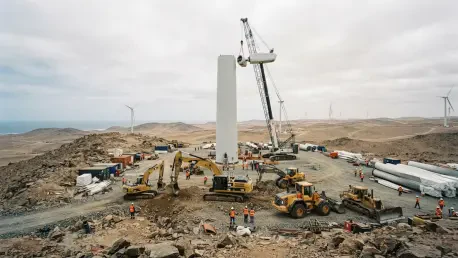

The relentless winds characteristic of the Namibian coastline are no longer just a natural phenomenon but have become a cornerstone of a national strategy aimed at securing energy independence. With a massive investment of approximately N$2 billion mobilized by Standard Bank Namibia, the Lüderitz wind power initiative represents one of the most significant shifts in the regional infrastructure landscape in recent history. Developed by CERIM Lüderitz Energy, a strategic joint venture between the China Energy International Group and the local firm ANIREP, this facility serves as a testament to the power of international collaboration in tackling climate objectives. Following a high-profile groundbreaking ceremony led by Vice President Lucia Witbooi, construction has moved into high gear to meet a commissioning deadline of March 1, 2027. This project signifies a departure from traditional fossil fuel reliance, placing Namibia at the forefront of the African renewable energy transition. By leveraging the specific geographic advantages of the Kharas Region, the state is turning its harsh environment into a productive economic asset.
Technical Integration and Grid Reliability
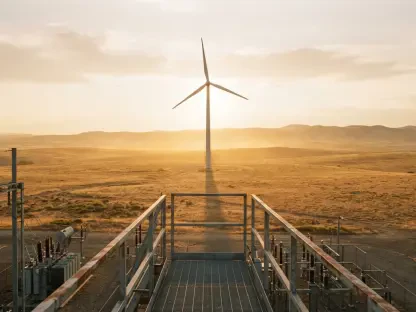
Technically, the facility is designed to harness the high-velocity air currents found approximately 16.5 kilometers south of Lüderitz, utilizing advanced hardware to maximize output. The installation will feature seven sophisticated Goldwind turbines, which together provide a total installed capacity of 54.6 MW. This hardware selection is critical, as it ensures high uptime and efficiency even in the demanding coastal environment where salt and sand can often compromise less robust equipment. To move this energy from the point of generation to the consumer, the developers are constructing a 40-kilometer, 132-kilovolt transmission line. This critical link will connect the wind farm directly to the Namib Substation, facilitating a seamless transition of green electrons into the national framework. The integration of such a high-voltage line requires meticulous planning to ensure that the influx of variable wind energy does not destabilize the existing electrical grid or cause frequency fluctuations.
Once the blades begin their permanent rotation, the plant is projected to generate roughly 253.8 GWh of electricity annually, a figure that represents about 6% of the total electricity consumption for the entire country. This massive injection of clean power is not merely about meeting demand but also about transforming the environmental footprint of the Namibian utility sector. By replacing thermal generation, the wind farm will offset approximately 150,000 tons of carbon dioxide emissions every year, contributing significantly to international climate commitments. Long-term operational stability is further guaranteed by a 25-year power purchase agreement with NamPower, the national utility. This contractual arrangement provides the financial certainty needed for long-term maintenance and upgrades while ensuring that the utility can count on a steady supply of renewable energy for decades. Such agreements are vital for attracting further investment by demonstrating a clear path for renewable energy adoption.
Economic Growth and Strategic Outcomes
From a financial and economic perspective, the project serves as a premier model for how public-private partnerships can successfully de-risk large-scale infrastructure in emerging markets. The funding consortium is notably diverse, including major players such as Standard Bank, RMB, the Development Bank of Namibia, and the African Development Bank Group. This broad institutional backing underscores a strong international consensus on the viability of Namibian wind resources and the professional management of the project. By pooling resources from both local and continental financial giants, the developers have managed to secure competitive interest rates and favorable terms that might otherwise be unavailable to solo ventures. This collaborative financial structure acts as a blueprint for future energy projects in the Southern African Development Community. It proves that when regional banks and international development institutions align their goals, they can mobilize the capital necessary to replace aging infrastructure with clean alternatives.
The successful implementation of the initial wind infrastructure in Lüderitz effectively provided the blueprint for Namibia to pursue its goal of 3,000 MW in total renewable capacity. To sustain this development, stakeholders prioritized the expansion of high-voltage transmission networks to ensure that remote coastal power could reach industrial hubs without significant line losses. The project showed that training programs for local youth were essential to maintaining the 25-year lifespan of these turbines, turning a construction boom into a permanent technical workforce. By reducing the reliance on volatile diesel imports, the nation stabilized its energy prices, allowing for more predictable economic planning across all sectors. Future strategies now involve exploring green hydrogen production as a natural extension of this excess wind capacity, positioning the Kharas Region as a leader in sustainable fuel. This transition ultimately proved that regional energy security was best achieved through international capital and a commitment to local industrialization.