
Christopher Hailstone stands at the intersection of traditional utility management and the burgeoning world of renewable energy, offering a veteran’s perspective on the massive shifts currently rattling the global energy sector. With a background that spans grid security and the intricate mechanics of electricity delivery, he has spent years advising on how to harden infrastructure against both environmental and technological volatility. As we enter a pivotal era where energy independence is becoming as vital as carbon neutrality, his insights provide a crucial map for understanding how legacy grids can be transformed into the intelligent, self-sustaining networks of the future.
How has the global dialogue surrounding energy shifted recently, particularly regarding the balance between expanding renewables and ensuring national energy security?
For several years, the primary driver of energy policy was the rapid build-out of wind and solar, but we have reached a profound turning point where resilient energy supply and national independence have claimed the top spot. It is a fascinating evolution because, while the expansion of renewables was the undisputed darling of 2023, governments are now realizing that you cannot have a green grid if it isn’t a secure one. Even with this pivot, the momentum behind clean energy is staggering, with global investments hitting $2.2 trillion in 2025—effectively doubling what we are seeing poured into fossil fuels. This creates a high-stakes environment where we must manage massive financial inflows while ensuring that the lights stay on during a period of intense geopolitical and environmental stress. It’s no longer just about adding green capacity; it’s about making sure that capacity belongs to a system that can withstand external shocks and maintain national sovereignty.
With the increasing complexity of modern power systems, what role do you see digitalization and virtual simulations playing in strengthening grid resilience?
We often refer to grid software as the nervous system of the entire network because, without that digital layer, we are essentially flying blind, especially in low-voltage distribution areas that service homes and small businesses. Digital twins and virtual simulations allow us to model incredibly complex scenarios and forecast risks with surgical precision before they ever happen in the physical world. This is why 74% of energy executives now view the smart grid as the critical driver of this transition, providing the visibility needed to manage everything from sudden weather events to fluctuating solar output. These technologies act as a bridge between our aging legacy infrastructure and the high-demand reality of a modern economy, turning raw data into actionable insights. By moving away from fragmented data standards and toward these integrated digital platforms, we give grid operators the power to visualize the entire network in real-time, which is the only way to maintain stability as we move away from fossil fuels.
How is the rise of the “prosumer” and high-demand technologies like data centers forcing a rethink of traditional, centralized power management?
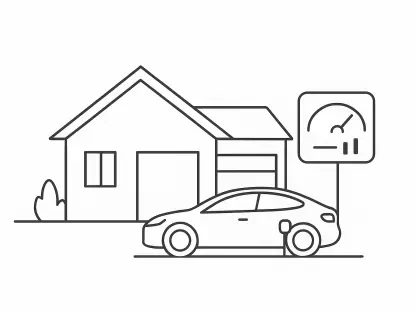
The traditional model where power flows one way from a massive plant to a passive consumer is effectively dead; we are now seeing a “Flip the Grid” approach where management starts from the bottom up. In regions like Thailand, where the net-zero target was pulled forward to 2050, the explosion of rooftop solar and electric vehicle charging has introduced a chaotic reverse power flow that old systems simply weren’t built to handle. At the same time, the push to become a regional technology hub means the grid must feed power-hungry data centers that require absolute, unwavering stability. To balance these competing forces, we are looking at Autonomous Zones—districts that can sense when renewable generation exceeds demand and automatically reroute that surplus to EV charging or industrial storage. It’s a sensory experience for the grid; the system “feels” the load and reacts in milliseconds to prevent transmission lines from overloading while still meeting the needs of a digital economy.
What are the primary obstacles preventing us from fully realizing these smart energy systems, and how can we overcome them?
The biggest bottleneck isn’t the technology itself, which is already ready for deployment, but rather the outdated regulatory frameworks that still prioritize physical assets like steel and copper over digital intelligence. Roughly 61% of executives view these regulatory constraints as a major challenge, as current rules often favor investing in a new transmission line over a sophisticated software package that could achieve the same result more efficiently. We need to transition toward a System of Systems model where electricity, gas, and hydrogen infrastructures are linked through standardized APIs and shared data protocols. Without this integration, we are stuck with fragmented silos that cannot talk to one another, making the system brittle and expensive to scale. Reforming these regulations to encourage investment in software and adjusting market mechanisms to value system flexibility is the only way to move at the speed the energy transition demands.
As we look toward a future that is decentralized and digital, how do you envision the autonomous grid functioning to ensure long-term sustainability?
The autonomous grid represents the pinnacle of the “3D” strategy—Decentralized, Democratized, and Digital—where the network acts as a self-healing organism that can repair itself without human intervention. In this future, 63% of energy leaders believe the benefits of automation, such as reduced operating costs and enhanced stability, are already well worth the investment, and 62% believe their regions are already prepared for this leap. If a fault occurs, the system doesn’t wait for a human to diagnose the issue; it isolates the affected area and automatically restores power to the rest of the network, with personnel only stepping in to review the system’s actions. This level of autonomy is essential because the sheer volume of data from distributed energy sources will soon exceed human cognitive capacity to manage in real time. By allowing the grid to make these split-second decisions, we create a system that is not only more efficient but inherently more sustainable, as it can perfectly match green supply with shifting demand every second of the day.
What is your forecast for the evolution of the power grid over the next decade?
My forecast is that we will see a rapid digital decoupling where the success of a nation’s energy transition is measured not by how many solar panels they have, but by the sophistication of their grid software and data integration. We are going to move toward a highly democratized system where every building and vehicle is an active participant in the energy market, facilitated by the 62% of regions already preparing for high levels of automation. This decade will be defined by the shift from rigid, centralized control toward flexible, autonomous energy districts that can thrive despite high variability in generation. Ultimately, those who embrace the System of Systems approach and reform their regulations to favor digital innovation today will be the ones who enjoy the greatest energy security and economic resilience as we approach the 2050 net-zero milestones.