
The sheer scale of modern renewable energy infrastructure has reached a point where individual machines can now rival the power output of traditional power plants while standing taller than most urban skyscrapers. Standing as a towering testament to the rapid acceleration of renewable energy engineering, the recent installation of a 26-megawatt offshore wind turbine prototype in Shandong marks a pivotal shift in how nations approach large-scale power generation. Developed by the Dongfang Electric Corporation, this colossal unit represents the current pinnacle of wind technology, pushing the boundaries of what was previously thought possible for a single-unit installation. By concentrating such immense capacity into a single structure, engineers have fundamentally altered the economics of offshore wind, moving away from the high-density farms of smaller units toward a future defined by fewer, much more powerful machines. This transition is not merely about size for its own sake but about achieving the necessary efficiency to make clean energy the dominant force in the global power grid during these critical years from 2026 to 2030.
The Engineering Behind Extreme Scale
Physical Dimensions: A Marvel of Modern Construction
The physical footprint of the 26-megawatt turbine is difficult to grasp without comparing it to familiar landmarks, as its blades alone exceed the length of a professional football field. This massive design allows for a total swept area of approximately 19 acres, which is roughly equivalent to the surface area of 300 tennis courts combined into a single rotating circle. Such a vast catchment area is essential for capturing the lower-density energy of the wind and converting it into a concentrated electrical stream that can serve tens of thousands of people. Constructing a machine of this size required revolutionary advancements in material science, particularly in the fabrication of the turbine blades, which must be lightweight enough to turn in low winds yet strong enough to maintain their shape under the immense centrifugal forces generated at high speeds. These engineering choices ensure that the turbine can maximize its intake from the atmosphere, turning every gust into a tangible source of power that fuels the regional economy while reducing the reliance on older, carbon-heavy infrastructure.
The logistical challenge of transporting and assembling such a behemoth at a coastal test site in Shandong necessitated the development of specialized maritime equipment and precision cranes capable of operating in variable weather. Once operational, a single unit of this capacity is projected to generate nearly 100 million kilowatt-hours of clean electricity on an annual basis, which provides enough energy to sustain approximately 30,000 average households. This level of output from a single point of failure-protected installation demonstrates why the industry is moving so aggressively toward larger units. Instead of maintaining hundreds of smaller 5-megawatt or 8-megawatt turbines, grid operators can now focus their maintenance efforts on a smaller number of high-output nodes. This consolidation of power generation simplifies the integration of offshore wind into the existing electrical grid, making it a more reliable and manageable component of the national energy portfolio. The Shandong prototype serves as a blueprint for the next generation of coastal energy projects, proving that the technical hurdles of extreme scale are being cleared with remarkable speed and precision.
Specialized Design: Resilience in Volatile Marine Environments
Operating in a marine environment presents a unique set of challenges, ranging from the constant threat of saltwater corrosion to the sheer physical force of seasonal typhoons that frequently batter the coastline. To ensure the longevity of the 26-megawatt prototype, designers integrated specialized anti-corrosion materials into every critical component, from the internal gearbox to the external housing of the nacelle. These materials are designed to withstand the abrasive nature of salt spray and high humidity, preventing the structural degradation that has historically shortened the lifespan of offshore assets. Furthermore, the turbine features typhoon-resistant structural reinforcements, which allow it to feather its blades and remain stable even when faced with extreme wind speeds that would normally compromise smaller or less robust designs. This focus on durability is a direct response to the need for reliable energy production in regions where the environment is as hostile as it is energetic, ensuring that the massive investment in these structures pays off over decades of continuous operation.
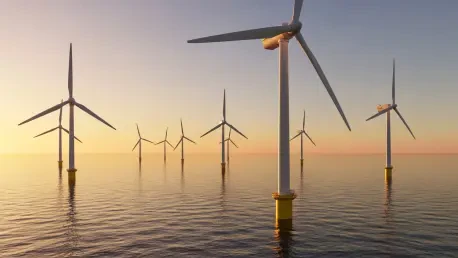
While the current test unit is situated on the coast to facilitate easier monitoring and data collection, the underlying design is specifically optimized for deep-sea deployment where the real potential for wind energy lies. In deep-water environments, wind speeds are significantly higher and more consistent than those found near the shore, but the conditions are also much more demanding for the structural foundations. This 26-megawatt model is built to serve as the centerpiece of future floating or deep-fixed platforms that will operate far over the horizon, away from shipping lanes and coastal ecosystems. By optimizing the turbine for these high-energy zones, engineers are positioning the technology to capture the most productive air currents available on the planet. The structural integrity of the machine is balanced with sophisticated sensor arrays that provide real-time feedback on vibration, stress, and environmental conditions, allowing for predictive maintenance that can address minor issues before they lead to significant downtime. This combination of physical toughness and digital intelligence is what makes the 26-megawatt standard a viable solution for the global energy transition.
Industrial Implications of the Megasized Trend
Rapid Technological Iteration: A Competitive Global Landscape
The speed at which the wind energy sector has scaled its maximum capacity is unprecedented in the history of industrial power generation, reflecting a fierce competitive drive among global manufacturers. In just a short four-year span leading up to the current 2026 standard, the maximum capacity of offshore turbines has surged by over 60%, jumping from a previous high of 15 megawatts to this current 26-megawatt benchmark. This rapid evolution is not confined to a single company; while Dongfang Electric Corporation currently holds the record, other domestic giants such as Goldwind and China Three Gorges are already deploying 20-megawatt units in various offshore sectors. This cluster of high-capacity development signals a broad industry consensus that the most efficient path forward involves the creation of increasingly larger machines. The competitive pressure within the Chinese market has served as an incubator for these advancements, forcing companies to iterate their designs at a pace that far outstrips the traditional development cycles seen in the fossil fuel or nuclear power sectors during their respective eras of growth.
This transition to oversized turbines also highlights a strategic shift in the global supply chain, as the demand for larger components necessitates a total overhaul of manufacturing facilities and shipping ports. To produce a 26-megawatt unit, factories must be capable of molding blades that are significantly longer and heavier than anything produced only a few years ago, requiring new types of composite resins and automated manufacturing processes. The domestic success of these Chinese firms has set a new global standard that international competitors must now meet to remain relevant in the offshore market. As these companies refine their 26-megawatt designs, they are also building the logistical expertise required to export this technology to other regions looking to capitalize on their own maritime wind resources. The result is a self-reinforcing cycle of innovation where each new record-breaking turbine pushes the entire industry to rethink its limits. This dynamic environment ensures that the cost per megawatt continues to drop even as the complexity of the machines increases, making wind power the most attractive option for new large-scale energy projects.
Economic and Environmental Advantages: Consolidating Energy Production
The strategic move toward “megasized” turbines offers significant economic advantages by drastically reducing the amount of physical infrastructure required to achieve a specific power target. By capturing wind over a much wider area with a single set of blades, developers can generate massive amounts of electricity using far fewer individual machines than would have been necessary in the past. This consolidation leads to a direct reduction in the number of undersea foundations that must be anchored to the seafloor, as well as a decrease in the total mileage of undersea cabling required to connect the turbines to the onshore grid. Since a large portion of the cost of an offshore wind farm is tied to these maritime construction activities, using higher-capacity turbines allows developers to drive down the levelized cost of electricity (LCOE). This makes clean energy more competitive with natural gas and coal, removing the financial barriers that previously hindered the widespread adoption of offshore wind in many parts of the world.
Beyond the clear economic incentives, the transition to high-capacity offshore wind power provides substantial public health and environmental benefits that cannot be ignored. Every 26-megawatt turbine that comes online displaces a significant amount of fossil fuel consumption, directly reducing the volume of carbon emissions and air pollutants released into the atmosphere. This reduction in particulate matter and sulfur dioxide has a tangible impact on the air quality of coastal regions, leading to improved health outcomes for local populations. Furthermore, the focus on fewer, larger turbines minimizes the total environmental footprint of wind farms on the seabed, as there are fewer points of contact with the marine ecosystem. By aligning economic efficiency with aggressive climate goals, these behemoth turbines offer a viable roadmap for meeting the rising global demand for affordable and sustainable electricity. The success of the Shandong project suggests that the future of energy production will be defined by its ability to harness the elements at a scale that was once considered the realm of science fiction.
The 26-megawatt turbine established a new benchmark for clean energy infrastructure, characterized by its extreme scale and the rapid pace of technological iteration. Industry leaders and policymakers moved to accelerate the deployment of these massive units, recognizing that the consolidation of power generation into fewer, more efficient machines was the most effective way to lower the cost of maritime energy. Future projects began to incorporate these designs into deep-sea wind farms, where the environmental conditions allowed for even higher utilization rates. Engineering teams focused on refining the floating foundation technologies necessary to support such heavy nacelles in open ocean waters. These advancements ensured that the infrastructure could withstand the increasingly volatile weather patterns observed across the globe. By prioritizing robust materials and digital monitoring, operators managed to extend the operational life of these assets well beyond previous estimates. The transition to this new scale of power generation provided a clear path for decarbonizing heavy industry and meeting the growing electrical needs of modern urban centers through sustainable means.