
The Delaware City Refinery stands as a massive industrial sentinel on the Mid-Atlantic coast, but its recent operational struggles have ignited a fierce debate regarding the true cost of regional energy security. This facility serves as a cornerstone of East Coast energy production, boasting a sophisticated infrastructure capable of processing a diverse range of crude oil grades. While its economic contributions to the surrounding region remain undeniable, the symbiotic relationship between heavy industry and local residents has become increasingly strained. The facility provides essential fuel security for the region, yet the environmental externalities associated with its massive footprint have placed it under the intense microscopic gaze of the Department of Natural Resources and Environmental Control (DNREC).
Maintaining such an aging industrial complex requires a delicate balance between constant production and the technical necessity of “turnarounds.” These maintenance windows are essential for long-term safety and mechanical integrity, but they frequently expose the facility to regulatory vulnerabilities. When primary systems go offline for repair, the refinery must navigate a complex landscape of federal air quality standards while attempting to minimize the impact on Delaware City. This infrastructure life cycle highlights a broader challenge for the refining sector: how to modernize essential equipment without triggering significant environmental disruptions that alienate the local community.
The Vital Role and Operational Complexity of the Mid-Atlantic Refining Sector
The Delaware City Refinery operates as a critical node in the regional supply chain, providing high-volume output that stabilizes fuel prices across several states. Its ability to refine heavy, high-sulfur crudes into usable products makes it an asset for PBF Energy, though this complexity also increases the potential for environmental incidents. The economic integration of the refinery goes beyond simple employment; it supports a network of local vendors and contributes significantly to the state’s industrial tax base. However, this economic weight no longer provides a shield against the rising expectations of environmental stewardship that define the current era.
Regulatory oversight has evolved from periodic inspections to a constant presence governed by strict DNREC protocols. These frameworks are designed to ensure that even during mechanical failures, the refinery adheres to the Clean Air Act and state-level mandates. The challenge lies in the aging nature of the facility’s core infrastructure. As components reach the end of their functional lives, the frequency of necessary maintenance increases, creating a cycle where technical necessity often clashes with the public’s right to clean air. This friction defines the current operational reality for the site’s managers and its neighbors.
Modern Trends and Data-Driven Performance in Industrial Refining
Emerging Technologies in Emissions Monitoring and Mitigation
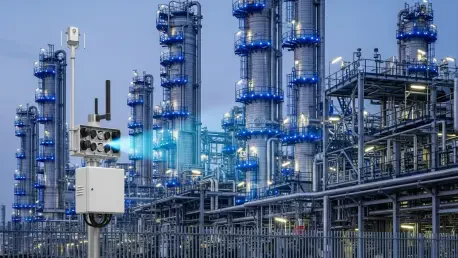
Technological shifts are redefining how refineries manage their environmental footprint through the implementation of fenceline monitoring systems. These sensors provide real-time transparency by uploading hourly data to public state portals, allowing residents and regulators to track pollutants as they cross the facility’s boundary. This movement toward active, sensor-based transparency serves as a corporate defense mechanism and a public safety tool, reducing the lag time between a mechanical failure and public awareness. By adopting these systems, the refinery attempts to regain trust through a policy of radical visibility.
Moreover, mitigation strategies have become more sophisticated, focusing on production rate reductions during critical repair phases. When primary pollution control devices are bypassed for maintenance, facility managers must decide whether to throttle output or risk significant unpermitted emissions. The transition toward utilizing secondary pollution control devices, even if less efficient than primary ones, represents a significant step in minimizing the magnitude of pollution spikes. These technological interventions reflect a broader industry trend where data-driven mitigation is preferred over passive environmental reporting.
Market Projections and Environmental Performance Indicators
Analyzing the current emission statistics reveals a troubling pattern of sulfur dioxide and carbon monoxide spikes during transition periods. These metrics serve as primary environmental performance indicators, signaling when a facility’s maintenance schedule has fallen behind its operational demands. While high-volume output remains the primary goal for PBF Energy, the increasing costs associated with administrative penalties and unpermitted emissions are beginning to impact the bottom line. This suggests that the cost of non-compliance may soon outweigh the benefits of deferred maintenance.
Growth in the refining sector is now inextricably linked to compliance excellence. Forward-looking benchmarks suggest that “technological transparency” will soon become a baseline requirement for all heavy industrial sites. Facilities that fail to integrate these transparency tools risk being left behind as regulators and investors alike prioritize environmental, social, and governance (ESG) metrics. For the Delaware City site, this means that future success depends less on crude throughput and more on the ability to demonstrate a measurable reduction in the frequency of pollution incidents.
Navigating Structural Obstacles and Public Health Challenges
The refinery currently faces what experts call a maintenance paradox, where essential mechanical upkeep requires the temporary bypass of primary pollution controls. This structural obstacle means that the very actions taken to ensure long-term safety often lead to short-term environmental degradation. When the coker carbon monoxide boiler or other critical systems are shut down for repairs, the facility must rely on secondary methods that are frequently insufficient to catch all hazardous byproducts. This creates a recurring conflict between the internal logic of industrial engineering and the external reality of public health.
Evaluating the public health externalities reveals a discrepancy between theoretical models and ground-level impacts. While regulators often suggest that pollutants released at high altitudes disperse before reaching residents, local health data and community anecdotes tell a different story. Sulfur dioxide releases, in particular, pose acute respiratory risks that can lead to emergency room visits for vulnerable populations. This friction reached a peak during recent town celebrations, where industrial odors and visible emissions cast a shadow over public events, highlighting the social tensions inherent in hosting a major refinery.
The Evolving Legal Landscape and Regulatory Accountability
The legal pressure on PBF Energy has intensified as private litigation and medical expense claims become more common following pollution spikes. Residents are no longer waiting for state action; instead, they are pursuing individual lawsuits to recover costs associated with respiratory illnesses and other health issues linked to refinery emissions. This rise in litigation represents a significant shift in how communities hold industrial neighbors accountable. Furthermore, the legislative landscape is shifting toward the potential classification of certain facilities as “chronic violators” under the Pollution Accountability Act.
Enforcement mechanisms are also becoming more robust, with the role of consent orders and financial fines moving from symbolic gestures to meaningful drivers of corporate behavior. A fine of $300,000 for emission violations may have once been seen as a cost of doing business, but in the current climate, it signals a lack of control that can trigger further scrutiny. These legal tools are designed to ensure adherence to safety protocols and to force the acceleration of deferred maintenance. As the legal framework tightens, the refinery must prove that it can operate without repeatedly exceeding its permitted limits.
The Future of Heavy Industry in an Era of Heightened Oversight
Regulatory bodies have moved from passive monitoring to proactive, data-backed intervention. This transition means that refineries are no longer judged on annual averages but on hourly performance. The move toward aggressive enforcement is supported by new “secondary” control methods that aim to eliminate the need for high-volume bypasses entirely. Innovation in these systems is critical for the survival of aging infrastructure, as the tolerance for unpermitted emissions continues to vanish. The goal is to reach a state of sustainable coexistence where the refinery can exist alongside an advocate community.
Adapting to this landscape requires a fundamental shift in how industrial facilities perceive their role in the community. Environmental justice is no longer a peripheral concern; it is a central pillar of operational strategy. For the Delaware City Refinery, this means investing in advanced filtration technologies that provide a fallback during maintenance cycles. Without these innovations, the facility risks becoming a relic of an era that prioritized production at any cost, rather than a modern partner in a sustainable economy.
Synthesizing Industrial Necessity with Environmental Stewardship
The evaluation of the Delaware City Refinery’s recent operational history demonstrated that the facility struggled to reconcile its industrial output with its environmental responsibilities. It became clear that the strategy of bypassing primary controls during maintenance led to unacceptable spikes in sulfur dioxide, which subsequently damaged public trust and invited legal intervention. Stakeholders recognized that the acceleration of deferred maintenance was no longer optional but a prerequisite for continued operation in a strictly regulated environment. The adoption of advanced filtration technologies and secondary control devices emerged as the most viable path to preventing future pollution events.
Ultimately, the transition toward real-time data transparency served as a primary bridge between corporate accountability and the community’s right to safety. Regulatory agencies successfully shifted their approach from reactive fining to proactive monitoring, ensuring that the refinery remained under constant pressure to optimize its performance. By prioritizing the health of the local population alongside the technical needs of the facility, the industry moved toward a more balanced model of stewardship. This shift highlighted that the future of heavy industry depended on its ability to prove, through hard data and consistent performance, that industrial necessity did not have to come at the expense of public health.