
Christopher Hailstone brings a wealth of experience in energy infrastructure and grid security to the table, offering a seasoned perspective on the evolving industrial landscape between Eurasia and Africa. As Türkiye and Angola look to deepen their strategic ties, his insights into how deepwater technology and agricultural modernization can bridge the gap between these two significant economies provide a clear roadmap for future cooperation. This discussion explores the synergy between Türkiye’s offshore drilling prowess and Angola’s vast untapped natural resources, the roadmap for hitting ambitious trade targets, and the potential for mining partnerships modeled on successful continental projects. We also examine the localization of agricultural machinery and the broader geopolitical implications of linking these two nations within the global trade corridor to create a resilient supply chain.
Türkiye currently operates a sophisticated deepwater fleet and is conducting high-level drilling operations in Somalia. How can this specific offshore expertise be transferred to Angola’s oil fields, and what operational milestones must state companies like TPAO and Sonangol reach to move from technical sharing to active production?
The transition from technical dialogue to active extraction relies heavily on the physical deployment of Türkiye’s world-class maritime assets. Türkiye has methodically built the world’s fourth-largest deepwater energy fleet, consisting of six state-of-the-art drillships and two seismic research vessels, which have already proven their mettle by uncovering 800 billion cubic meters of gas in the Black Sea. For Angola, the first major milestone involves moving beyond the boardroom to launch joint upstream projects where TPAO’s hands-on experience in high-pressure, deep-sea environments can be applied to Angolan offshore blocks. We are already seeing the blueprint for this in Somalia, where Turkish crews are managing some of the deepest drilling operations on the planet, a feat that requires immense technical precision and physical endurance. To reach active production, Sonangol and TPAO must establish a shared operational command that integrates these seismic vessels to map untapped reserves before the drillships move in to break ground.
Bilateral trade currently sits at $126 million, which is significantly lower than the $500 million target set by officials. What specific industries offer the fastest route to bridging this gap, and what regulatory or logistical adjustments are necessary to encourage Angolan firms to invest more heavily in Türkiye?
While the current $126 million trade volume might look modest on paper, it actually represents a massive, untapped reservoir of commercial energy that is just waiting for the right spark. The fastest route to the $500 million target lies in the diversification of the manufacturing and energy services sectors, moving away from simple commodity exchange toward high-value industrial equipment. For Angolan firms to feel the confidence to invest in Türkiye, there needs to be a streamlining of the regulatory frameworks established during the Joint Economic Commission sessions to reduce the friction of cross-border capital movement. We need to see more Turkish logistics firms setting up shop in Luanda to handle the “last mile” of delivery, ensuring that the heavy machinery required for Angola’s development arrives without delay. There is a palpable sense of urgency among business leaders to transform these administrative hurdles into a seamless trade corridor that reflects the true economic scale of both nations.
International mining efforts are already approaching the production phase for gold in other parts of Africa. How would a similar exploration and development model be applied to Angola’s gold and diamond sectors, and which joint investment frameworks are best suited for these high-value mineral projects?
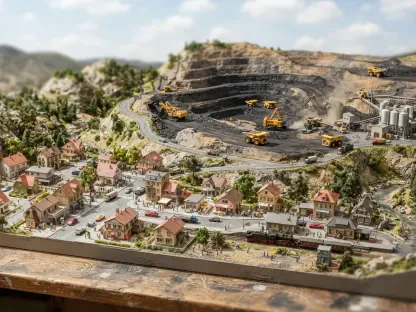
The success of Türkiye’s state-linked mining company, MTAIC, in bringing a gold project in Niger toward the production phase serves as a perfect proof of concept for the Angolan market. By applying this “exploration-to-extraction” model, we can see Turkish technical consultants working alongside Angolan geologists to identify high-yield diamond and gold deposits with surgical accuracy. The best framework for these high-stakes projects is a joint investment model where Türkiye provides the specialized machinery and technical field development, while Angola provides the mineral rights and local workforce. This creates a balanced partnership where the risks are shared, and the rewards—the glittering potential of Angola’s subsoil—are maximized through modern efficiency. Seeing the first drill core samples from a joint venture is always an emotional moment for an engineer, as it represents years of geological guesswork finally turning into tangible wealth.
Angola possesses nearly 58 million hectares of arable land, yet vast areas remain uncultivated due to infrastructure gaps in irrigation and storage. How can Turkish experience in agricultural machinery and food processing be localized, and what steps are required to transform Angola into a regional hub for joint production?
Angola sits on a literal goldmine of 58 million hectares of arable land, but the silence of these uncultivated fields is a reminder of the work left to do in irrigation and cold-chain logistics. Türkiye’s capacity in manufacturing robust agricultural machinery and sophisticated food processing systems is tailor-made for the rugged conditions of the Angolan interior. To localize this, we must move beyond exporting tractors and instead build assembly plants within Angola, training local technicians to maintain the irrigation systems that will breathe life into the soil. This transformation requires a heavy focus on rural infrastructure, specifically building the storage facilities and sanitation hubs that prevent crop spoilage after the harvest. When you see a once-barren field turning green thanks to a newly installed Turkish irrigation pivot, you realize that food security is the most strategic alliance of all.
With a combined GDP of $1.75 trillion, both nations occupy vital positions in the global market. How does positioning Türkiye as a manufacturing hub between Western Europe and China change the strategic value of Angola’s raw materials, and what long-term projects would best support this trade corridor?
The sheer economic weight of a $1.75 trillion combined GDP changes the calculus of global trade, positioning the Türkiye-Angola axis as a formidable alternative to traditional east-west routes. By leveraging Türkiye’s $820 billion total foreign trade volume and its role as a technology hub between Western Europe and China, Angola’s raw materials gain a direct “fast track” into the world’s most sophisticated supply chains. Long-term projects should focus on creating a maritime “green corridor” that links Angolan ports directly to Turkish industrial zones, allowing minerals and energy products to be processed and re-exported as finished goods. This isn’t just about moving cargo; it’s about creating a sophisticated ecosystem where Angolan resources fuel Turkish factories, which in turn provide the technology to further develop Angola’s infrastructure. It is a symbiotic relationship that turns the geographic distance between the two nations into a strategic advantage for both.
What is your forecast for the Türkiye-Angola energy and economic partnership?
I forecast that the partnership will evolve from a period of “technical courtship” into a deep-seated industrial marriage, with trade likely doubling within the next three years as the first joint offshore wells begin to show results. We will see Türkiye move from being a simple supplier of goods to a permanent fixture in the Angolan industrial landscape, specifically through the establishment of regional manufacturing centers for mining and farming equipment. As the global demand for diversified energy and food sources intensifies, the strategic value of Angola’s 58 million hectares and its deepwater blocks will make it Türkiye’s most vital partner in the Southern Hemisphere. Within a decade, the “Türkiye-Angola Day” will be viewed not just as a forum for discussion, but as the foundational moment for a trade corridor that reshaped the economic map of the Atlantic. This partnership is built on the solid ground of mutual necessity, and the momentum I see today suggests a future of shared prosperity and technological integration.