


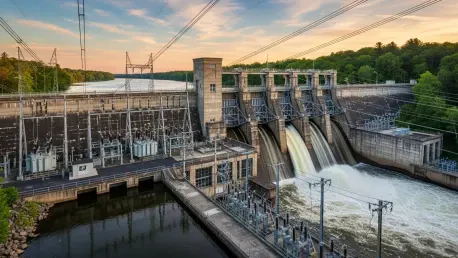

The proposed transfer of thirteen aging hydroelectric dams for the symbolic price of thirteen dollars has effectively forced a reckoning over the future of Michigan’s energy infrastructure and the long-term safety of its river systems. This transaction, involving the state’s second-largest utility and a private equity-backed operator, represents far more than a simple asset divestment. It serves as a high-stakes test case for how regulated utilities can offload historical liabilities and whether private capital is a suitable steward for critical public infrastructure that carries immense environmental and physical risks. As the energy sector pivots toward more efficient renewable sources, the fate of these century-old structures hangs in a delicate balance between economic pragmatism and public safety.
The Crossroads of Michigan’s Hydroelectric Infrastructure
The thirteen hydroelectric dams at the center of this controversy represent a sprawling legacy that stretches back to the early twentieth century. Located along the Au Sable, Manistee, Muskegon, River Raisin, and Kalamazoo rivers, these structures were once the backbone of Michigan’s emerging electrical grid. For decades, they provided reliable, carbon-free power that fueled the industrial growth of the Great Lakes region. However, as the infrastructure enters its second century of operation, the physical reality of aging concrete and rusted turbines has transformed these historical assets into complex management challenges. The dams now sit at a structural and regulatory crossroads, where the cost of continued operation is increasingly difficult to justify under traditional utility models.
This $13 sale proposal from Consumers Energy to Confluence Hydro, a subsidiary of the private equity firm Hull Street Energy, has triggered an intense debate over corporate responsibility. By attempting to sell the entire portfolio for a nominal fee, Consumers Energy is signaling a desperate need to exit a business segment that no longer aligns with its modern financial objectives. The significance of this deal lies not in the purchase price, but in the transfer of nearly $1.7 billion in potential decommissioning liabilities and the ongoing responsibility for dam safety. The conflict pits the utility’s desire for fiscal efficiency against the fears of local residents and conservationists who worry that a private entity may lack the long-term stability required to manage such volatile assets.
The intersection of public utilities, private equity, and environmental management creates a volatile industry landscape. Public utilities are strictly regulated and held to high standards of transparency, whereas private equity firms often operate with different priorities, focusing on maximizing asset value and cash flow. This deal highlights the growing trend of private equity entering the energy infrastructure space, often targeting distressed or mature assets that larger corporations no longer want. This shift raises fundamental questions about whether the incentives of private investment can be reconciled with the long-term ecological health of Michigan’s waterways and the safety of the thousands of people living downstream from these massive reservoirs.
Assessing the technological and economic scope of these facilities reveals a stark disparity between their historical importance and their current utility. While the dams possess a combined nameplate capacity of 132 megawatts, this represents only about 1% of the total energy generation for Consumers Energy. In the broader context of Michigan’s aggressive renewable energy goals, such a small contribution is often seen as negligible when compared to the vast potential of modern wind and solar projects. Yet, the reliability of hydroelectric power as a baseload source remains a compelling argument for those who believe that every megawatt of carbon-free energy is vital. The challenge remains whether the existing technology can be modernized effectively enough to remain a viable part of the grid through 2030 and beyond.
Shifting Dynamics in the Hydroelectric Energy Market
Emerging Trends in Asset Divestment and Private Equity
The utility industry is currently witnessing a significant shift characterized by the divestment of uneconomic assets. Regulated utilities across the country are increasingly seeking to purge low-yield, high-maintenance infrastructure from their balance sheets to focus on capital-intensive projects with more predictable returns, such as grid modernization and large-scale renewable developments. The thirteen Michigan dams are quintessential examples of such assets; they are expensive to operate and require constant oversight to meet stringent safety standards. By offloading these dams, a utility can effectively de-risk its portfolio, shifting the burden of relicensing and potential structural failures onto another party while maintaining a public-facing commitment to clean energy.
The rise of firms like Hull Street Energy in the acquisition of distressed energy assets reflects a broader trend in the private equity sector. These firms often employ a strategy of acquiring neglected or “end-of-life” infrastructure at a low cost, betting that operational efficiencies and aggressive financial restructuring can wring out remaining value. In the case of Confluence Hydro, the strategy involves positioning hydroelectric power as an under-appreciated resource that can provide steady returns through long-term power purchase agreements. However, critics argue that this model is inherently risky for the public, as private equity timelines are often much shorter than the multi-decade lifespans of the infrastructure they acquire, leading to concerns about the sustainability of their management practices.
Whether this trend leads to innovative modernization or a slow descent into the status quo remains a central point of contention. Proponents of the sale suggest that a specialized operator like Confluence Hydro might implement technological upgrades, such as advanced sensor arrays for structural monitoring or more efficient turbine designs, that a diversified utility might overlook. Conversely, there is a pervasive fear that the primary goal of such an acquisition is to minimize maintenance costs to maximize short-term profits. This risk is particularly acute in the hydro sector, where deferred maintenance can lead to catastrophic failures that occur years after the original investors have exited the deal.
Economic Projections and Market Performance Indicators
The valuation discrepancies associated with this deal are staggering and serve as a primary point of concern for state regulators. A sale price of $13 stands in surreal contrast to the estimated $1.7 billion cost of decommissioning the dams or the $1 billion required for relicensing and necessary upgrades. This massive gap suggests that the market value of these dams as ongoing concerns is essentially negative without significant public or ratepayer subsidies. The discrepancy forces a difficult choice: should the state allow the transfer to a private entity that may not have the resources to cover these long-term costs, or should the utility be forced to maintain them at the expense of its customers?
Energy pricing forecasts play a crucial role in determining the feasibility of the proposed deal, specifically regarding the Power Purchase Agreement (PPA). The proposal includes a contract where Consumers Energy would buy power from the new owner at roughly $160 per megawatt-hour, a price significantly higher than the current market average. This premium is intended to provide the new owner with the capital necessary to maintain and relicense the dams. However, this creates a long-term financial burden for Michigan ratepayers, who would essentially be subsidizing the private equity firm’s operations. The impact of these costs over a thirty-year period represents a substantial economic commitment that could otherwise be directed toward newer, more efficient energy technologies.
Despite the challenges, the growth outlook for small-scale hydro remains a niche but important part of Michigan’s clean energy strategy. As the state moves away from coal and gas, maintaining a diverse mix of renewable sources is critical for grid stability. Hydroelectric power offers a level of consistency that weather-dependent solar and wind cannot match. If these thirteen dams can be successfully modernized and operated safely, they could serve as a blueprint for how older infrastructure can be integrated into a twenty-first-century grid. However, the economic reality suggests that this path is only viable if the costs of operation do not exceed the benefits of the energy produced, a threshold that these aging dams are struggling to meet.
Critical Challenges and the Safety-Liability Gap
The integrity of Michigan’s hydroelectric infrastructure is a matter of profound concern, especially given the haunting legacy of the 2020 Edenville and Sanford dam disasters. Those failures, which resulted in the displacement of thousands and caused hundreds of millions of dollars in damage, remain a vivid reminder of what happens when private owners fail to maintain structural standards. Many of the thirteen dams currently up for sale are of a similar age and design as those that failed. The fear of structural failure is not merely theoretical; it is a localized, visceral anxiety for the communities that live in the shadows of these embankments. Any deal that transfers these structures must prioritize rigorous, transparent safety inspections and guaranteed funding for emergency repairs.
A major flashpoint in the current debate is the “ringfencing” controversy involving the corporate structure of the proposed buyer. Confluence Hydro plans to operate each of the thirteen dams through a separate limited liability company (LLC), a move that critics argue is designed to insulate the parent company, Hull Street Energy, from legal and financial responsibility. If one dam were to suffer a catastrophic breach or become a financial sinkhole, the specific LLC could theoretically declare bankruptcy, leaving the state and local taxpayers to foot the bill for the cleanup and repairs. This structural insulation creates a safety-liability gap where the party reaping the profits is not the same party that would bear the ultimate cost of a disaster.
The conflict between ecological preservation and economic stability further complicates the narrative. From an environmental perspective, the expiration of the dams’ licenses offers a once-in-a-century opportunity to restore Michigan’s rivers to their natural state, improving fish passage and water quality. However, removing the dams would lead to the disappearance of the large reservoirs that have become central to local recreational economies and property values. Many of these lakeside communities depend on the dams for their very identity and tax base. Balancing the desire for a restored, free-flowing river with the practical need to protect local wealth and tourism creates a political and social impasse that is difficult to resolve through purely economic or environmental arguments.
Consumers Energy has complicated the situation by issuing a “take it or leave it” ultimatum regarding the sale. The utility has indicated that if the regulatory approval for the $13 deal is not granted, it will likely move toward the most cost-effective alternative: total decommissioning and removal of the dams. This stance places tremendous pressure on local communities and state regulators, as it frames the sale as the only way to save the lakes. This decommissioning ultimatum forces stakeholders to choose between a potentially risky private owner and the guaranteed loss of the reservoirs, leaving very little room for a middle-ground solution that might involve public ownership or a more robustly funded restoration plan.
The Regulatory Landscape and Oversight Framework
Navigating the regulatory landscape for hydroelectric dams involves a complex interplay between federal and state authorities. The Federal Energy Regulatory Commission (FERC) holds the primary power over relicensing and safety standards for most of these dams. However, FERC’s processes are often criticized for being slow and focused more on technical compliance than on the specific economic or social needs of the host state. This creates a regulatory gap where federal standards might be met on paper, but the state is left with the practical consequences of an owner who lacks the financial depth to handle a long-term crisis. Understanding this jurisdictional divide is essential for any strategy aimed at ensuring the safety of Michigan’s waterways.
In an unprecedented move, the Michigan Department of Natural Resources (DNR) has intervened in the Public Service Commission (PSC) case, raising significant objections to the sale. The DNR’s involvement underscores the severity of the situation, as the agency is traditionally focused on land and wildlife management rather than utility finance. Their primary concern is that the state lacks the necessary tools to hold a private equity firm accountable over the long term. The DNR is pushing for more stringent oversight and clearer definitions of what constitutes “adequate maintenance,” arguing that the current proposal does not provide enough protection for Michigan’s natural resources or its citizens.
The push for parent-company guarantees and financial assurances has become a cornerstone of the regulatory debate. Critics of the $13 deal argue that Confluence Hydro and Hull Street Energy must be required to back their subsidiaries with the full weight of their corporate assets. Without such a guarantee, the state is essentially taking a massive gamble on the financial health of thirteen individual LLCs. Ensuring accountability means establishing a framework where bankruptcy cannot be used as a shield against public liability. This could include the creation of dedicated trust funds for decommissioning or the requirement of high-limit insurance policies that stay with the dams regardless of ownership changes.
Environmental standards also present a moving target for the dams’ future operations. New regulations regarding sediment flow, water temperature, and fish habitat restoration are increasingly difficult for older dams to meet without expensive retrofitting. As climate change alters precipitation patterns and water temperatures, the ecological impact of these dams will likely become more pronounced, leading to even stricter mandates from environmental agencies. Any prospective owner must be prepared to navigate these evolving requirements, which can significantly alter the economic viability of a project. The cost of environmental compliance is often the hidden factor that turns a bargain into a financial burden.
The Future Path for Michigan’s Waterways and Power
The upcoming decision by the Michigan Public Service Commission will likely serve as a definitive moment for the state’s energy policy. If the commission approves the sale, it will signal a willingness to embrace private equity as a viable solution for aging infrastructure, provided certain financial safeguards are met. If it rejects the deal, it may trigger a wave of dam removals that will fundamentally reshape Michigan’s geography and local economies. The industry is watching closely, as the outcome will dictate how other utilities handle their own “uneconomic” assets in the coming years. Regardless of the ruling, the case has already exposed the fragility of the current system.
Technological disruptors could eventually alter the viability of small-scale hydro, though their impact remains to be seen. Advancements in real-time structural monitoring using satellite data and AI-driven sensors could drastically reduce the cost of safety inspections and provide earlier warnings of potential failures. Furthermore, new turbine designs that are more “fish-friendly” or capable of generating power at lower flow rates could breathe new life into older sites. However, these technologies require significant upfront investment, which brings the discussion back to the central problem: who will pay for the modernization of assets that barely produce a profit?
Global economic influences, particularly those driven by climate change, are also beginning to impact the insurance and operation of century-old dams. Insurance premiums for aging infrastructure are rising as extreme weather events become more frequent and severe. For a private owner, the cost of insuring thirteen old dams could eventually become prohibitive, potentially leading to a situation where the dams are operated without adequate coverage. This global trend toward higher risk-pricing makes the long-term financial stability of the buyer even more critical. The economic environment from 2026 toward the end of the decade will likely be defined by how well infrastructure can adapt to these external pressures.
Ultimately, this deal will set a precedent for the future transfer of public infrastructure into private hands. If Michigan can create a framework that successfully balances corporate profit with public safety and environmental restoration, it could provide a blueprint for other states facing similar challenges with aging infrastructure. However, if the deal fails or leads to a repeat of past disasters, it will likely lead to a moratorium on such sales and a greater push for public decommissioning. The path forward requires a level of cooperation and transparency that has often been missing from the utility industry, demanding a new era of accountability for those who manage the state’s most vital resources.
Strategic Synthesis and Final Verdict
The investigation into the proposed sale of Michigan’s thirteen hydroelectric dams revealed a complex web of financial maneuvers and public safety concerns. Stakeholders recognized that while the nominal price suggested a bargain, the actual value was buried beneath billions of dollars in potential maintenance and decommissioning costs. The utility sought a clean break from assets that no longer served its economic goals, while the private equity firm saw an opportunity to capitalize on premium energy contracts. Throughout the process, the tension between preserving local recreational economies and restoring natural river ecosystems remained a primary point of friction that dominated public discourse and regulatory hearings.
State regulators and environmental advocates ultimately identified the corporate LLC structure as a significant vulnerability that threatened to leave the public exposed to massive liabilities. The potential for a parent company to walk away from a structural disaster through bankruptcy was viewed as an unacceptable risk in the post-Edenville era. Consequently, the push for parent-company guarantees emerged as a non-negotiable requirement for any transfer of ownership. It became clear that for such a deal to be sustainable, the financial protections had to be as robust as the concrete walls of the dams themselves, ensuring that private profit did not come at the expense of public safety.
The final synthesis of the deal’s implications suggested that a sustainable hydroelectric future required a fundamental shift toward greater transparency and long-term financial commitment. Actionable next steps for the state included the implementation of a rigorous, state-mandated inspection schedule and the creation of a dedicated infrastructure fund to cover emergency repairs in the event of a private owner’s default. Moving forward, Michigan’s leaders must decide whether to incentivize the modernization of these sites through public-private partnerships or to begin the controlled process of river restoration. The resolution of this case provided a critical lesson: in the management of public infrastructure, the cheapest price often carries the highest ultimate cost.







