
The rapid retirement of traditional coal-fired power stations across New South Wales has created an urgent necessity for a robust and reliable replacement strategy to safeguard the state’s industrial and domestic energy requirements. As the grid undergoes its most significant transformation since electrification, the government has moved to secure the next generation of power through the strategic launch of Tenders 8 and 9. These procurement rounds, overseen by AusEnergy Services Limited, are not merely administrative procedures but are the primary mechanisms for ensuring that the transition to a renewables-dominated system does not compromise the stability or affordability of electricity. By opening these competitive bidding windows, the state aims to attract global investment and local expertise to build a diverse portfolio of energy assets. This initiative represents a critical juncture in the Electricity Infrastructure Roadmap, where the focus shifts from theoretical planning to the actual deployment of high-capacity wind, solar, and storage technologies.
Expanding Generation Through Hybrid Innovation
Strategic Scale of Renewable Procurement
The scale of Tender 8 represents a historic milestone for the region, as it seeks to procure 2.5 GW of new renewable capacity to fill the void left by aging thermal plants. This solicitation is specifically engineered to identify projects that can offer high efficiency and rapid deployment, with a clear preference for developments that can be fully operational before the end of 2029. By setting a minimum capacity threshold of 30 MW, the government ensures that only utility-scale projects with the potential to significantly impact the grid are considered. This approach focuses on projects that have already cleared preliminary environmental and planning hurdles, thereby reducing the lead time between the awarding of a contract and the first injection of power into the system. The procurement is designed to stimulate the construction of both wind and solar farms, creating a balanced energy mix that can take advantage of the state’s diverse geographic and climatic conditions.
Furthermore, the state is utilizing the Long-Term Energy Service Agreement model to provide a financial safety net for developers, which is crucial for securing low-cost financing in a competitive global market. These agreements offer a minimum price guarantee for the electricity produced, giving investors the confidence to commit to large-scale infrastructure projects without the fear of extreme price volatility. This mechanism effectively transfers a portion of the market risk away from the private sector, allowing for more aggressive bidding and ultimately lower costs for the end consumer. By stabilizing the revenue streams of these new renewable assets, the state ensures that the transition is driven by sustainable economic principles rather than just environmental mandates. This strategy is expected to yield enough clean energy to power approximately one-third of the households in the state, fundamentally altering the energy landscape and reinforcing the grid against future supply shocks.
Integrating Storage with Hybrid Models
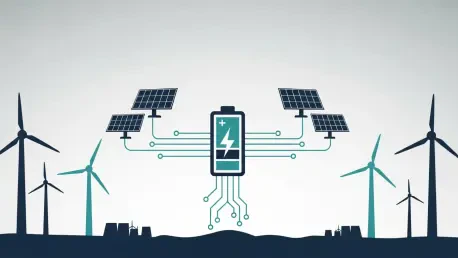
A defining feature of the current procurement round is the introduction of the hybrid service agreement, which encourages the integration of renewable generation with advanced battery storage systems. This shift reflects a growing recognition within the industry that standalone solar or wind projects are no longer sufficient to meet the complex needs of a modern grid. By co-locating storage facilities with generation assets, developers can “smooth out” the variability of weather-dependent energy, storing excess power during periods of high production and releasing it when demand peaks or the sun sets. This hybrid approach optimizes the use of existing transmission infrastructure and reduces the need for costly grid upgrades. It also allows projects to participate more effectively in the frequency control and ancillary services markets, providing the essential stability services that were traditionally supplied by large spinning turbines in coal plants.
The emphasis on hybrid facilities also addresses the logistical challenges associated with connecting new power sources to the network. When generation and storage share a single connection point, the administrative and technical burden on the network operator is significantly reduced, leading to faster integration and lower overall system costs. These integrated projects are viewed as the “building blocks” of a flexible grid, capable of responding in real-time to the fluctuating needs of a digital economy. As the state moves toward its stretch target of 16 GW of new generation by 2030, these hybrid models will play an increasingly vital role in maintaining system reliability. By prioritizing projects that demonstrate this technological synergy, the government is fostering an environment where innovation is directly linked to commercial viability, ensuring that the next wave of energy infrastructure is as resilient as it is sustainable.
Securing Long-Term Stability with Advanced Storage
Scaling Up Long-Duration Energy Reservoirs
Parallel to the push for new generation, Tender 9 focuses exclusively on the critical requirement for long-duration energy storage to provide a reliable backup for the intermittency of renewables. This round is targeting approximately 1.5 GW of power capacity, which equates to a massive 12.5 GWh of energy storage, specifically looking for projects capable of discharging power for at least eight hours. Unlike short-duration batteries that are primarily used for grid stability and peak shaving, these long-duration assets, such as pumped hydro and large-scale battery arrays, act as a massive “green battery” for the entire state. These facilities are intended to bridge the gap during extended periods of low renewable output, such as consecutive cloudy or windless days, ensuring that the lights stay on regardless of weather patterns. The deadline for these projects to become fully operational is set for 2034, reflecting the longer construction timelines required for such massive engineering feats.
The strategic importance of eight-hour storage cannot be overstated, as it provides the depth of energy reserves needed to replace the “baseload” functionality of retired coal units. By mandating a minimum of 5 MW of power per project, the state is inviting a variety of technological solutions, ranging from traditional mechanical storage to emerging chemical and thermal technologies. This technological neutrality encourages competition and allows the market to determine the most cost-effective ways to store energy at scale. As the state works toward its target of 42 GWh of storage by 2034, these projects will become the cornerstone of a secure energy system. The successful deployment of these assets will mitigate the risk of price spikes during periods of high demand, providing a predictable and stable energy environment for both residential consumers and large-scale industrial users who require constant, high-quality power.
Future-Proofing Through Market Certainty
The overarching vision behind these tenders is to move beyond the minimum legislated requirements and achieve aggressive stretch targets that place the state at the forefront of the global energy transition. Energy Minister Penny Sharpe has emphasized that this proactive stance is necessary to “future-proof” the economy against the inevitable decline of fossil fuel assets. By over-delivering on capacity and storage, the state creates a buffer that protects consumers from the uncertainties of a rapidly changing global energy market. The streamlined, single-stage procurement process used in these tenders is a direct response to the need for speed, allowing successful bidders to be announced by late 2026 and construction to begin shortly thereafter. This accelerated timeline is essential for maintaining momentum and ensuring that new capacity is online before the final closures of the state’s remaining coal-fired generators.
In the final analysis, the success of these tenders will be measured by their ability to deliver a seamless transition that balances environmental goals with economic reality. By providing a clear and transparent framework for investment, the state is effectively de-risking the move to a low-carbon future and ensuring that the benefits of renewable energy are passed on to the public. The integration of advanced storage, the promotion of hybrid generation models, and the use of sophisticated financial instruments all work together to create a resilient, modern grid. Stakeholders should now focus on optimizing the supply chain and local workforce capabilities to support this massive infrastructure build-out. Ensuring that the necessary skilled labor and raw materials are available will be the next great challenge, requiring close collaboration between the government, educational institutions, and the private sector to turn these ambitious tender targets into a tangible, high-performing reality.
The energy transition in New South Wales reached a pivotal moment with the conclusion of the latest bidding rounds, shifting the focus from procurement to active implementation. Moving forward, developers and grid operators must prioritize the physical integration of these diverse assets, ensuring that transmission networks are sufficiently reinforced to handle the decentralized nature of new generation. The state’s commitment to exceeding its original targets provided a necessary safety margin, yet the true test will lie in the operational performance of hybrid systems and long-duration storage under extreme weather conditions. Local industries should leverage this period of high investment to modernize their own energy-intensive processes, taking advantage of the increased grid stability and lower projected costs. Ultimately, the successful deployment of these projects served as a global blueprint for transitioning large-scale industrial economies from fossil fuels to a diversified, renewable-led energy architecture.