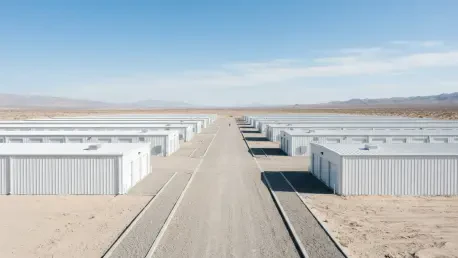

The global energy market is witnessing an unprecedented shift as massive battery systems evolve from auxiliary support tools into the backbone of the digital economy. Tesla’s transition to LFP chemistry for stationary storage offers superior cycle life and thermal stability compared to the nickel-based alternatives used in high-performance vehicles. This shift comes at a time when the demand for utility-scale storage has reached a fever pitch, creating a paradoxical financial landscape for the world’s leading electric vehicle manufacturer. While the company’s recent quarterly report indicated a 16% decline in energy segment revenue, reaching approximately $2.9 billion compared to $3.4 billion in the same period last year, the order backlog for Megapacks has surged to an all-time high. This suggests that the current dip is merely a temporary artifact of the accounting cycle rather than a reflection of diminishing interest. As the company pivots its primary focus toward infrastructure, the scarcity of available production slots through 2027 has become a central narrative for investors and grid operators alike. The industry is no longer looking at batteries as a secondary accessory but as a primary driver of industrial expansion and grid reliability in an era defined by massive electrical consumption.
Strategic Production and Market Drivers
The AI Infrastructure Boom: Powering the Digital Surge
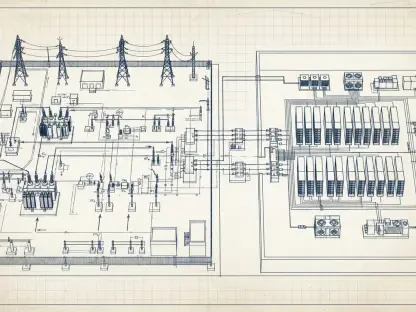
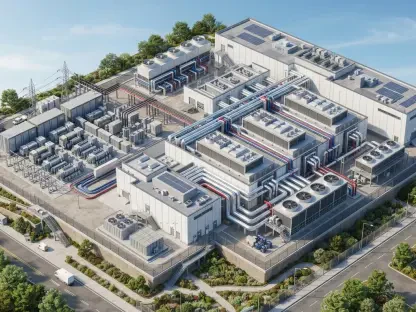
The meteoric rise of generative artificial intelligence and high-performance computing has fundamentally altered the power requirements of modern data centers. These facilities are no longer simple server warehouses; they have transformed into high-density energy consumers that require a level of electrical stability previously reserved for heavy industrial manufacturing. As companies deploy tens of thousands of power-hungry processors, the volatility of their electrical loads has become a significant challenge for existing utility grids. To mitigate this, data center operators are increasingly turning to on-site energy storage systems like the Tesla Megapack. These units act as a massive buffer, absorbing excess energy during low-demand periods and discharging it instantaneously when the computing load spikes. This trend has created a “pull” effect on the energy sector, where energy storage capacity is becoming as critical a bottleneck as the silicon chips themselves. Consequently, the massive demand from the tech sector is a primary reason why Tesla’s production capacity for 2026 and 2027 is almost entirely spoken for by long-term contracts.
Furthermore, the integration of AI-driven storage solutions allows for more sophisticated power management than ever before. Modern data centers are moving toward a model where they can participate in grid-balancing programs, effectively selling energy back to the utility when the grid is stressed. This dual-use case—protecting the facility from outages while simultaneously generating revenue through frequency regulation—has made the Megapack an essential asset for tech giants. The current market is characterized by a scarcity mindset where developers are willing to secure production slots years in advance to ensure their projects remain viable. This shift in procurement strategy from “just-in-time” to “strategic reserve” is a direct response to the lengthening lead times in the battery supply chain. As we progress through 2026, the synchronization between the AI build-out and energy infrastructure deployment is becoming the defining characteristic of the industrial landscape, ensuring that every megawatt-hour of storage produced has a waiting destination.
Revenue Timing: Navigating the Financial Disconnect
The reported 16% decline in Tesla’s energy generation and storage revenue during the third quarter of 2026 presents a confusing picture to those unfamiliar with large-scale infrastructure accounting. Unlike consumer electronics or even vehicle sales, where revenue is often recognized shortly after production, utility-scale projects operate on much longer timelines. Revenue for a Megapack installation is generally not recognized until the system is fully delivered, installed, and commissioned at the customer’s site. This means the financial figures being reported today are actually a reflection of production cycles and shipping logistics from several months or even a year ago. During a period of rapid manufacturing expansion, there is often a significant lag between the capital expenditure required to build the units and the recognition of income on the balance sheet. Tesla is currently in the midst of a heavy ramp-up phase, focusing on scaling its specialized production lines to meet the massive 2027 backlog, which creates a temporary mismatch between volume and recognized profit.
In addition to the timing of deliveries, the overall segment revenue is influenced by the product mix within the energy division. While the Megapack is the star performer, the division also encompasses residential solar and Powerwall installations. Fluctuations in the solar market, driven by changing interest rates or regional policy shifts, can sometimes mask the explosive growth occurring in the grid-scale battery sector. Despite the current dip, the internal projections from leadership suggest that gross margins for the storage segment are expected to rise significantly as economies of scale take hold. The move toward vertically integrated manufacturing, where more components are produced in-house, is designed to reduce the cost per kilowatt-hour, eventually leading to a surge in profitability that will be reflected in future reports. As the current backlog moves into the delivery and commissioning phases in late 2026 and throughout 2027, the financial narrative is expected to pivot from contraction to hyper-growth, aligning the company’s fiscal reality with its operational dominance.
Technological Shifts and Supply Chain Control
The Transition: Moving to In-House LFP Chemistry
The decision to move toward Lithium Iron Phosphate (LFP) chemistry for the Megapack represents one of the most significant technological pivots in the history of grid-scale storage. LFP batteries are inherently safer and more durable than the nickel-manganese-cobalt (NMC) variants commonly used in older electric vehicles. In a stationary application like the Megapack, where the weight and volume of the battery are less restrictive than in a moving car, the benefits of LFP are overwhelming. These cells can withstand thousands more charge cycles without significant degradation, making them the ideal choice for utilities that need a twenty-year operational life for their storage assets. By focusing on LFP, Tesla has optimized its storage product for longevity and thermal stability, reducing the risk of fires and lowering the total cost of ownership for its customers. This shift is a key driver behind the “extreme demand” cited by management, as grid operators prioritize safety and long-term reliability over the energy density required for mobile applications.
Sourcing and supply chain sovereignty are equally important factors in the LFP transition. By producing these cells in-house, Tesla is systematically reducing its dependence on a handful of external suppliers that dominate the global battery market. This vertical integration allows the company to protect itself from the price volatility of rare materials like cobalt and nickel, which have historically been subject to erratic swings and ethical concerns. Iron and phosphate are more abundant and easier to source, providing a more stable foundation for a multi-year production plan. This control over the battery chemistry also allows Tesla to fine-tune the manufacturing process for specific grid applications, ensuring that the software and hardware are perfectly synced. As the company expands its manufacturing footprint in 2026, the ability to churn out LFP cells at a massive scale is the primary engine allowing them to fulfill the 2027 backlog while maintaining healthy profit margins. The result is a more resilient supply chain that can withstand global trade disruptions better than its competitors.
Vertical Integration: The Manufacturing Masterstroke
Tesla’s strategy of vertical integration extends far beyond the battery cells themselves, encompassing the power electronics, thermal management systems, and the underlying software that controls energy flow. By designing and manufacturing the inverters and cooling systems in-house, the company can ensure that every component of the Megapack is optimized for maximum efficiency. This integrated approach reduces the complexity of installation for the customer, as each unit is shipped as a “plug-and-play” solution that includes everything needed to connect to the high-voltage grid. This simplicity is a major competitive advantage in a market where labor shortages and technical hurdles often delay large-scale infrastructure projects. As the company refines its manufacturing processes throughout 2026, the time required to build and test each unit is decreasing, allowing for a faster throughput that is essential for tackling the mountain of orders currently on the books.
The software layer, specifically the Autobidder platform, acts as the central nervous system for these hardware deployments. Autobidder uses machine learning to predict energy prices and manage the charging and discharging of battery fleets in real-time. This allows owners of Megapack systems to maximize their returns by buying electricity when it is cheap and selling it back to the grid during peak pricing windows. By offering an integrated hardware and software stack, Tesla has transformed the Megapack from a simple battery into a sophisticated financial asset. This level of integration creates a powerful ecosystem that is difficult for commodity battery manufacturers to replicate. As the 2027 production slots continue to fill up, the synergy between manufacturing sovereignty and advanced software remains the primary reason why customers are willing to commit to long-term delivery schedules. The company’s ability to control every aspect of the energy storage lifecycle has turned a hardware business into a high-margin, tech-driven infrastructure play.
Quantifying Success and Managing Risk
Benchmarks of Progress: The Apollo Power Yardstick
To understand the actual scale of the demand for Megapacks, one must look at the tangible contracts being signed by major energy developers. A prime example is the agreement with Apollo Power, which involves the delivery of 260 Megapack 2XL units. This single project represents approximately 1 gigawatt-hour (GWh) of storage capacity, a figure that provides a concrete benchmark for the division’s operational throughput. When viewed in the context of Tesla’s total deployments, which reached 13.7 GWh in the third quarter of 2026 alone, it becomes clear that the company is managing multiple “mega-projects” simultaneously. These large-scale deals are the foundation of the 2027 backlog, proving that the claim of being “sold out” is rooted in signed, legally binding agreements rather than mere verbal interest. For developers like Apollo Power, securing these units more than a year in advance is a strategic necessity to ensure they can meet their own delivery promises to the grid and their financial investors.
Furthermore, these massive orders highlight a broader industry trend where storage projects are becoming increasingly concentrated in the hands of major utility-scale developers. These entities require a partner that can offer not just the hardware, but also the logistical support and long-term warranties necessary for multi-billion dollar projects. The Apollo Power deal serves as a yardstick for the entire industry, signaling that the market for energy storage has matured to a point where gigawatt-scale orders are becoming the new standard. As Tesla works through these contracts, each successful deployment reinforces its reputation for being able to execute on a massive scale, further fueling the demand for the remaining 2027 slots. The sheer volume of these agreements creates a stable revenue pipeline for the next two years, insulating the company from the more volatile consumer-facing markets. This shift toward massive industrial contracts is a key reason why the energy division is poised to become a dominant contributor to the company’s overall valuation.
Execution Challenges: Navigating the Ramping Process
Despite the overwhelming demand, the path to fulfilling the 2027 backlog is not without its risks, primarily centered on the difficulty of scaling manufacturing. Ramping up a high-tech production line for in-house LFP cells is a notoriously complex engineering challenge that involves mastering chemical yields and high-speed assembly. Any significant delay in the production ramp or a drop in cell quality could immediately ripple through the delivery schedule, causing a backlog of delayed projects and potential contract penalties. Tesla has historically faced “production hell” with its vehicle lines, and while the energy division has been more stable, the scale of the current expansion is unprecedented. Ensuring that the new factories can reach full capacity by 2027 is the most critical task facing the operations team, as any stumble could open the door for competitors to snatch up desperate customers. The company must balance its aggressive growth targets with the need for rigorous quality control to maintain the safety record of its storage products.
External factors also play a significant role in the execution of these large-scale projects. While Tesla can control its factory output, it has no control over local permitting, environmental reviews, or grid interconnection delays. Many utility-scale projects face years of regulatory hurdles before a single battery can be installed on-site. If a major customer like Apollo Power faces a delay in getting their site ready, Tesla may be forced to hold onto the finished inventory or find a new buyer on short notice, both of which can complicate financial reporting. Additionally, the global logistics network remains a point of vulnerability, with shipping costs and port congestion capable of delaying the delivery of units to international markets. As the company pushes toward the end of 2027, navigating these “last-mile” challenges will be just as important as the manufacturing process itself. The ability to manage these external risks while maintaining a breakneck production pace will determine whether the current backlog translates into the expected financial windfall.
Future Projections and Market Evolution
The Outlook for 2027: Data Centers as Dominant Consumers
Looking ahead to the end of 2027, the landscape of energy storage is expected to be dominated by the needs of the digital economy. While renewable energy smoothing was the original driver for the Megapack, the insatiable power hunger of AI-driven data centers is rapidly becoming the primary market force. By 2027, it is predicted that a majority of utility-scale storage deployments will be tied directly to high-capacity computing clusters rather than traditional wind or solar farms. This shift represents a fundamental change in how energy is valued; in the world of AI, power is the ultimate currency. Data center operators are no longer just looking for a backup battery; they are looking for a comprehensive energy management system that allows them to maintain 99.999% uptime in an increasingly unstable energy environment. Tesla’s ability to cater to this specific, high-value segment is what will maintain its “sold out” status even as other competitors bring new capacity online.
This transition also implies a significant change in the geographic distribution of Megapack deployments. Historically, storage was concentrated in regions with high renewable penetration, like California or South Australia. However, as data centers sprout up in regions with lower land costs and cooler climates, the demand for storage will follow. By 2027, we can expect to see massive Megapack installations in non-traditional energy hubs, driven entirely by the proximity to fiber-optic networks and computing infrastructure. This geographic diversification will help Tesla hedge against regional policy changes, as the demand becomes tied to the global growth of the internet rather than local green energy mandates. The synchronization of the “sellout” narratives between energy and high-end compute suggests that we are entering a period where energy infrastructure is the limiting factor for all technological progress. For Tesla, this means that the backlog for 2027 is not just a list of orders, but a roadmap for the future of the global digital grid.
Long-Term Sustainability and Margin Expansion
The ultimate goal for Tesla’s energy division is to reach a level of profitability and scale that rivals its automotive business. As the transition to in-house LFP cells matures, the cost of goods sold for each Megapack is expected to drop significantly, paving the way for substantial margin expansion. Unlike cars, which require constant model refreshes and marketing spend, the Megapack is a standardized industrial product with a long lifecycle. Once the production lines are fully optimized, they can churn out the same design for years, leading to the kind of operational efficiency rarely seen in the tech sector. Furthermore, the recurring revenue from software services like Autobidder will start to make up a larger portion of the division’s income. As more gigawatt-hours are deployed, the software “moat” around the hardware becomes deeper, creating a high-margin service business that remains active long after the initial sale. By 2027 and 2028, this software-driven income could become a primary engine for the company’s bottom-line growth.
In conclusion, the narrative of being “almost sold out” through 2027 is a credible reflection of a world that is desperate for stable, high-capacity energy solutions. While the current financial dip of 16% in revenue has caused some temporary skepticism, the underlying fundamentals suggest a period of hyper-growth is on the horizon. Tesla successfully positioned its energy arm to capture the massive demand from the AI sector while simultaneously securing its supply chain through vertical integration and the pivot to LFP chemistry. The next few years will be defined by the company’s ability to execute on its production promises and navigate the complexities of global infrastructure deployment. As the backlog transitions into delivered units, the energy division will likely emerge as a pillar of the company’s valuation, proving that the shift from a vehicle-centric model to an infrastructure-first model was the correct strategic move. The critical milestone for the coming quarters will be demonstrating that the production ramp can keep pace with the insatiable demand of a power-hungry world.