
Norway relies on hydropower for nearly 90 percent of its total electricity generation, making the resilience of its aging infrastructure a top priority for national energy security. This reliance underscores the critical need for advanced technological interventions as the country navigates a complex energy transition in 2026. While the rugged fjords and steep mountains have provided clean energy for decades, many existing facilities were constructed in the mid-20th century and now require significant overhauls to meet modern demand. As the global energy landscape shifts toward more volatile renewable sources, Norway’s hydropower plants must act as a stabilizer for the entire European grid. ABB has emerged as a critical partner in this transition, deploying sophisticated automation and electrification solutions that breathe new life into these legacy assets. By integrating high-performance sensors, the company allows utility providers to extract more value from every cubic meter of water while maintaining safety.
Integrating Advanced Automation and Control Systems
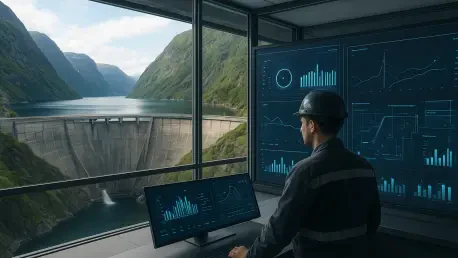
The core of this technological evolution lies in the implementation of the ABB Ability System 800xA, a distributed control system that acts as the central nervous system for hydropower plants. In many Norwegian facilities, operators previously relied on manual processes or fragmented control units that operated in isolation. By consolidating these functions into a single, unified interface, ABB provides plant managers with a comprehensive overview of every turbine, valve, and generator across multiple sites. This level of visibility is crucial for optimizing the start-stop cycles that are increasingly common as hydropower complements intermittent wind and solar power. The system enables precise adjustments to water flow and frequency, ensuring that the electricity delivered to the grid remains stable even during rapid changes in demand. Furthermore, the integration of historical data with real-time analytics allows for more informed decision-making, significantly reducing the likelihood of human error in high-pressure operational scenarios.
Beyond immediate control capabilities, these automation solutions are designed to extend the operational lifespan of heavy machinery that would otherwise require costly replacements. By installing high-precision sensors on rotating equipment, ABB enables the continuous monitoring of vibration, temperature, and lubrication levels. This shift toward condition-based maintenance allows operators to detect subtle anomalies that often precede catastrophic failures, facilitating repairs during planned outages rather than responding to emergency breakdowns. Such a proactive approach is particularly valuable in the remote, rugged terrain of Norway, where reaching a site for urgent repairs can be both dangerous and prohibitively expensive. As these digital tools become more embedded in the infrastructure, they foster a culture of efficiency where resources are utilized only when necessary. This precision not only protects the mechanical integrity of the turbines but also maximizes the revenue potential for operators by ensuring that plants remain online during peak market pricing periods.
Securing the Future: Sustainable Energy Management
Maintaining a stable power supply requires more than just efficient generation; it necessitates a sophisticated approach to grid quality and frequency regulation. As Norway exports more electricity through subsea cables to the rest of Europe, the domestic grid faces new challenges related to reactive power and voltage fluctuations. ABB addresses these issues by deploying Static Synchronous Compensators, or STATCOMs, which provide instantaneous voltage support and improve the overall capacity of the transmission lines. These systems are essential for integrating the growing amount of offshore wind energy into the national grid without compromising the stability provided by hydropower. By balancing the load in real-time, these power electronics ensure that the energy transition does not result in brownouts or equipment damage for industrial consumers. The synergy between robust hydropower generation and intelligent grid compensation creates a resilient energy backbone that can withstand environmental stressors and the unpredictable nature of modern electricity markets.
As the modernization process matured, the focus shifted toward the cultivation of a digitally literate workforce capable of navigating these complex systems. Educational initiatives and collaborative training programs between ABB and local technical universities ensured that the next generation of engineers possessed the skills required to manage a data-driven energy sector. This human-centric approach recognized that technology alone was not a panacea; rather, it served as a tool to empower experts to make more sustainable choices. Data harvested from the modernized plants provided invaluable insights into the long-term impact of climate change on water availability and seasonal runoff patterns. By applying machine learning algorithms to these vast datasets, operators began to develop more accurate forecasting models for reservoir management. These models allowed for better preparation against extreme weather events, ensuring that flood control measures were as optimized as electricity production, thereby protecting local communities.