
The current surge in private capital earmarked for renewable energy projects in the United Kingdom has reached unprecedented levels, yet a significant portion of this investment remains trapped within a complex web of regulatory delays and grid infrastructure limitations. While the financial appetite for utility-scale solar installations has never been stronger, the distance between a signed investment agreement and an operational power plant has widened due to systemic friction. The industry now finds itself at a critical crossroads where the primary objective has shifted from securing funding to ensuring actual project delivery. This transition requires a departure from traditional development models that often failed to account for the volatile nature of modern grid connectivity and the evolving requirements of national energy targets. To bridge this gap, the focus must sharpen on the logistical and technical pathways that allow these massive solar arrays to move from the drawing board to the national grid without being stalled by the weight of their own complexity.
Overcoming the Delivery Bottleneck: The Shift Toward Pragmatic Planning
Historically, the Development Consent Order process functioned under a mandate of absolute certainty, which effectively forced developers to finalize every technical detail long before a project was ever approved for construction. This rigid structure created a persistent stalemate where grid operators were hesitant to commit capacity to projects that lacked formal planning consent, while planning authorities were reluctant to grant approval without a guaranteed connection point from the operator. Such a circular logic frequently resulted in years of stagnation, leaving technically viable solar projects in a state of perpetual limbo while energy demands continued to rise. The industry recognized that this outdated approach was no longer compatible with the urgent need for large-scale decarbonization. Consequently, a new paradigm began to emerge that prioritizes momentum and acknowledges the inherent uncertainties in high-voltage infrastructure. This shift allows for a more fluid interaction between the planning system and the physical realities of the national power network.
Modernizing the pathway to project completion involves a strategic acceptance that certain technical variables, particularly those controlled by third-party grid operators, cannot always be locked down in the early stages of a development. This realization has led to a more pragmatic planning environment where initial consent can be granted based on a range of potential technical solutions rather than a single, fixed design. By allowing for this degree of flexibility, developers are now able to navigate the multi-year planning phase without being completely sidelined by external infrastructure changes or shifting technical requirements that may occur after the initial application. This flexibility is essential because the grid itself is a dynamic entity undergoing its own massive transformation, meaning that connection parameters can change significantly between the start of a project and its final commissioning. Embracing this adaptability ensures that solar farms remain viable even as the external environment around them evolves.
The Fenwick Model: A Blueprint for Adaptive Grid Integration
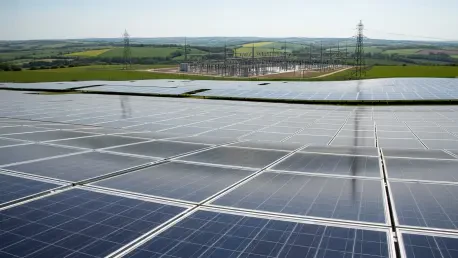
The Fenwick Solar Farm in Doncaster stands as a primary case study for this new methodology, illustrating how an adaptive approach can successfully bypass traditional planning bottlenecks that once halted progress. By securing the first energy Development Consent Order that included multiple grid connection options, the project broke the mold of traditional planning and set a new standard for the industry. The developer intelligently proposed a primary line drop connection alongside a fallback corridor to a nearby substation, providing a clear path forward regardless of which technical solution proved most feasible during the final engineering stages. This foresight was instrumental in addressing the common concern that a single, rigid connection plan might be rendered obsolete by future grid upgrades or unexpected land-use restrictions. The success of this model has provided a blueprint for other utility-scale projects, demonstrating that planning authorities are willing to support complex projects if they are presented with a robust range of viable contingencies.
When the Secretary of State granted consent for the Fenwick project while keeping these multiple connection options open, it marked a landmark shift in UK energy policy that resonated throughout the renewable energy sector. This decision effectively decoupled the immediate requirement for absolute technical finality from the broader goal of granting planning permission, thereby allowing technical negotiations with the National Grid to continue post-consent. This specific type of regulatory flexibility significantly reduces the financial risk for developers, as they no longer face the prospect of a project being terminated simply because one specific connection point becomes unavailable. The “Fenwick Model” serves as a powerful demonstration that a flexible planning framework can effectively manage the uncertainties of grid integration while maintaining the momentum necessary for large-scale energy production. It proves that the government and planning authorities are increasingly prioritizing the actual delivery of power over the strict adherence to static, paper-based plans.
Strategic Coordination: Aligning Stakeholders for Efficient Deployment
Success in this rapidly evolving market requires a high level of coordination across the entire energy ecosystem, including developers, local authorities, and national grid operators. Because energy infrastructure is a dynamic and constantly changing entity, the planning system must be agile enough to respond to changes in grid capacity and the arrival of new technologies such as advanced battery storage. Effective delivery depends on early and continuous collaboration to ensure that all stakeholders are aligned with the national strategy for energy security and carbon reduction. This proactive engagement helps to identify potential hurdles long before they become insurmountable obstacles, allowing for the co-creation of solutions that satisfy both local planning requirements and national energy needs. By fostering a culture of transparency and shared responsibility, the industry can move away from the adversarial nature of traditional planning and toward a more collaborative model that accelerates the deployment of clean energy assets across the country.
Beyond the coordination of individual projects, there is a broader need to modernize the national grid queue to ensure that viable projects are prioritized over those that are merely speculative. This process of clearing the backlog is essential for freeing up capacity for developers who are ready to break ground and begin generating electricity for the national network. The industry has seen a shift toward more stringent requirements for maintaining a position in the queue, encouraging a “use it or lose it” mentality that benefits the overall health of the energy sector. This focus on project readiness, combined with a flexible planning framework, creates a more efficient pipeline for renewable energy delivery. It ensures that the limited resources available for grid connection are allocated to the most advanced and feasible projects, rather than being tied up by projects that have little chance of reaching completion. As these reforms take hold, the pathway for large-scale solar potential becomes clearer, allowing for a more predictable and steady expansion of green power capacity.
Market Resilience: Securing the Long-Term Value of Clean Assets
For investors, the path to project delivery now requires a sophisticated focus on design flexibility and proactive risk management to protect the long-term value of their clean energy assets. Projects that incorporate fallback options and technical contingencies are far more resilient to the uncertainties of the grid queue and are better positioned to handle the long development cycles associated with utility-scale solar. This resilience is not just a technical necessity but a core financial strategy that ensures a project remains attractive to capital markets even if its original connection plan must be modified. Investors are increasingly looking for development teams that possess the expertise to navigate these complex regulatory landscapes and who can demonstrate a track record of delivering operational projects in a constrained environment. The shift in focus from theoretical capacity to actual power generation has redefined what constitutes a high-quality energy asset, placing a premium on adaptability and the ability to solve complex logistical challenges.
The transition from financial ambition to operational reality required a fundamental rethink of how energy infrastructure was permitted and constructed throughout the United Kingdom. It was no longer sufficient to merely secure a plot of land and a promise of funding; the industry had to master the art of flexible planning to overcome the physical constraints of an aging power grid. By adopting the principles of the Fenwick Model and prioritizing project delivery over rigid technical certainty, developers successfully bridged the gap between national climate goals and the generation of clean electricity. This evolution in the planning system allowed for the integration of massive solar arrays while managing the complex risks associated with grid connectivity and local regulatory demands. The shift toward a more agile and collaborative framework ensured that the UK could effectively harness its solar potential, turning a massive backlog of stalled projects into a reliable and sustainable source of power. This pragmatic approach ultimately secured the future of the energy transition by making delivery the central metric of success.