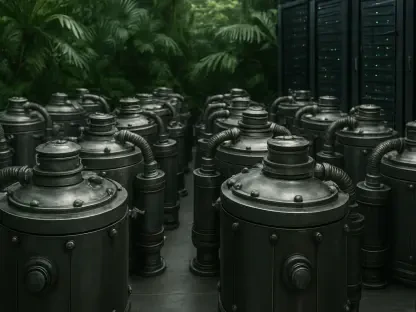

The digital revolution has reached a critical juncture where the abstract concept of the cloud is colliding with the hard physical limits of planetary power grids and terrestrial geography. As artificial intelligence models evolve into massive industrial entities, the search for sufficient electricity and cooling has become an existential struggle for the largest technology firms in the world. Modern data centers are no longer just buildings; they are gargantuan energy consumers that demand a level of resource intensity that many land-based regions simply cannot provide anymore. This bottleneck has forced a radical reimagining of where our digital brains should reside, shifting the focus from suburban server parks to the vast, untapped expanses of the global oceans. By moving hardware onto floating platforms, the industry aims to bypass the political friction of land development while gaining access to the natural cooling required to sustain high-performance computation across the globe. This maritime pivot represents a fundamental shift in how we build the foundations of future intelligence.
Power Grid Volatility: The End of Terrestrial Stability
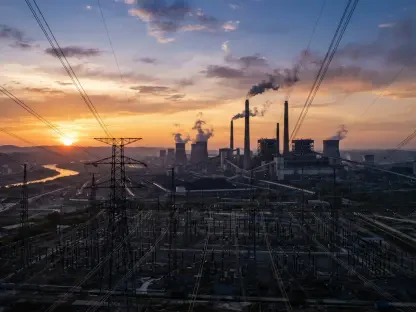
Terrestrial electrical grids were fundamentally designed for the predictable cycles of residential and industrial consumption, making them ill-equipped for the violent energy surges inherent in modern AI training. When a large language model undergoes a complex training phase, the power demand can spike by more than fifty percent in mere milliseconds, creating a massive thermal and electrical load that threatens to destabilize local utility systems. These unpredictable fluctuations do more than just strain the wires; they pose a direct physical threat to the sensitive silicon chips and high-bandwidth memory modules that constitute the core of an AI cluster. Upgrading land-based infrastructure to handle these bursts typically requires years of bureaucratic approvals and billions of dollars in capital investment, a timeline that is far too slow for the rapid pace of innovation. Consequently, developers are finding that the grid is now a limiting factor for progress, necessitating a move toward more isolated and dedicated energy environments found at sea.
Beyond the technical challenges of power delivery, the social and environmental costs of terrestrial data centers have reached a breaking point in many regions. These facilities consume millions of gallons of freshwater daily to maintain operational temperatures, leading to intense conflicts in regions struggling with drought or water scarcity. Local communities have become increasingly hostile toward the expansion of server farms, citing the constant hum of industrial cooling fans and the aesthetic blight of windowless concrete structures. Protests against heat discharge and the monopolization of municipal resources have turned once-favored tech hubs into zones of political contention and legal delays. For tech giants, the path of least resistance is no longer through the suburbs of Northern Virginia or the deserts of the Southwest, but rather toward the isolation of the sea where resource competition with human populations is nonexistent. This shift represents a necessary migration for survival, allowing companies to scale without the friction of property rights.
Maritime Solutions: Harnessing the Thermal Power of the Deep
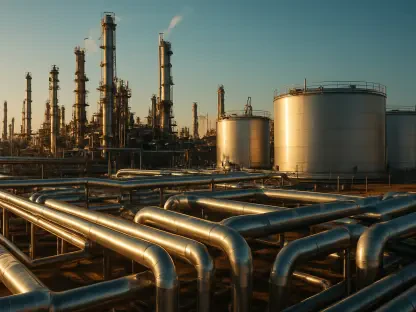
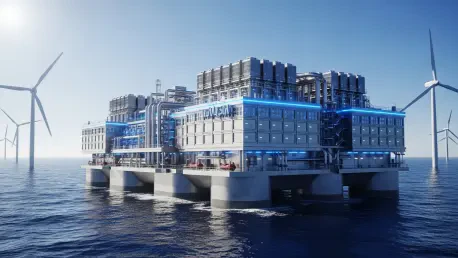
The open ocean provides an unparalleled solution to the cooling crisis by offering a virtually infinite heat sink that requires far less mechanical energy to exploit. By utilizing deep-sea intake systems, operators can pull naturally chilled water from the lower depths to dissipate the immense heat generated by tens of thousands of high-performance GPUs running at maximum capacity. This thermal advantage significantly improves the power usage effectiveness of the facility, allowing a higher percentage of electricity to be used for computation rather than climate control. To achieve this, the industry is repurposing engineering concepts from the offshore energy sector, utilizing semi-submersible platforms designed to withstand extreme maritime environments. These floating structures are built to remain stable in heavy swells, providing a modular foundation for the massive AI factories that are now too large and too hot to be safely housed on solid ground, ensuring that the physical limits of hardware no longer dictate the pace of evolution.
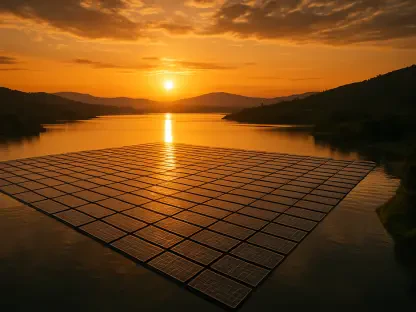
Operating in international waters or far offshore also grants a level of logistical freedom that is simply impossible within the constraints of terrestrial zoning and national borders. Large-scale data platforms can be constructed in specialized shipyards and then towed to strategic locations where they can connect to underwater power cables or offshore wind farms. This mobility allows for a more flexible deployment of computing power, enabling companies to position their hardware closer to renewable energy sources or in regions with favorable regulatory environments. Furthermore, the absence of neighbors and local height restrictions means that these facilities can be designed with an eye toward pure industrial efficiency rather than architectural concealment. The maritime environment effectively removes the physical boundaries that have historically slowed down the scaling of digital infrastructure, creating a new frontier where global connectivity meets industrial-scale engineering on a scale never before attempted on land.
Operational Resilience: Navigating the Risks of the Open Sea
Maintaining the gold standard of five nines reliability is a daunting task when the entire facility is subject to the constant motion and corrosive environment of the open sea. In the world of high-stakes AI development, even a momentary power flicker can be catastrophic, as it might erase weeks of complex calculations and force a total restart of the training process. This level of risk demands a rigorous operational culture that mirrors the discipline found on deep-water oil rigs, where safety and uptime are the primary metrics of success. Engineers must implement triple-redundant power systems and sophisticated motion-compensation technology to ensure that the delicate server racks remain level and energized regardless of weather conditions. To manage these risks, offshore operators have turned to advanced digital twins and AI-driven analytics that monitor sensors for microscopic signs of wear, ensuring that predictive maintenance can prevent failures before they occur in these isolated maritime environments.
The pivot toward maritime AI infrastructure established a new paradigm for solving the physical constraints of the digital age through bold engineering and strategic foresight. Stakeholders moved beyond traditional terrestrial thinking and embraced the ocean as a primary site for industrial-scale computation, which effectively decoupled technological growth from the limitations of local power grids. Companies successfully integrated renewable offshore energy with advanced thermal management systems, creating a blueprint for sustainable expansion that minimized the environmental footprint of the AI industry. Moving forward, the industry prioritized the development of standardized floating modules and autonomous maintenance robotics to further reduce the operational risks associated with sea-based deployments. By investing in these resilient offshore systems, the global tech community ensured that the hardware required for the next generation of artificial intelligence remained robust and scalable, far removed from the resource conflicts of previous eras.